Roof Systems and Replacement

Commercial Roofing Services in Bethlehem

Four Roof Systems and a Replacement Plan Built Around Your Building

Our commercial roofing services in Bethlehem cover TPO, EPDM, industrial, and metal roofs, plus full replacement of worn commercial roofs.

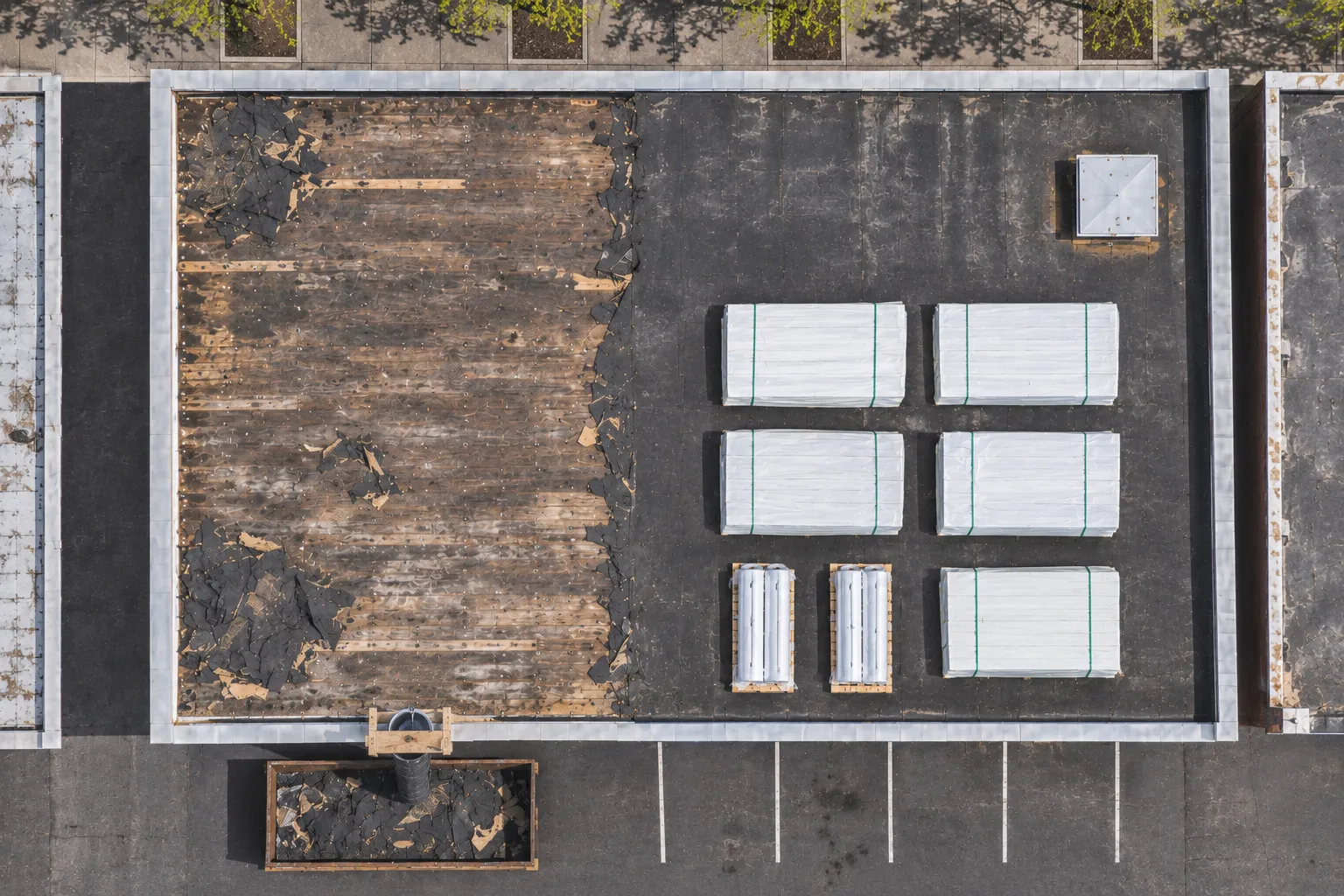
Top-down view of a flat roof mid tear-off, part stripped to the wood deck beside stacked insulation board

Commercial Roofing Services in Bethlehem by Roof System

Commercial roofing services in Bethlehem come down to four systems. Each card notes the spots where that roof usually lets water in.

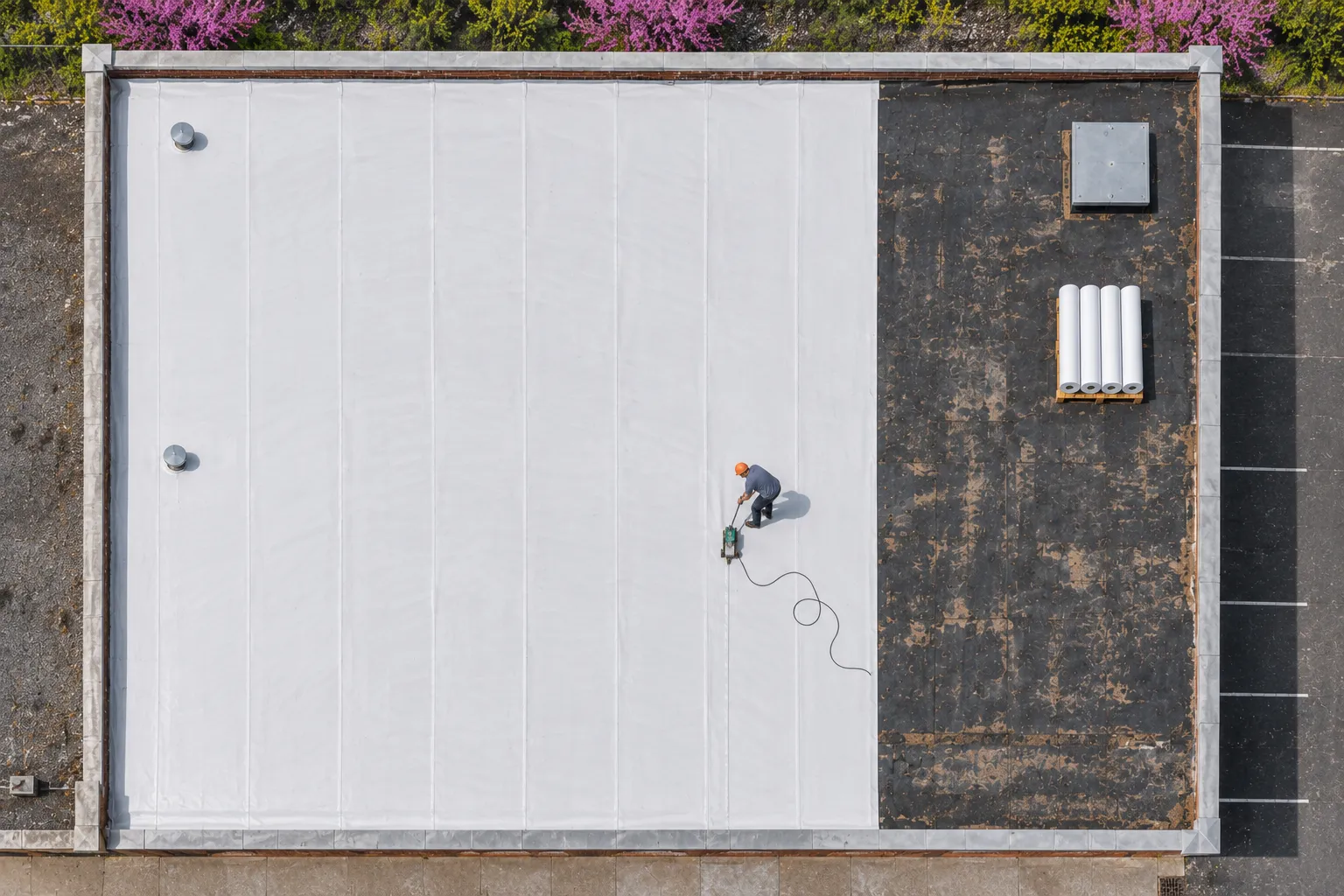
Top-down view of a roofer heat-welding a seam on a new white TPO roof beside the old dark membrane

TPO Roofing

Heat-welded white membrane for warehouses, retail, and offices, with seams probed and curbs flashed into the field sheet. Walk pads go on the routes to each unit.

Where Water Gets In
  • Field seams that were never probed
  • Curb corners around rooftop units
  • Edge metal lifting at the perimeter
TPO roofing details
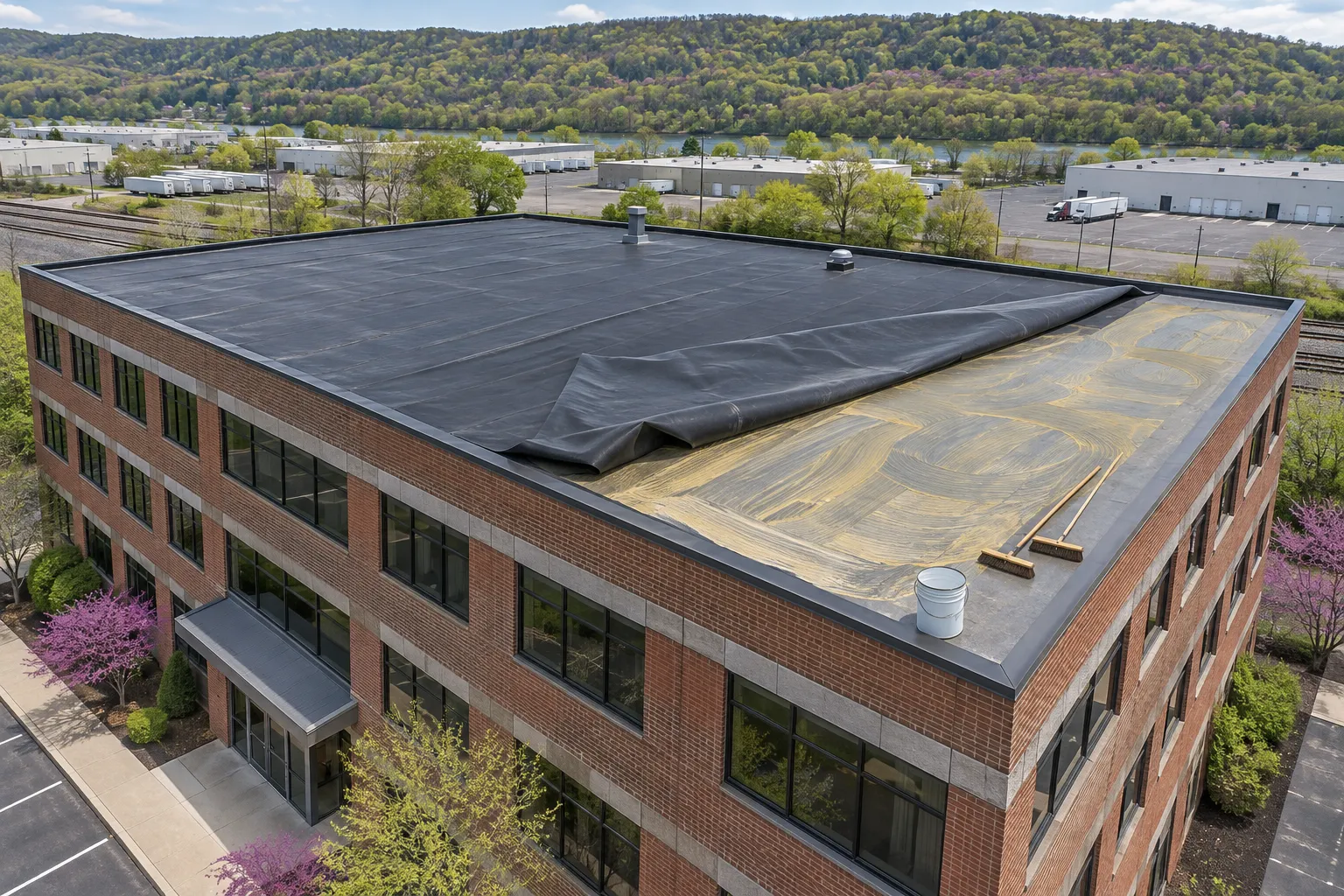
Black EPDM sheet folded back over fresh bonding adhesive on a brick office building roof

EPDM Roofing

Rubber membrane replacement for offices and older brick buildings, adhered or fastened, with taped laps and new drain flashing. Ballasted roofs are checked under the stone first.

Where Water Gets In
  • Taped laps opening after freeze cycles
  • Clamping rings at roof drains
  • Punctures from dropped tools and debris
EPDM roofing details
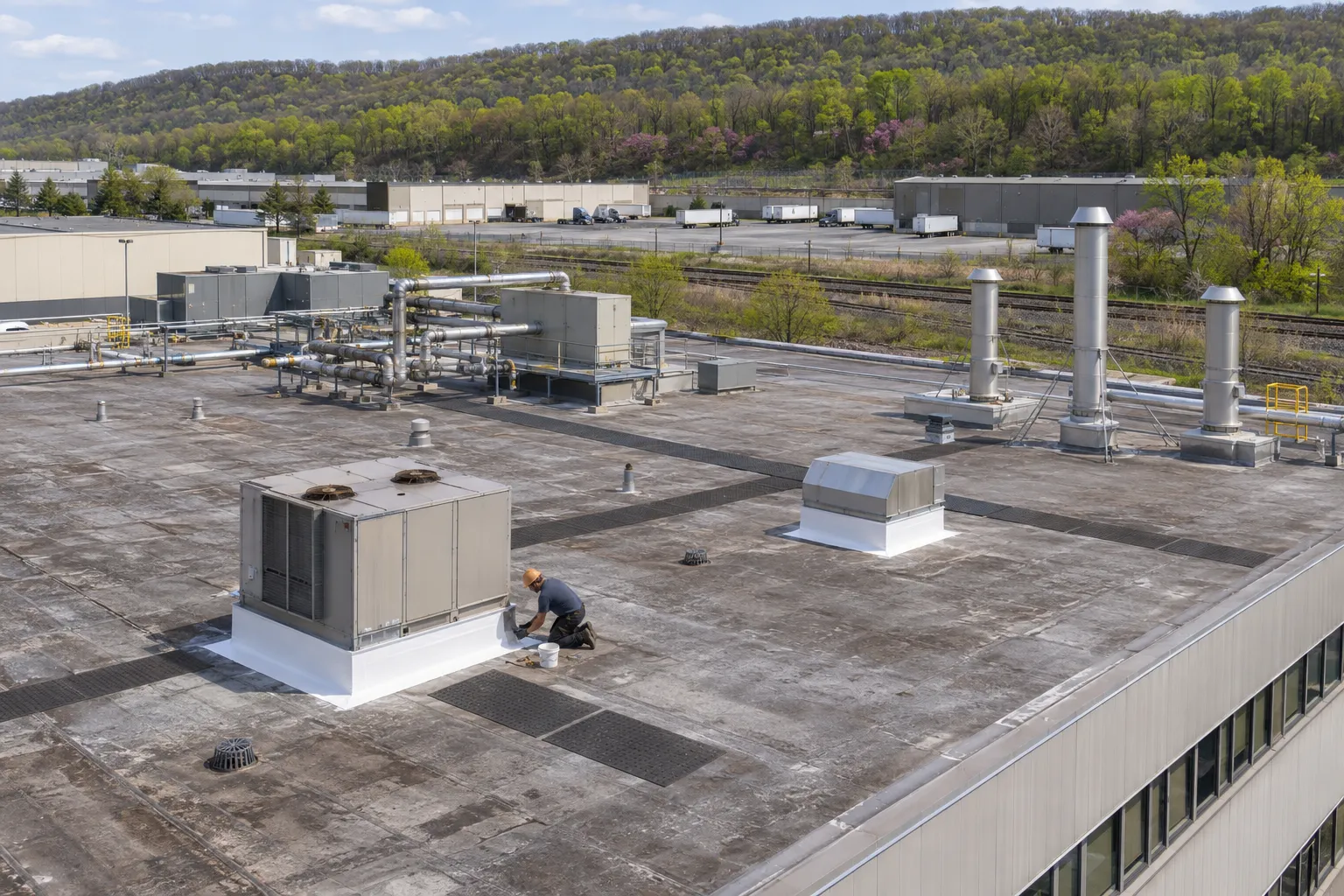
Roofer flashing a rooftop unit curb on an industrial flat roof with exhaust stacks and ducts

Industrial Roofing

Plant and shop roofs replaced in sections around exhaust, interior humidity, and the production schedule underneath, with equipment isolated before tear-off.

Where Water Gets In
  • Collars around exhaust stacks
  • Equipment curbs and pipe supports
  • Service paths worn through the membrane
Industrial roofing details
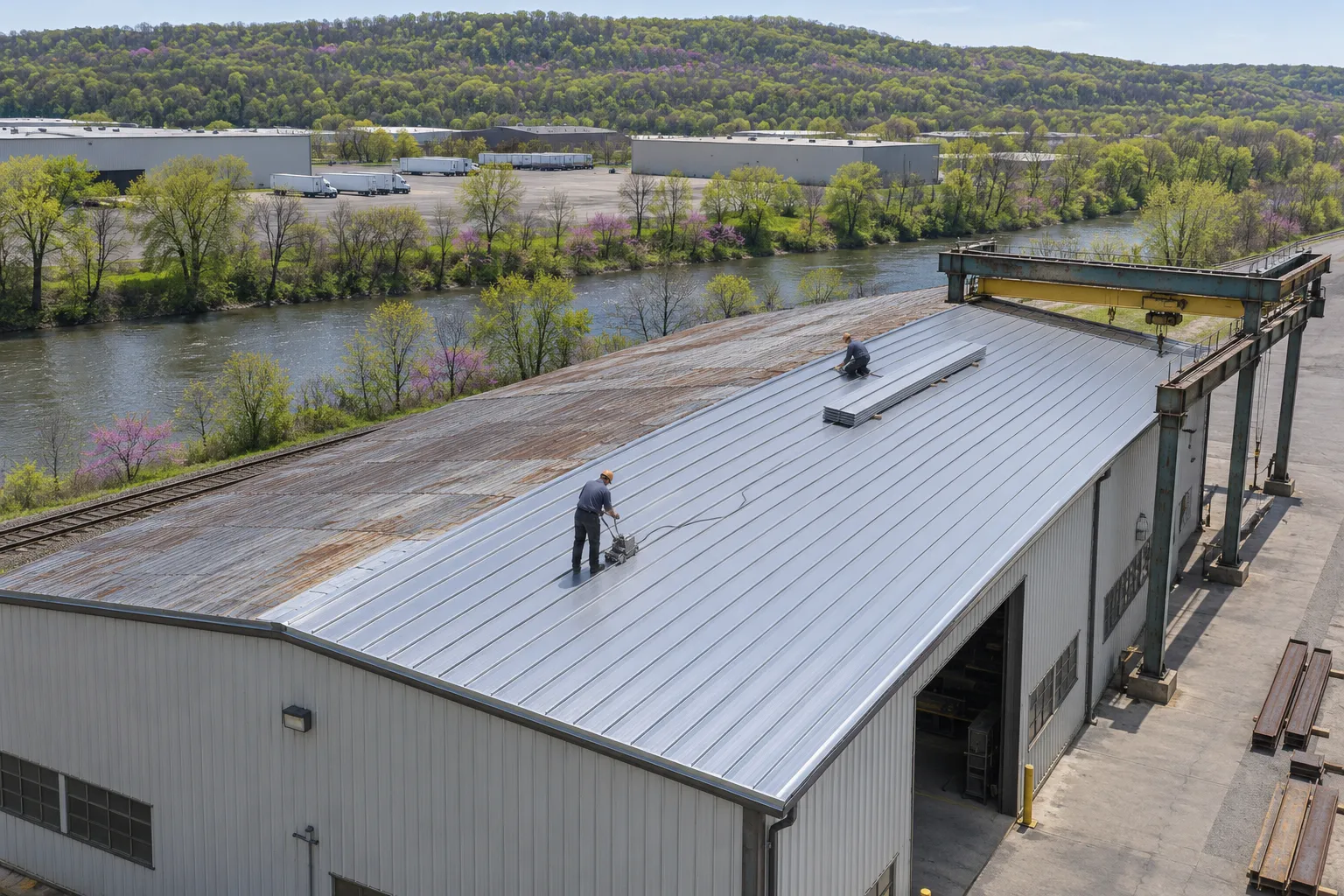
Roofers installing new standing-seam metal panels over an old rusted metal roof on a steel building

Commercial Metal Roofing

Standing-seam and ribbed panel installs, repairs, and retrofit framing on steel and brick buildings after structural review. Wall flashing is rebuilt where panels meet brick.

Where Water Gets In
  • Panel end laps and ridge closures
  • Rusted fasteners on older panels
  • Wall flashing where panels meet brick
Metal roofing details

Which System Fits Which Roof

A quick side-by-side of the four roof systems we install. The inspection on your roof settles the choice for any one building.

SystemCommon BuildingsSeams or JointsWatch For
TPOWarehouses, retail strips, and offices with rooftop unitsHot-air welded laps, probed after weldingFoot traffic and dropped parts around rooftop units
EPDMOffices and older brick buildings with open roof fieldsPrimed seam tape rolled into the lapsLap edges and drain flashing after freezing
Industrial AssembliesPlants, fabrication shops, and process buildingsMembrane and flashing chosen for the exposureExhaust residue, equipment curbs, and interior moisture
Metal PanelsSteel shops, storage buildings, and pitched wingsStanding seams on clips or lapped ribsFasteners, end laps, and flashing at brick walls

Not Sure Which System Fits?

Most owners start unsure. A roof walk and a few cores show which systems make sense for the deck, drains, and equipment you already have.

Schedule Your Free Inspection
What To Have Ready
  • Building address
  • Current roof type, if known
  • Rooftop equipment
  • Any leak history

How Every Roof System Gets Installed

The steps stay the same across TPO, EPDM, industrial, and metal work, whatever the size of the roof.

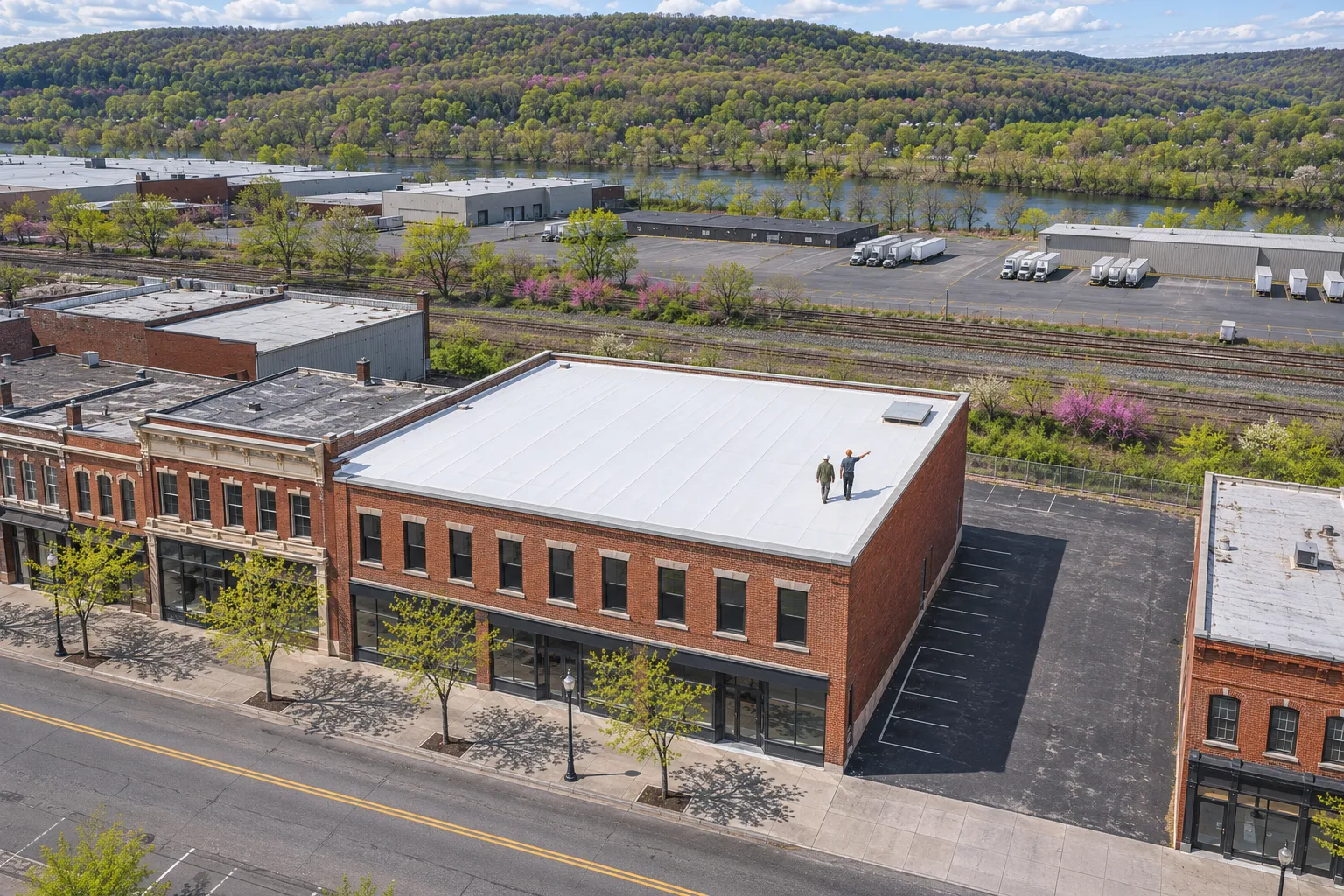
Wide view of a brick commercial block with a white flat roof and two people walking it
  1. 1

    Inspect Your Roof

    Day 1

    Cores, a moisture check, and a walk of every edge, drain, and curb show what the replacement has to cover. We photograph what we find for the proposal.

  2. 2

    Pick the System and Layers

    Scope

    The proposal lists the system, insulation, attachment, and each flashing detail in plain terms, along with any allowance for deck repairs found during tear-off.

  3. 3

    Set Up Access

    Stage

    Roof hoisting spots, debris chutes, and interior protection are placed around how the building runs, keeping entrances and docks clear.

  4. 4

    Replace in Daily Sections

    Build

    Each roof area opened in the morning is closed watertight by the end of the day, with temporary tie-ins where old and new roof meet.

  5. 5

    Test and Walk Through

    Close

    Seams, drains, and flashing are checked, debris is cleared from the roof and grounds, and the owner walks the roof before we leave.

Commercial Roof Replacement in Bethlehem

Replacement is the right call when repairs stop holding. These signs tell us a roof has reached that point.

  • Wet Insulation Across Large Areas

    Cores that find water in many places mean the board under the membrane has to come off. Wet board also hides deck damage until it is removed.

  • Seams Failing Faster Than Repairs

    When laps reopen soon after each patch, the sheet itself has aged out, and every new repair joins material that keeps getting weaker.

  • Deck Damage Under Long Leaks

    Rust or rot in the deck needs repair that only a tear-off exposes. Soft spots underfoot near old leaks are the usual warning.

  • Two Roofs Already in Place

    Buildings with stacked old roofs usually need a full tear-off before anything new goes on, since extra layers add weight and hide water.

  • Edge Metal Pulling Off in Wind

    Loose coping and gravel stop on an aging roof usually travel with a worn membrane, so both are renewed together.

  • Many Patched Penetrations

    A roof covered in mastic patches at pipes and curbs has more weak points than repairs can keep up with.

  • Drainage That Repairs Leave Unchanged

    Tapered board installed during a replacement corrects slope problems that patches leave behind, sending water to the drains instead of letting it sit.

Questions About Commercial Roofing Services in Bethlehem

How owners choose between systems and decide on replacement.

When to Replace a Commercial Roof Instead of Repairing It?

Replace when wet insulation spreads across the roof, when seams fail faster than repairs, or when the deck needs work only a tear-off can reach. A roof with one bad detail and dry layers is a repair job.

Do You Handle Commercial Roof Replacement in Bethlehem Year-Round?

Yes, with planning for the season. Winter work depends on safe access and on conditions the chosen system accepts, and each opened area is closed before the crew leaves for the night.

Can Different Systems Go on One Building?

Yes. A warehouse might get TPO on the main roof and metal panels on a pitched wing. Each area gets the system that fits its slope and use.

Can Tenants Stay Open During a Reroof?

In most buildings, yes. Sections are opened one at a time, noisy tear-off can be timed around business hours, and interior protection goes up under each open area.

What Does a Proposal From You Include?

Tear-off depth, insulation, attachment, membrane or panel, flashing at each detail, access and protection, and any allowance for hidden deck damage.

How Long Does a Replacement Take?

Roof size, the number of layers coming off, and deck repairs set the schedule. The proposal lists sections in order, and weather can shift the dates.

Do New Roofs Need Upkeep?

Yes. Twice-yearly walks to clear drains, check seams, and look at curb flashing catch small problems before they reach the insulation.

Can You Match an Existing Roof on an Addition?

Usually. We identify the existing system and tie the new area into it with compatible flashing at the joint between old and new.

See every question on the FAQ page

Book Commercial Roofing Services in Bethlehem

Tell us about the building and the roof on it now. We will inspect it and recommend the system and scope that fit.

Call Us (835) 214-7704