Stains Over Storage Racks
Leaks over stock show up as stains on boxes and ceiling deck long after water entered at a seam.
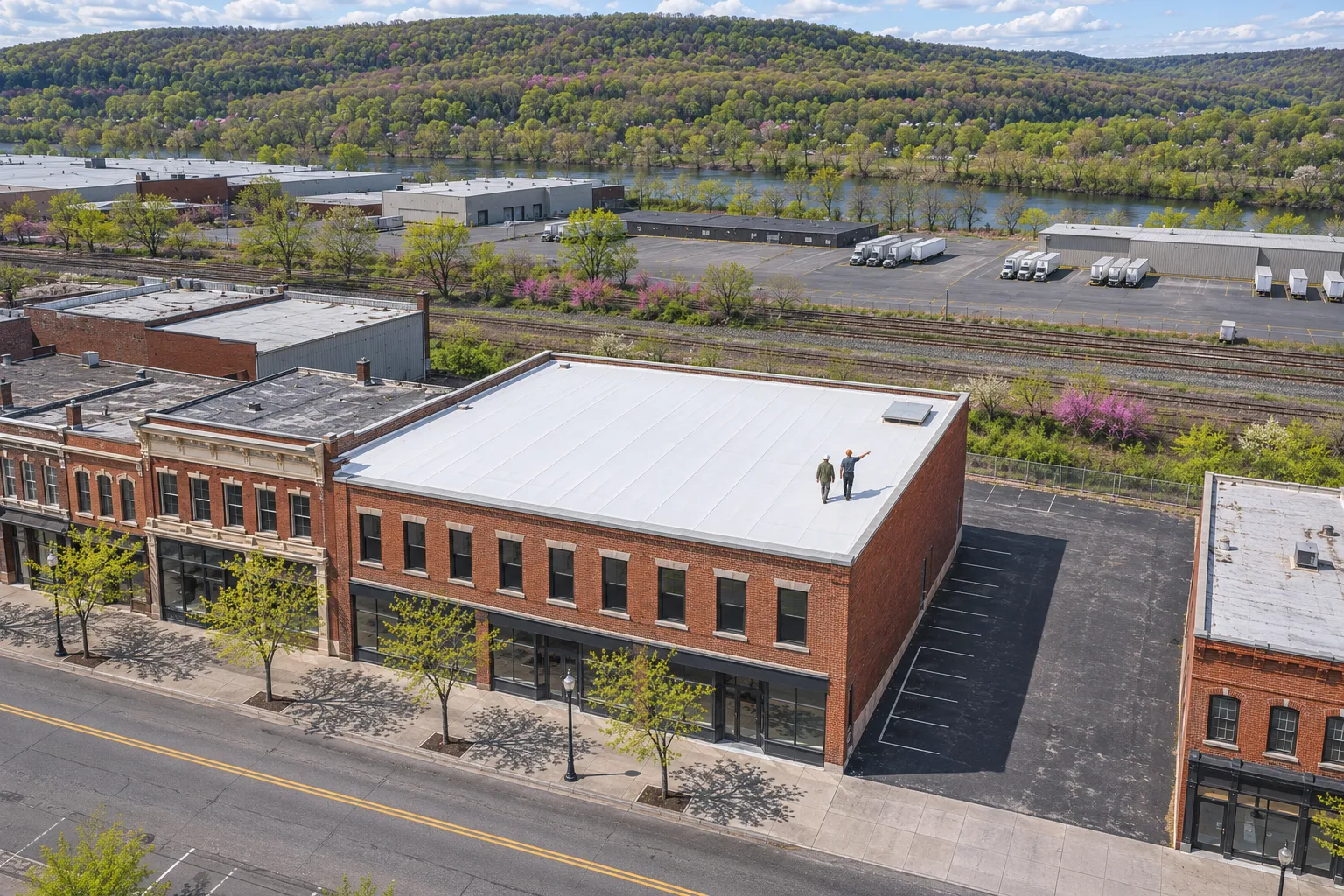
As a Perkasie commercial roofing contractor, we replace warehouse and shop roofs while trucks keep loading and stored goods stay covered.
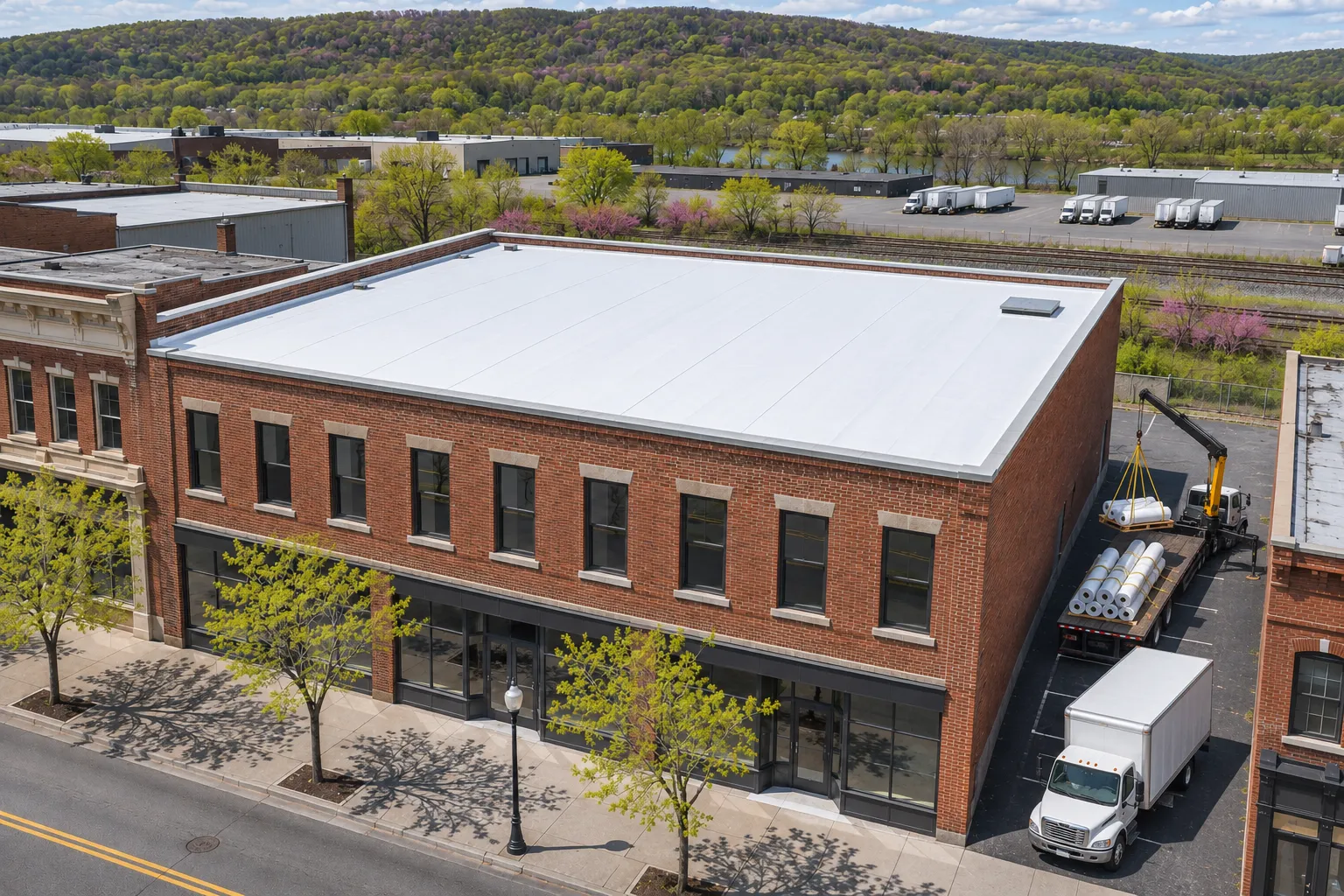
Perkasie commercial roofing on a full warehouse runs at the pace of the stock below and the trucks at the docks.
On a stocked building, the work starts with three checks: moisture in the old layers, the condition of the deck, and how water leaves the roof. Those findings decide what stays and how much has to come off.
Deliveries and stored contents set the rest. We plan hoisting away from the docks and cover racks under each open section, so the warehouse keeps shipping while the roof is replaced above it.
Warehouse roofs show the same few warning signs before replacement.
Leaks over stock show up as stains on boxes and ceiling deck long after water entered at a seam.
Steel deck under long-running drain leaks rusts and flexes underfoot.
Wide spans sag over time and keep water in the field between drains.
Wind lifts edge metal along the dock wall where the building sees the most weather.
Warehouse fans carry layers of patch that crack each winter.
Mastic layered on mastic hides the original failure and traps water in the board.
A new roof answers the failures that put stock at risk.
Leaks travel through wet board and land far from the opening.
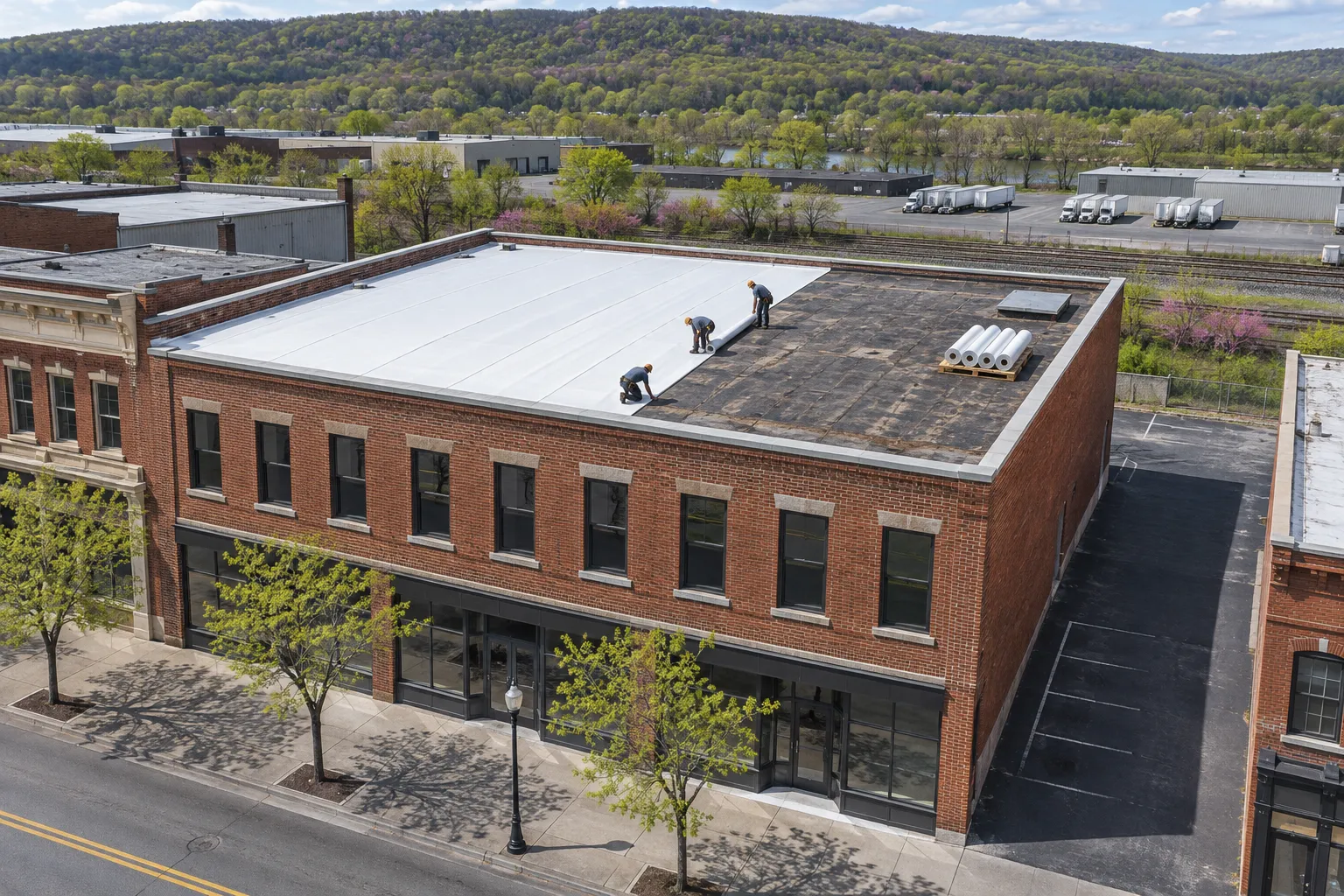
Wet layers are removed and the new membrane is closed off each day, keeping stock dry.
Sagging spans leave ponds that wear the surface.
Tapered insulation moves water off the middle bays and toward the drains.
Loose metal over the docks lets wind peel the membrane back.
Edge metal over the docks is refastened to new blocking and sealed to the field.
Exhaust fan curbs carry years of patching that splits every winter.
Fan curbs are rebuilt where needed and wrapped with new membrane flashing.
Four roof systems cover the warehouses and shops we see in Perkasie.
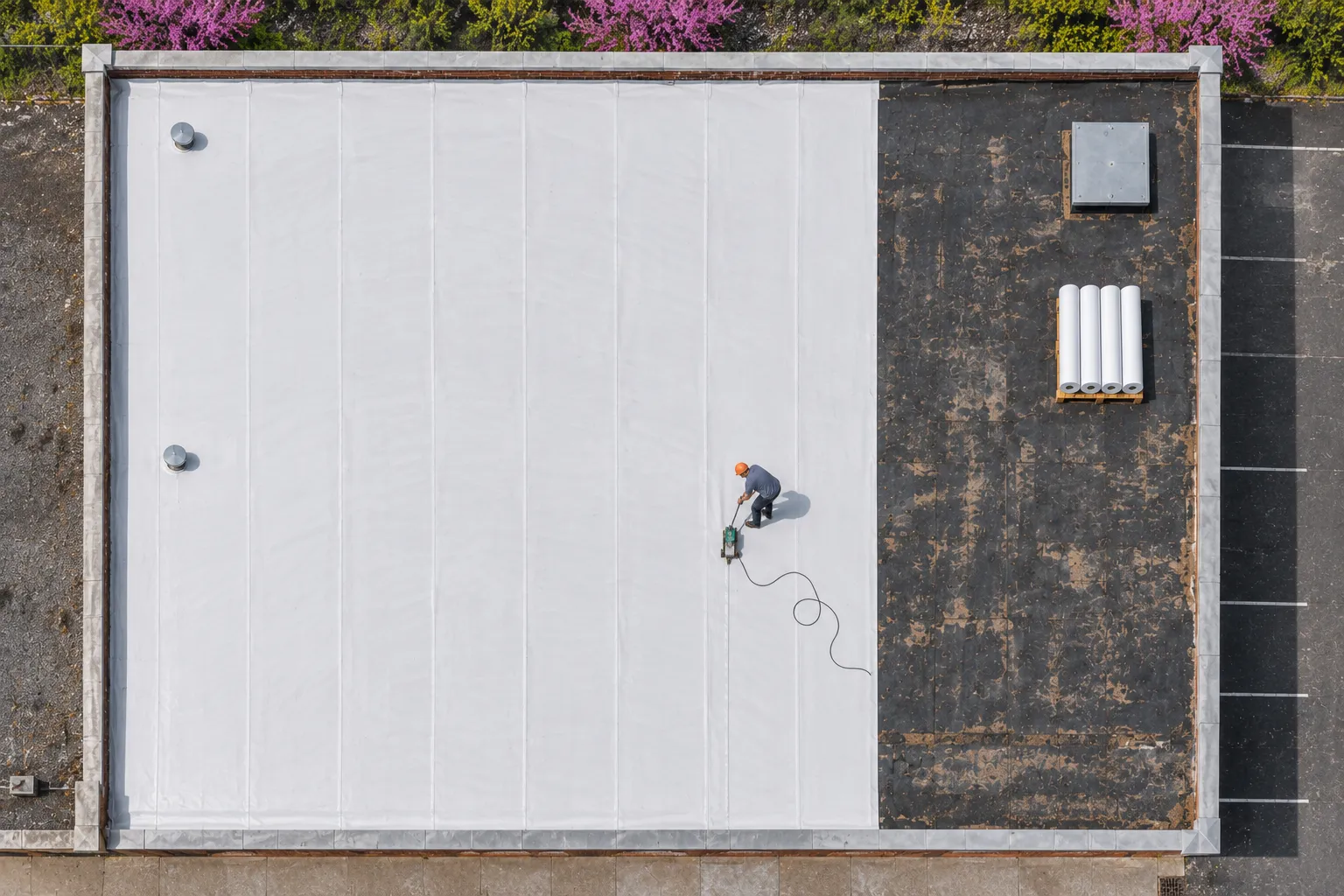
Welded white membrane works well on wide warehouse roofs, with walk pads leading to the fans and units.
Where Water Gets In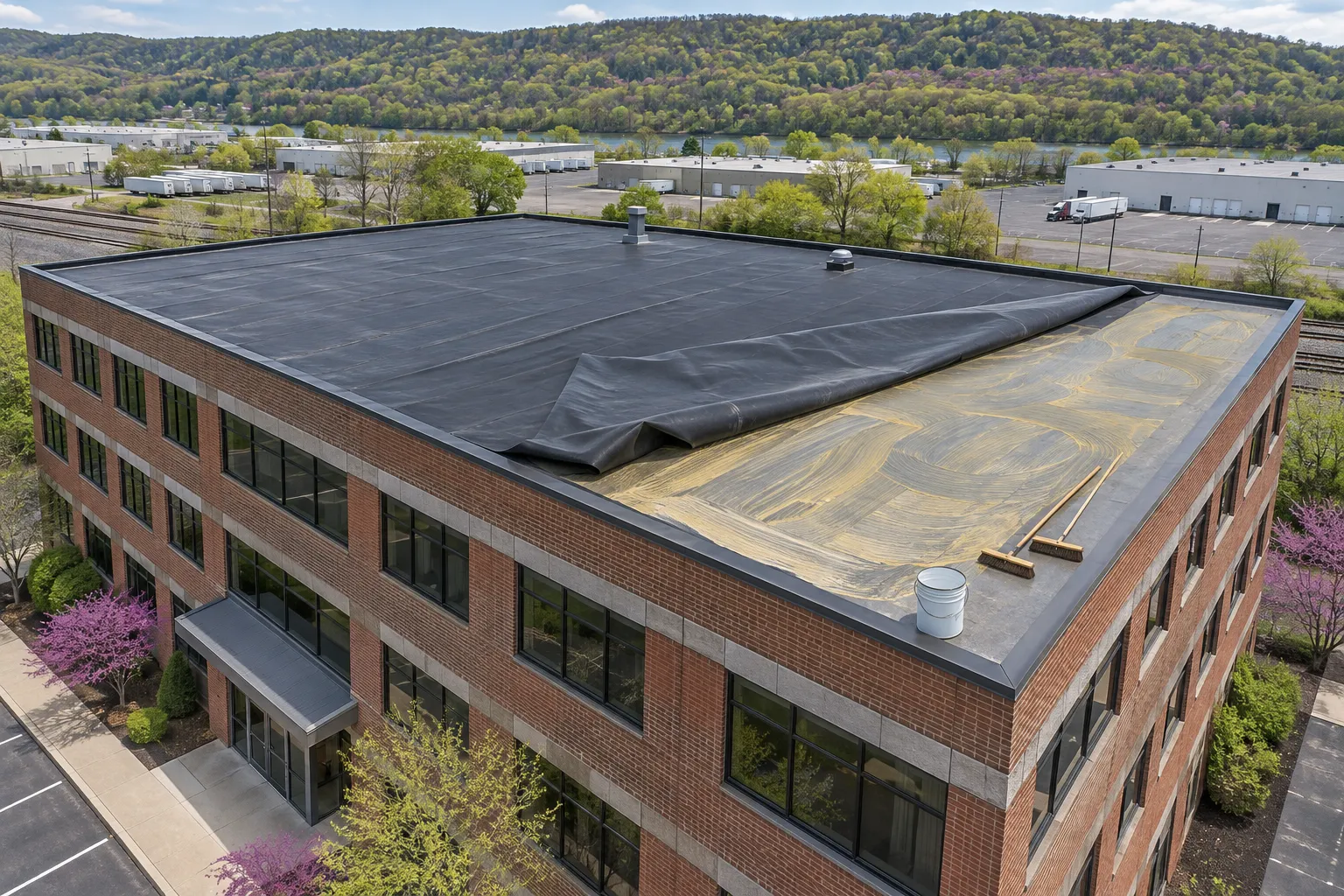
Rubber sheet suits shop and office wings attached to the warehouse, especially where rubber is already in place.
Where Water Gets In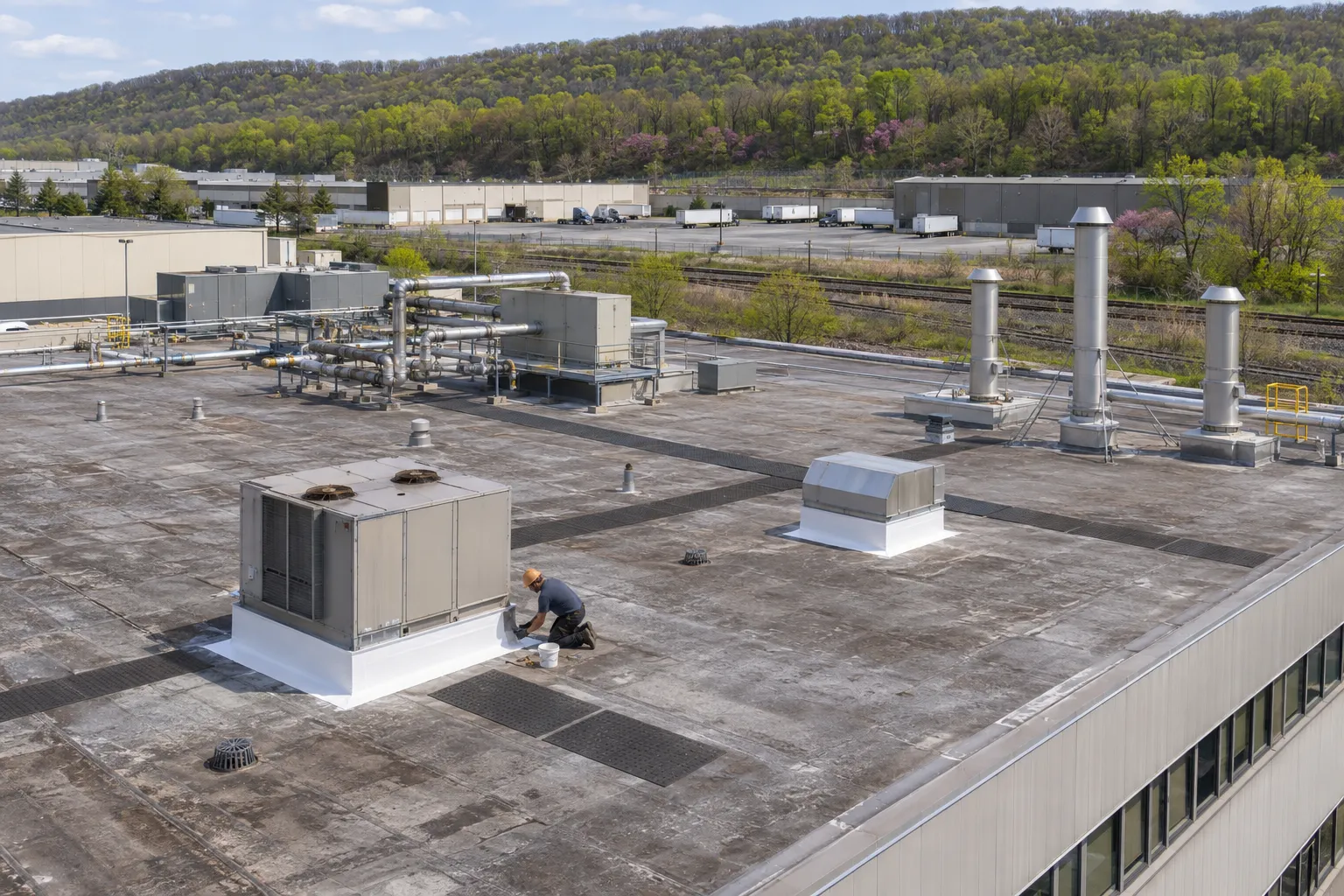
Buildings with light manufacturing beside storage need the reroof planned around both kinds of work.
Where Water Gets In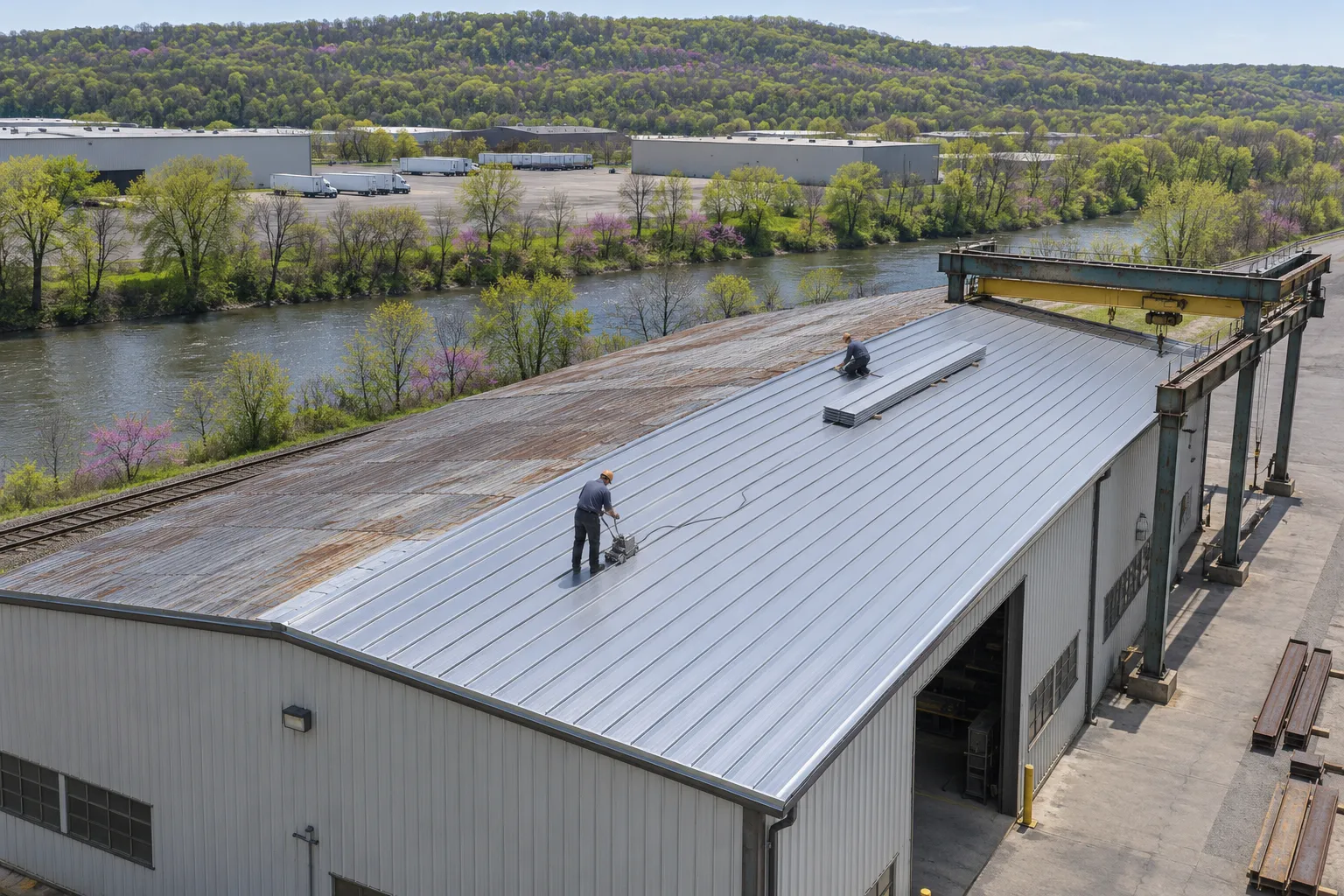
Pole-style storage and pitched steel buildings get new ribbed or standing-seam panels.
Where Water Gets InEvery week of leaking over racks puts goods at risk. Book a visit and we will find the wet layers and plan the work around your trucks.
Schedule Your Free InspectionWarehouse jobs move bay by bay, matched to the delivery schedule.
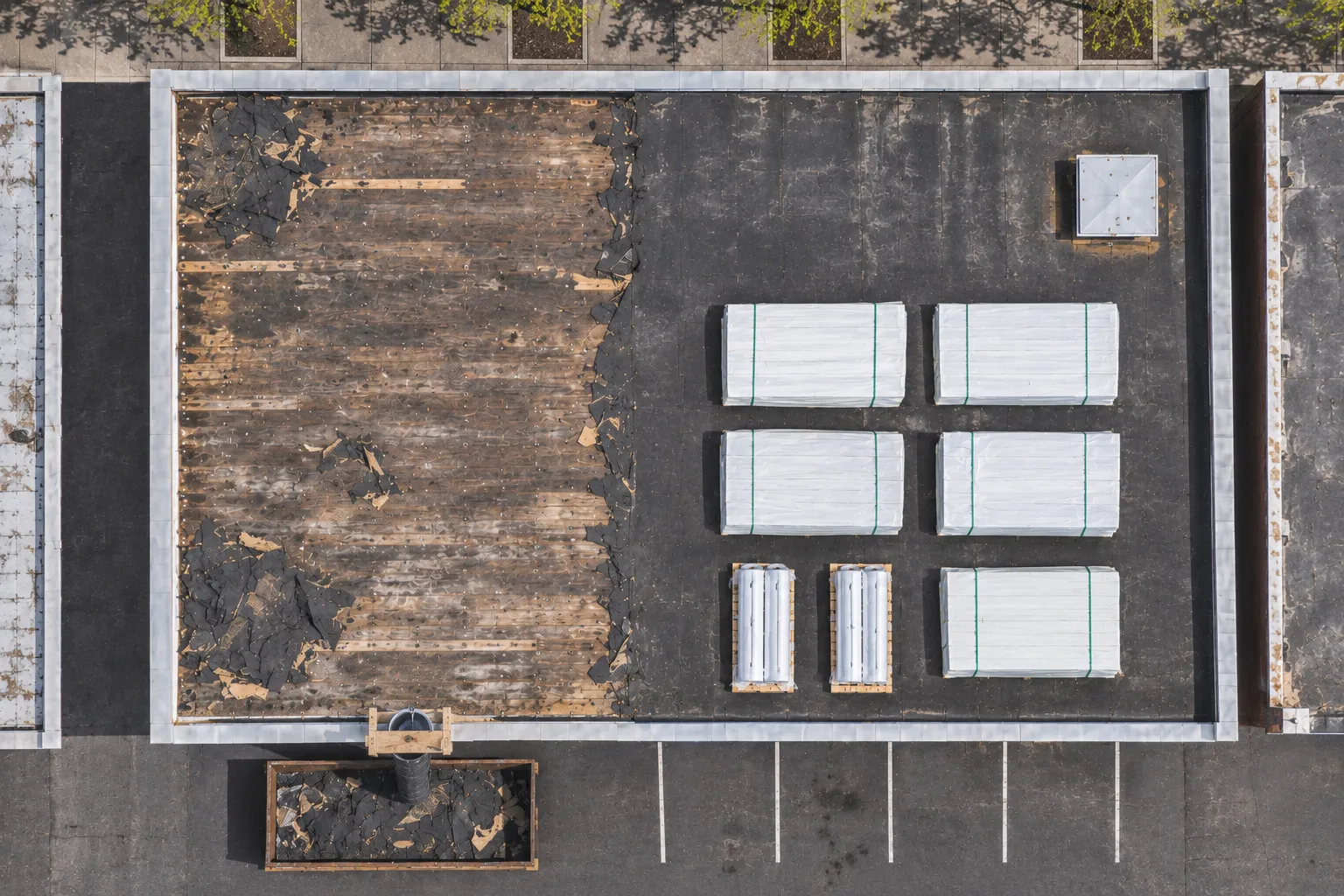
Core cuts over storage and near drains show which layers are wet and how much tear-off the roof needs.
We set the order of sections so open roof never sits above active docks during shipping hours.
Racks under each open roof bay are covered before work starts on that section.
Old layers come off, deck repairs are made, and new insulation and membrane close the bay before the crew leaves.
Exhaust fans, drains, and dock wall edges are flashed before a final walk with the warehouse manager.
Does your building sit near Perkasie? We take commercial roofing work in these towns too. Somewhere else? call us or send us a message.
Home base for our commercial roof work.
Storefronts and offices with older edge metal.
Office roofs crowded with rooftop units.
Flat roofs with low spots and slow drains.
Roofs with steady service traffic to equipment.
Answers for warehouse and shop owners in Perkasie.
Look at moisture, deck condition, and drainage before picking a membrane. We also check delivery access and how stored goods will be protected. Those findings decide what can stay and how the work proceeds, so the roof choice follows a clear picture of the building and its operation.
Roof size, the layers coming off, deck repair, insulation, edge metal, and flashing set most of it. Working around docks and covering stock adds planning time that shows up in the proposal.
Yes, from single shops to large distribution buildings. Bigger roofs are split into sections, and each section is opened and closed on its own schedule.
In most cases, yes. Hoisting and staging stay away from the docks during shipping hours, and the bays over the docks are scheduled for quieter times.
We work across Perkasie and the five other towns in our area. Call with the address and we will set a time to walk the roof.
Bay size, layers coming off, and deck repairs set the pace. The proposal lists the sections and their order so the warehouse can plan around them.
Usually not. Racks under open sections are covered, and only stock directly under deck repairs gets shifted, with notice ahead of time.
Send the warehouse address and your delivery hours. We will check the roof and plan sections that keep your docks working.