If Your Roof
Has One Old Layer Over a Dry Deck
Cores show dry board, so the tear-off can stop at a clean, firm surface.
Start WithFull TPO replacement

As a Bethlehem TPO roofing contractor, we install white thermoplastic membrane over new insulation on warehouses, offices, and brick commercial blocks.
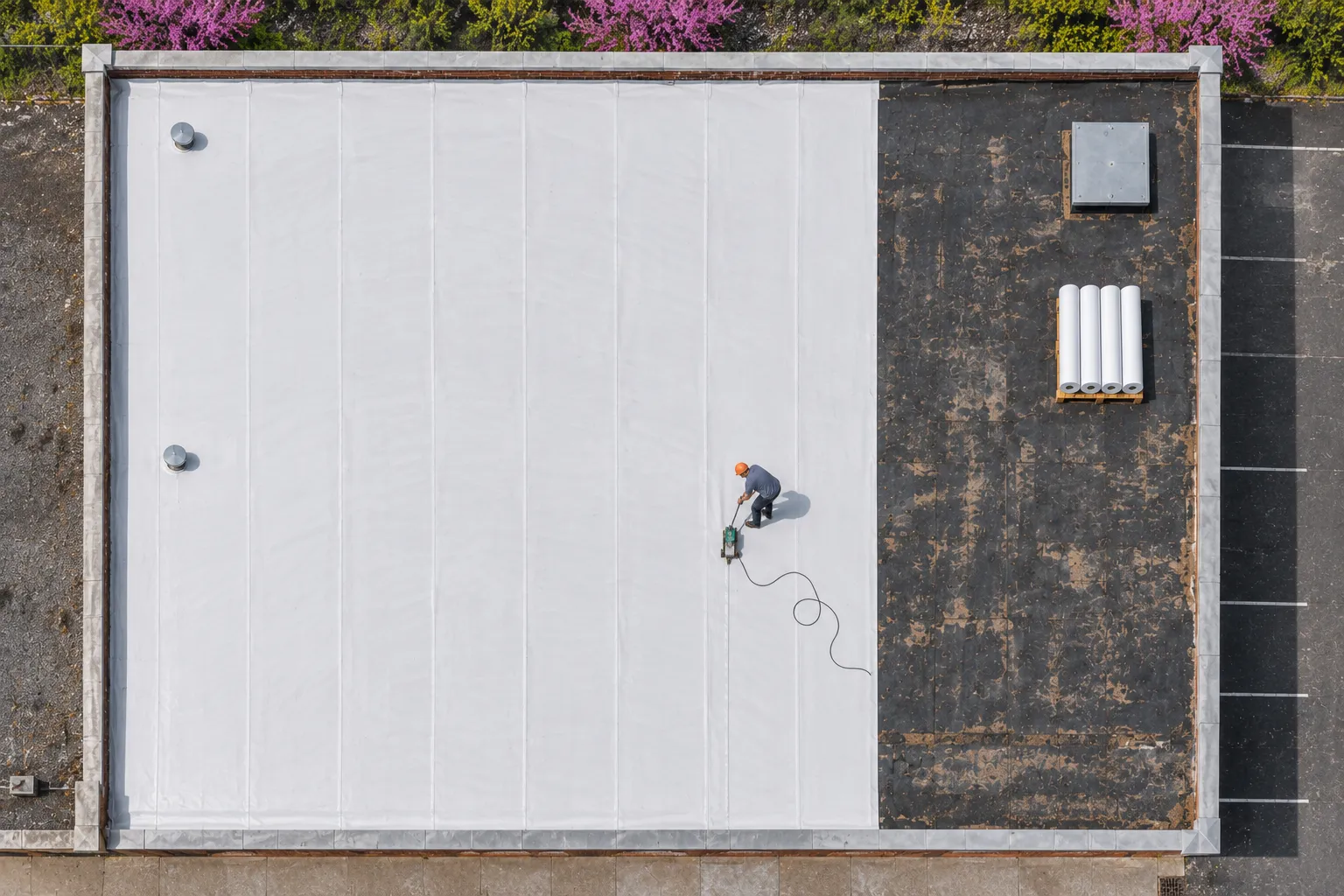
Bethlehem TPO roofing suits most low-slope roofs, but the layers underneath decide how the job is built. Start with what your roof looks like today.
Cores show dry board, so the tear-off can stop at a clean, firm surface.
Busy roofs need planned walk paths and extra flashing at every support.
Wet sections come out first, and only dry layers are considered for staying.
A split weld or loose curb wrap on a young roof points to a targeted fix first.
These conditions show up on aging single-ply roofs across the Lehigh Valley and shape the replacement scope.
Cold welds from the original install open first, often along the long field seams near the parapet.
Spongy areas near curbs and drains usually mean the insulation took on water through a failed detail.
Shrinking sheet tugs on edge metal and wall flashing until corners lift.
Inside and outside corners on HVAC curbs crack when the original patches dry out.
Standing water around clogged or high drains wears the surface and hides small punctures.
Dropped screws and tool traffic leave small holes where technicians walk to the equipment.
The membrane is one choice among several. These are the decisions written into every TPO proposal we prepare.
| Decision | What We Choose Between | What Drives It |
|---|---|---|
| Tear-Off Depth | Remove to the deck, or keep a dry existing layer | Core results and the number of layers already on the roof |
| Attachment | Mechanically fastened or fully adhered membrane | Deck type, wind exposure, and the surface the sheet goes on |
| Insulation | Flat board, tapered board, or both | Where water collects now and the drain heights |
| Membrane Thickness | Standard or heavier sheet | Foot traffic, rooftop equipment, and the owner's plans for the building |
| Walkways | Walk pads on set routes, or none | How often technicians reach each unit |
Each failure below has a direct answer in the new assembly.
Glued or poorly welded laps let water travel under the sheet before it shows inside.
Fresh laps are heat-welded on site and probed along their full length before the crew moves on.
Water-logged insulation stops insulating and keeps the deck damp through the winter.
Dry board goes back at the thickness chosen for the building, under a white reflective surface.
Layers of patch around units crack each winter and let water down the curb wall.
Each curb gets new membrane flashing welded to the field sheet with formed corners.
Pulled seams at the parapet and lifted corners usually mean an aging single-ply roof. Schedule a visit and we will check the welds and the board under them.
Schedule Your Free InspectionTPO work moves section by section so the building stays dry each night.
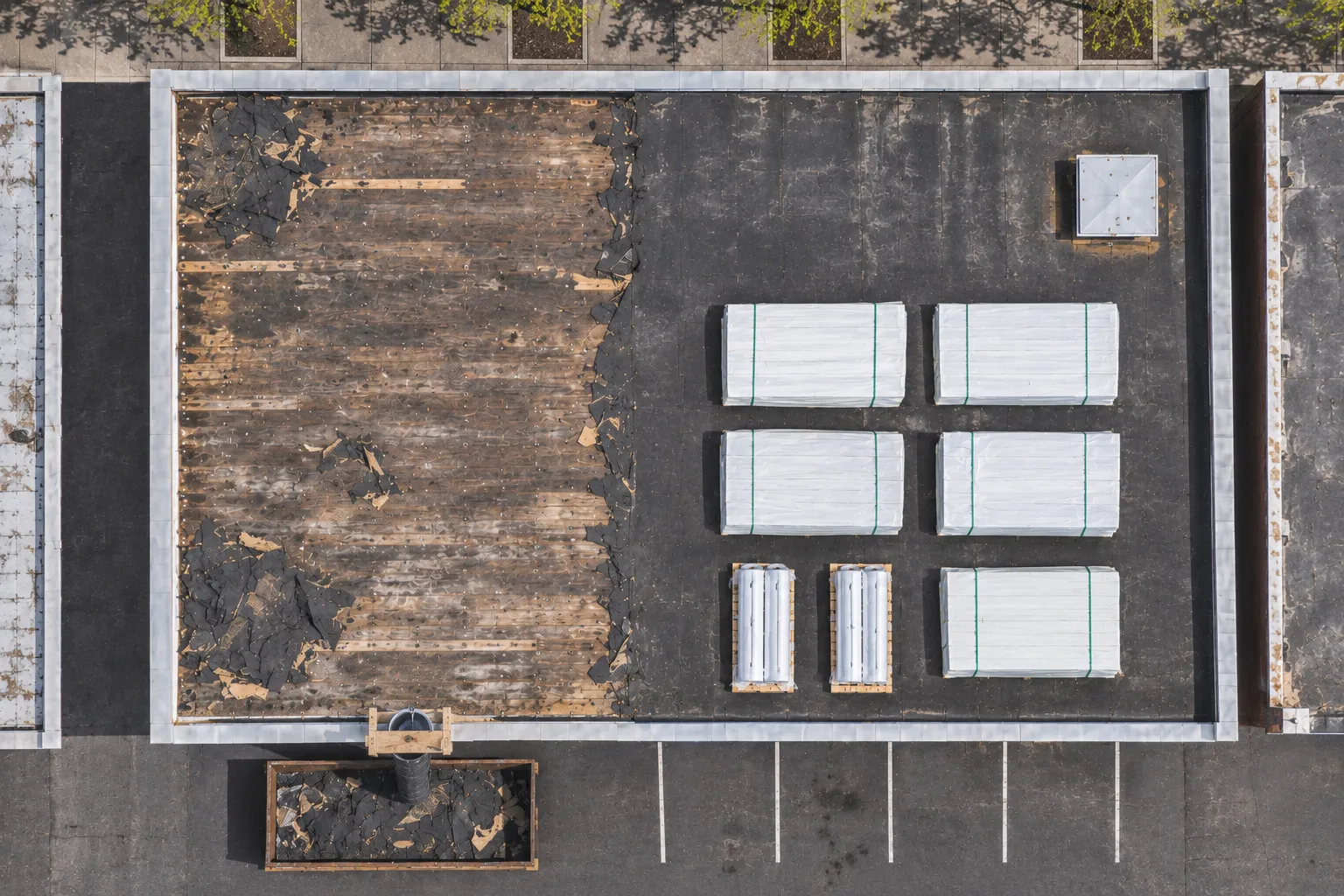
Core cuts and a moisture check tell us which layers come off and what the new insulation has to make up.
Membrane rolls and board are hoisted to set spots, and interior areas under open sections are protected.
Each section comes off to the depth the cores called for, and any soft deck is repaired before new board goes down.
Sheets are fastened or adhered, laps are hot-air welded, and every seam is probed once it cools.
Curbs, pipes, drains, and edge metal are flashed and welded into the field before a final walk with the owner.
Some buildings suit another system better. These are the other roofs we install.
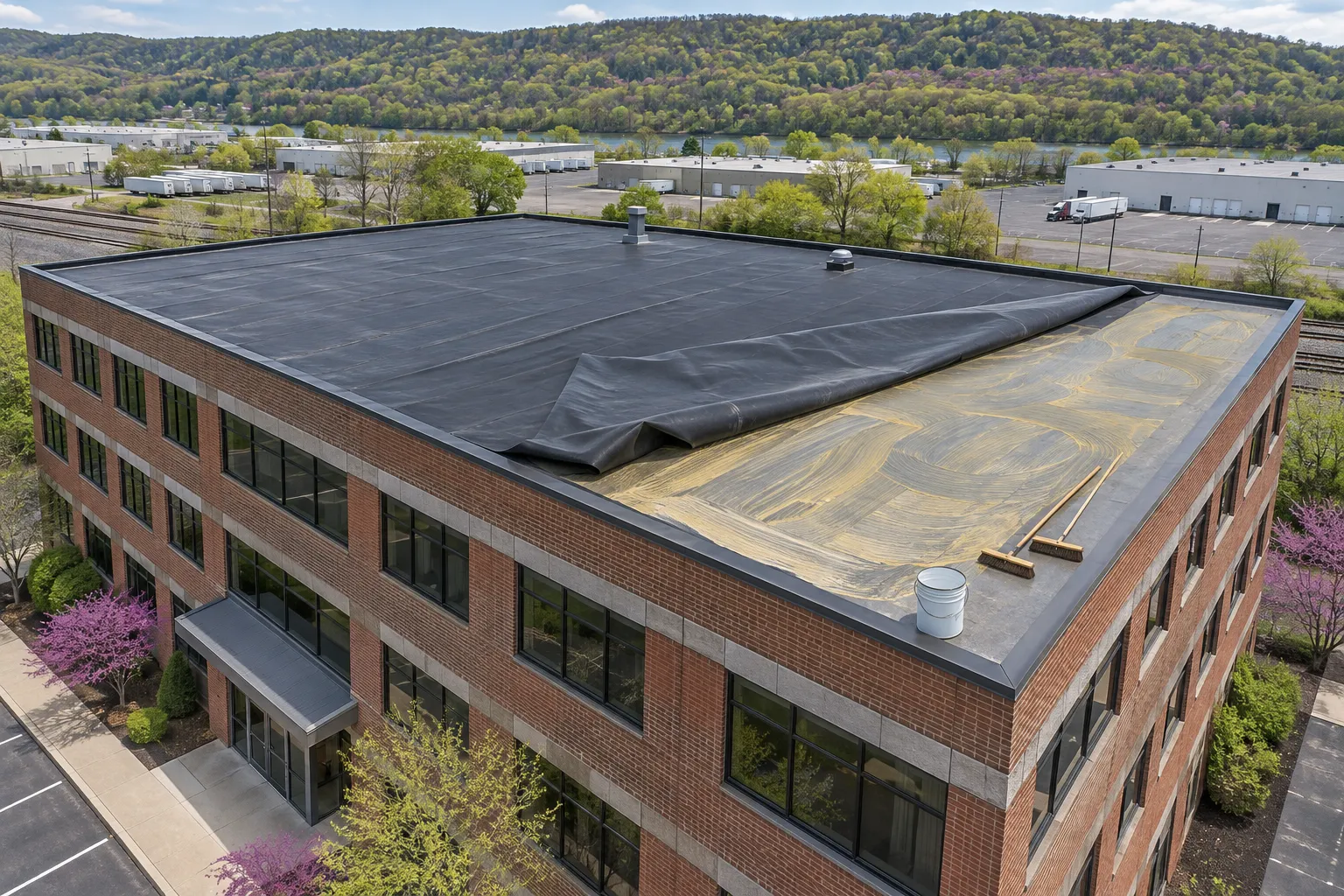
Black rubber sheet suits roofs where the owner prefers adhered rubber, or where an older EPDM roof is being replaced like for like.
Where Water Gets In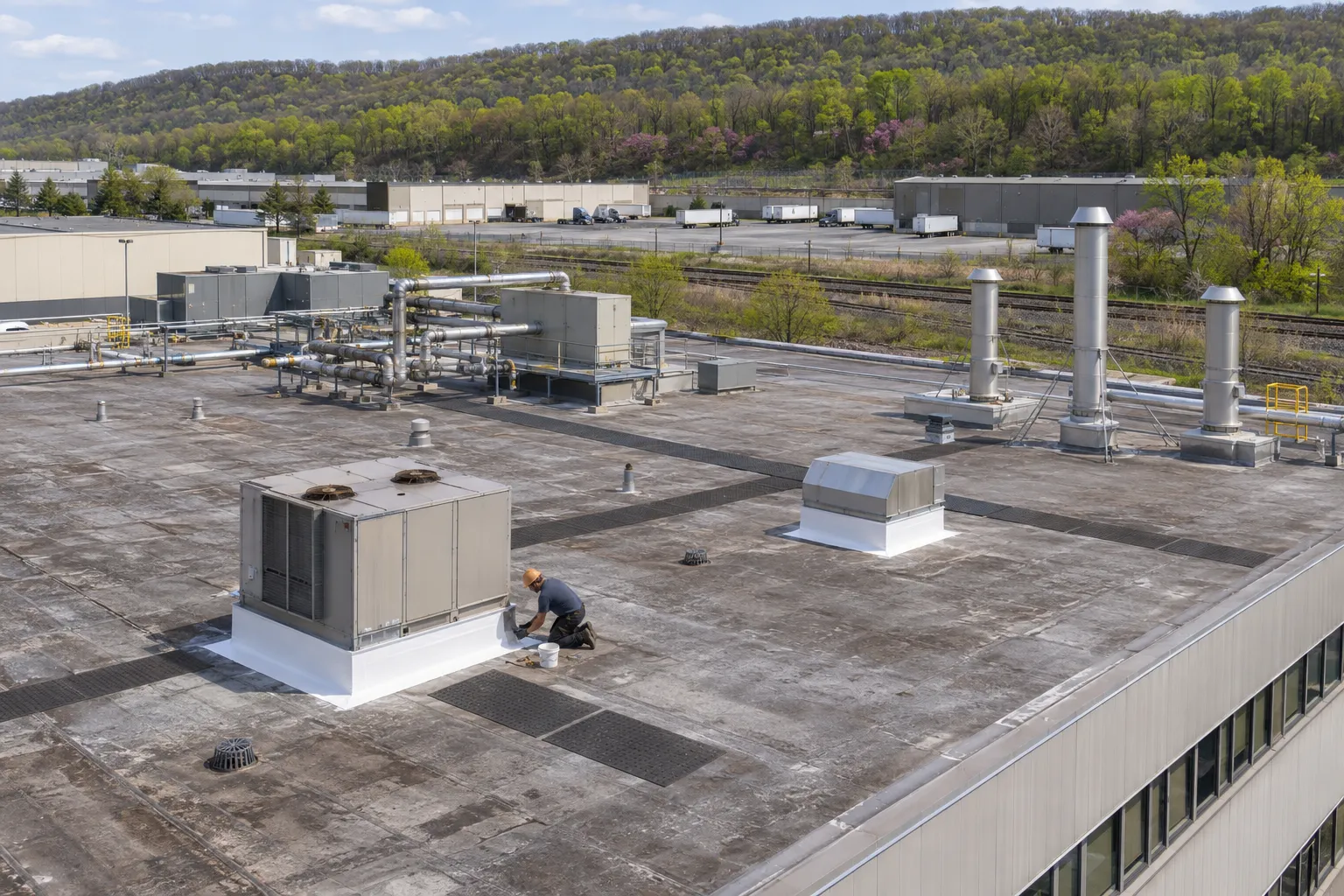
Plants with stacks, process humidity, and tight production windows need a reroof plan built around the floor below.
Where Water Gets In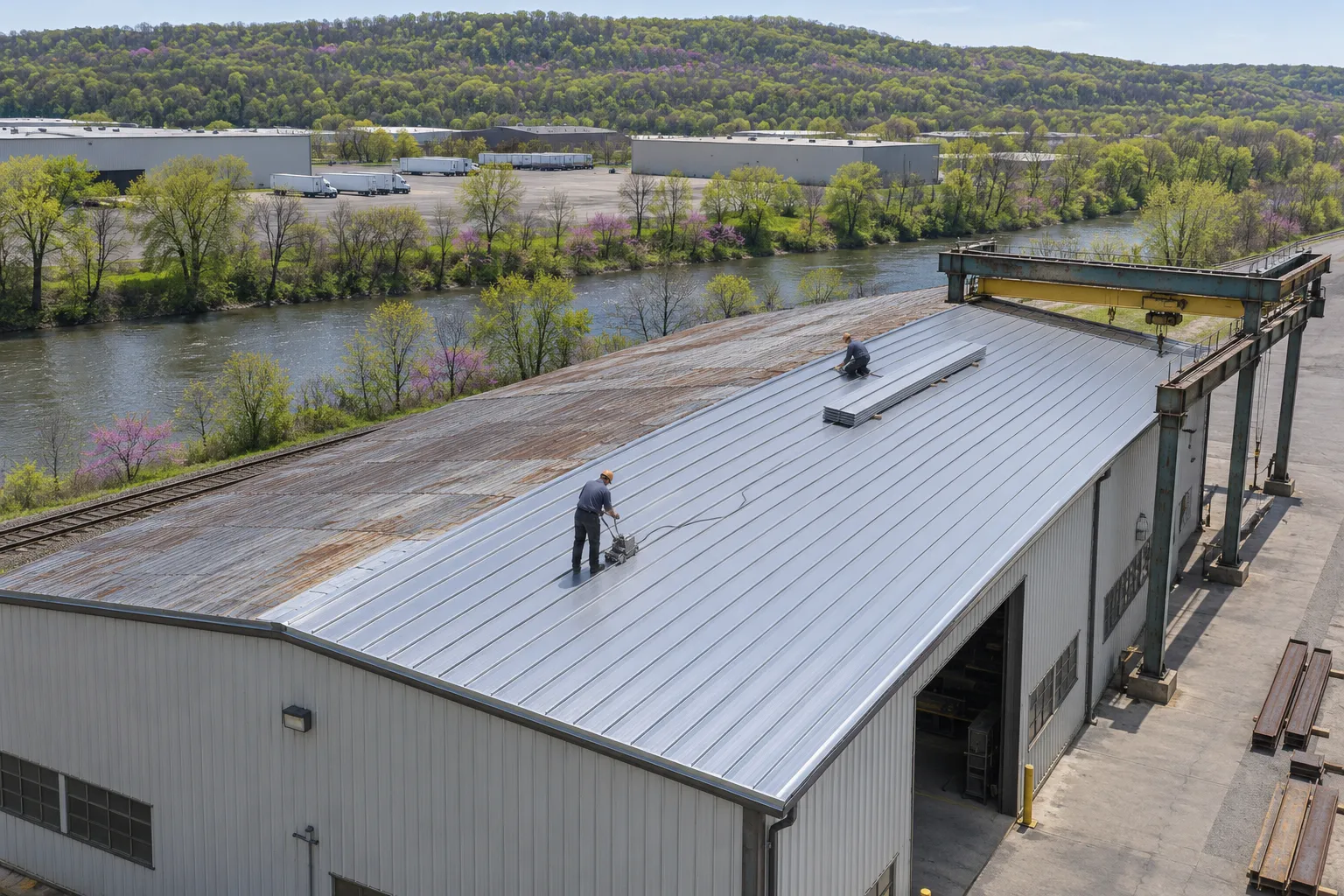
Pitched steel buildings and retrofit slopes over flat roofs get standing-seam or ribbed panels in place of a membrane.
Where Water Gets InAnswers about single-ply roofs on commercial buildings.
TPO is a thermoplastic polyolefin membrane whose seams are joined with hot air. On a commercial roof it sits on insulation and a substrate chosen with it, so the sheet is one layer of a planned assembly. Curb and edge flashing tie into it, and drains and service paths set how the rolls are laid out.
The roof itself sets the price. We look at the area, membrane thickness, insulation, how many old layers come off, deck repair, edge metal, flashing, and rooftop units. Access, staging, and the season matter too, especially when work has to fit around operations inside.
Sometimes, once the old roof is proven dry. Wet insulation or a weak deck has to be found and dealt with first, and the attachment has to reach something solid. Covering damp layers seals the old problem under new membrane and makes later repairs harder to trace.
Cold surfaces call for checking the membrane maker's prep, welding, and attachment requirements before work goes on. We look for frost and moisture and run test welds in the real conditions. Adhesive limits apply where adhesives are used, and the schedule waits for conditions that give a good weld.
Every lap is probed with a seam probe once it cools, and suspect spots are rewelded. Test welds at the start of each day confirm the welder settings match the air temperature and the sheet.
Regular foot traffic wears any membrane, so set routes get walk pads and the field stays clear. A heavier sheet is worth pricing on roofs with many units and frequent service calls.
Share the address and what you see on the roof. We will cut cores, check the welds that are there now, and write up the TPO assembly that fits.