If Your Roof
Is Rubber With Laps Opening Everywhere
Widespread lap failure on an aged sheet calls for a new membrane instead of more tape.
Start WithFull EPDM replacement
As a Bethlehem EPDM roofing contractor, we replace and install rubber roofs on offices, older brick buildings, and low-slope commercial blocks.
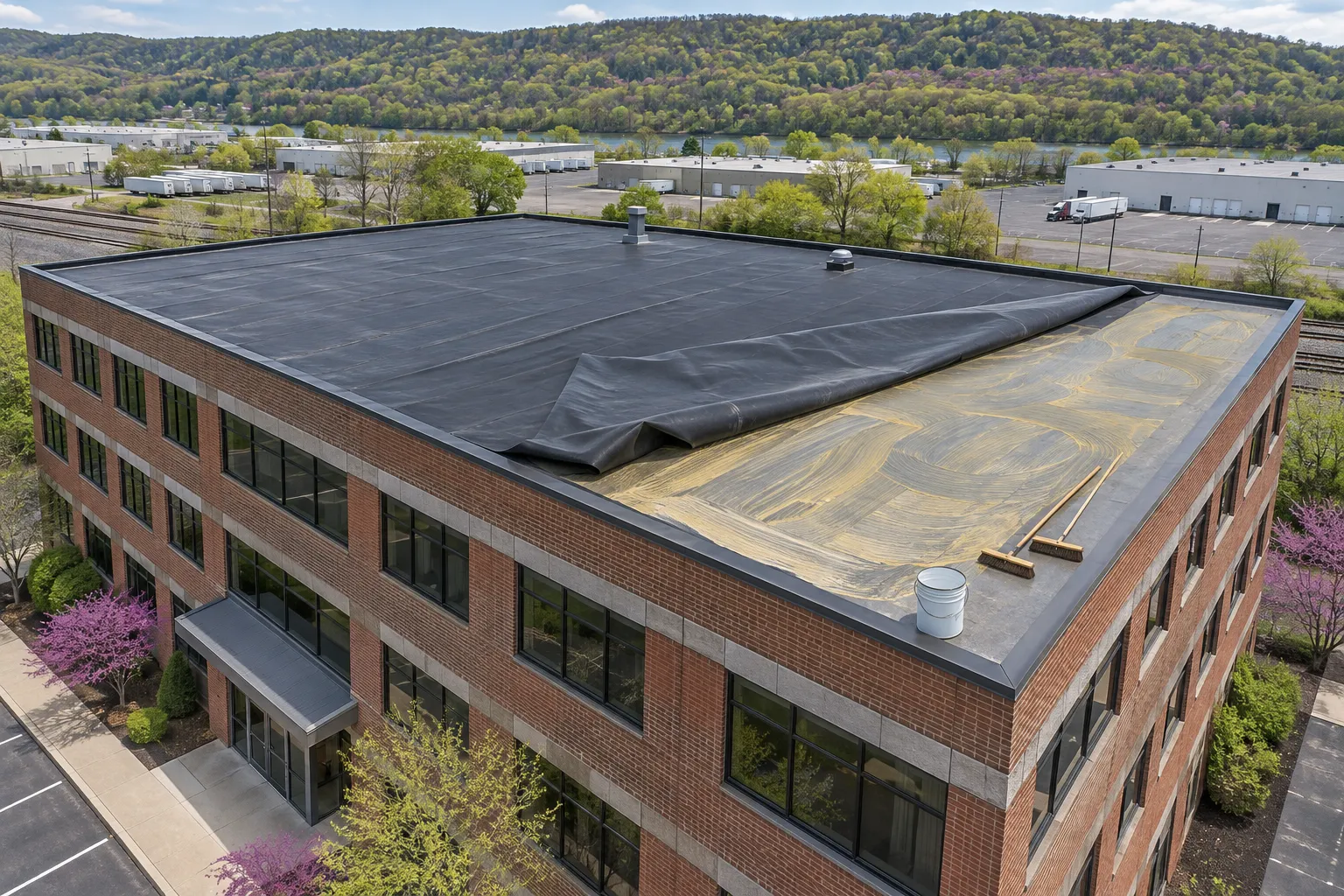
Many Bethlehem EPDM roofing jobs replace an older rubber roof. Others switch systems. These cases show where each path starts.
Widespread lap failure on an aged sheet calls for a new membrane instead of more tape.
Wide, open fields with simple edges suit large rubber sheets with few seams.
Stone hides the sheet, so it is moved and the membrane checked before deciding.
A loose clamping ring or torn drain flashing is a local repair on a sheet that still has life.
Rubber roofs fail in a few familiar places. Each one tells us how far a replacement needs to go.
Older glued laps and tired seam tape open along the edges after repeated freezing.
The membrane around drain bowls stretches and tears where water pools and refreezes.
Aged rubber pulls tight at base flashing, bridging corners until they split.
Dark sheet hides tiny holes from screws and debris until a stain shows up indoors.
Leaks travel across loose-laid rubber, so the stain inside sits far from the actual hole.
Stone and foot traffic compress insulation, leaving low spots that hold water.
Rubber roofs come in more than one build. These are the main decisions in an EPDM proposal.
| Decision | Options | What Decides It |
|---|---|---|
| Attachment | Fully adhered, mechanically fastened, or ballasted | Deck type, wind, and the load the structure can carry |
| Seams | Factory tape with primer, or wider laps at details | Roof layout and where water collects |
| Sheet Size | Wide rolls or narrower sheets | Access for hoisting and the number of penetrations |
| Insulation | Polyiso board, tapered where needed | Drain heights and low areas found on the walk |
| Existing Roof | Full tear-off or partial removal | Core results and how many layers already exist |
Here is how a new rubber roof answers the failures we find on older ones.
Old adhesive seams dry out and peel back, letting water under the sheet.
Primed laps with seam tape are rolled in and checked, with cover strips at the most exposed joints.
Crushed board and high drain bowls keep water sitting where the sheet is weakest.
New insulation is set to fall toward the drains, and each drain gets new flashing and a clamping ring.
Shrunken rubber pulls off base flashing at walls, curbs, and inside corners.
Fresh base flashing is adhered up the wall and secured under new termination bar and counterflashing.
Open seams on an older EPDM roof often run wider than the visible ones. Book an inspection and we will check the laps, drains, and board underneath.
Schedule Your Free InspectionRubber roof replacement follows a fixed order from the first core to the last drain clamp.
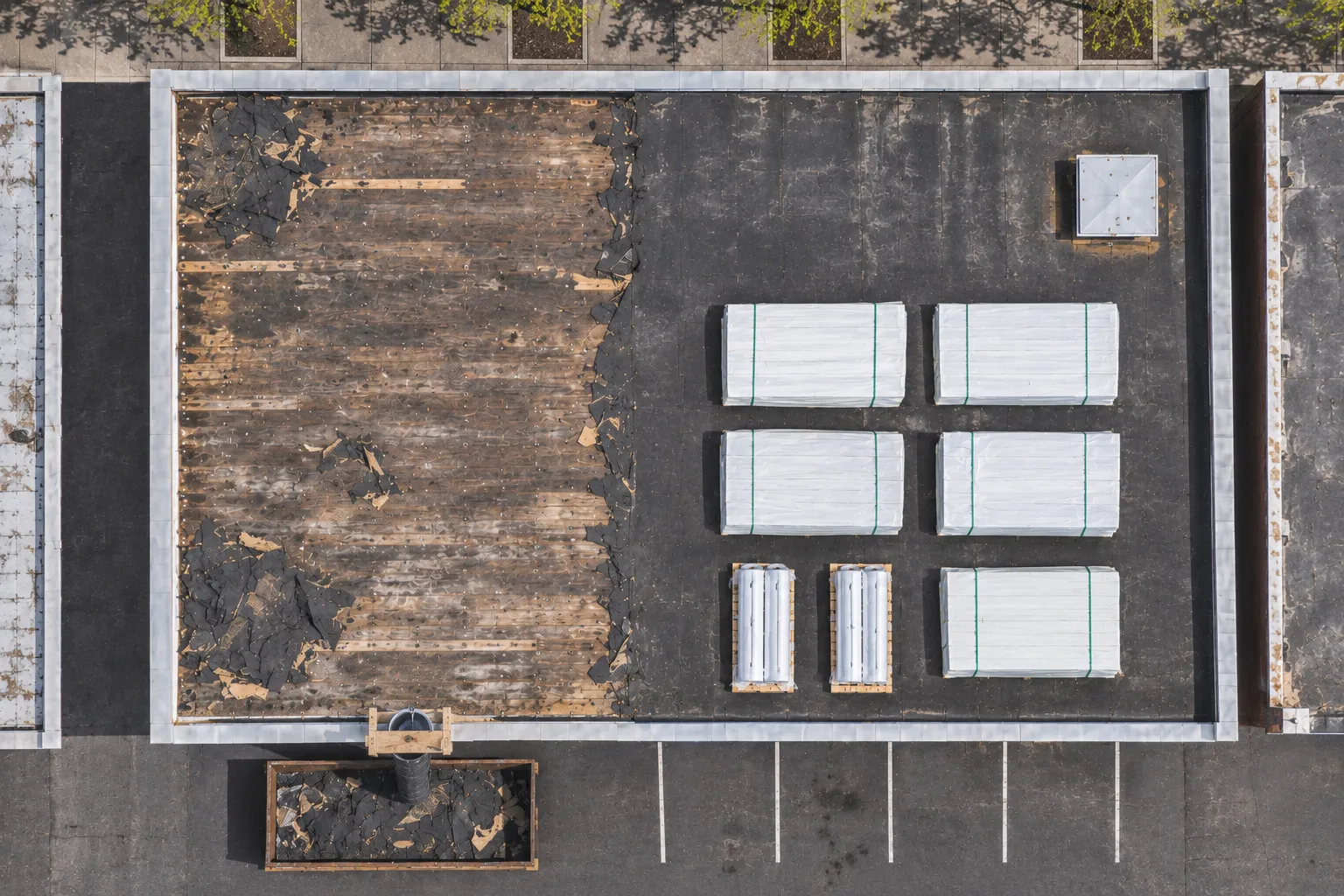
We probe laps, check drains, and cut cores to see whether the insulation under the rubber is dry.
Old sheet, ballast, and wet insulation come off section by section down to a firm, dry surface.
Polyiso board goes down, with tapered pieces where the walk found low areas near drains.
Sheets are adhered or fastened, relaxed in place, and joined with primed seam tape that is rolled in.
Walls, curbs, and pipes get base flashing, and drains get new clamping rings before a final walk.
Switching systems can make sense on some buildings. These are the other roofs we install.
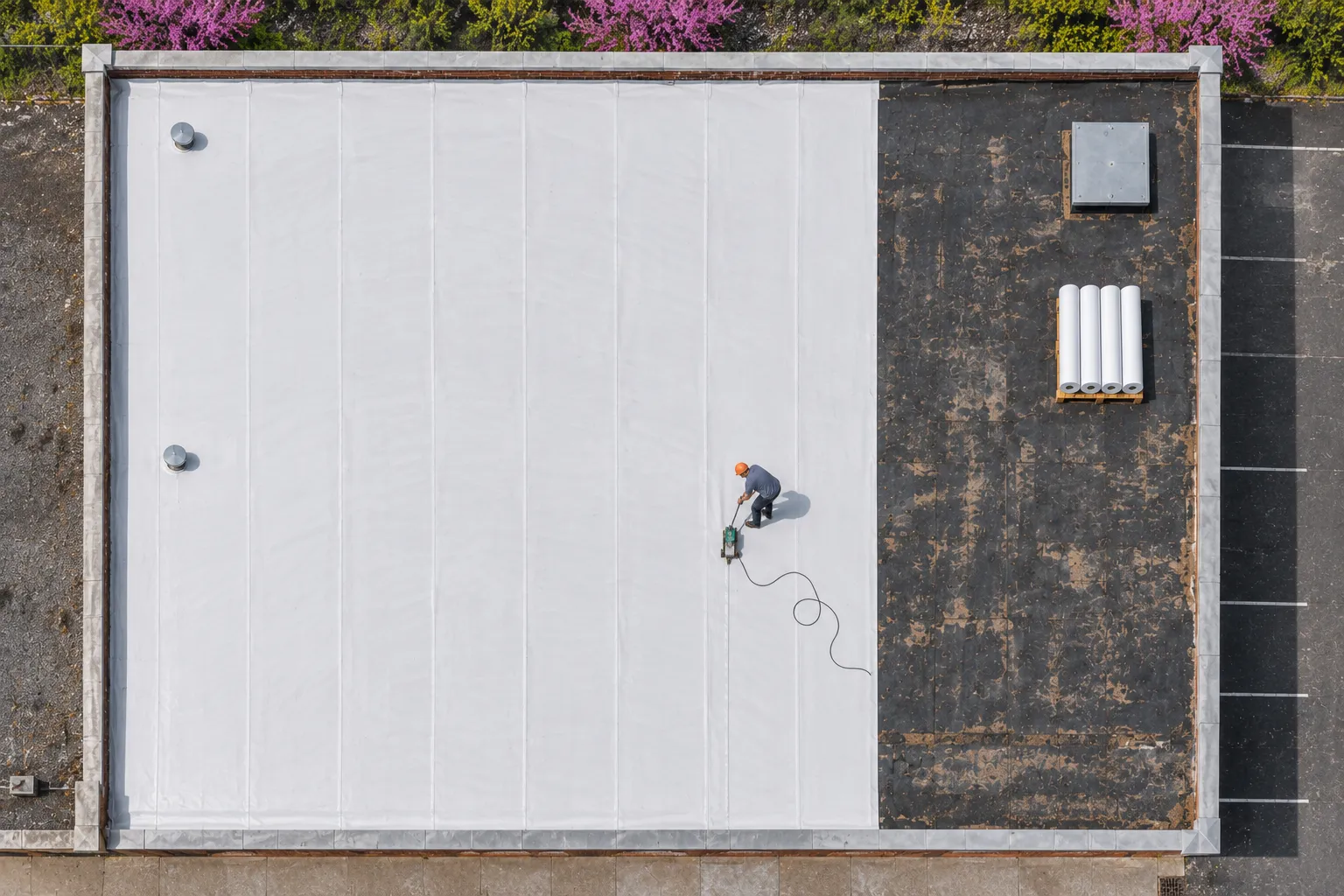
Owners replacing old rubber often weigh white welded TPO, which joins seams with heat in place of tape and primer.
Where Water Gets In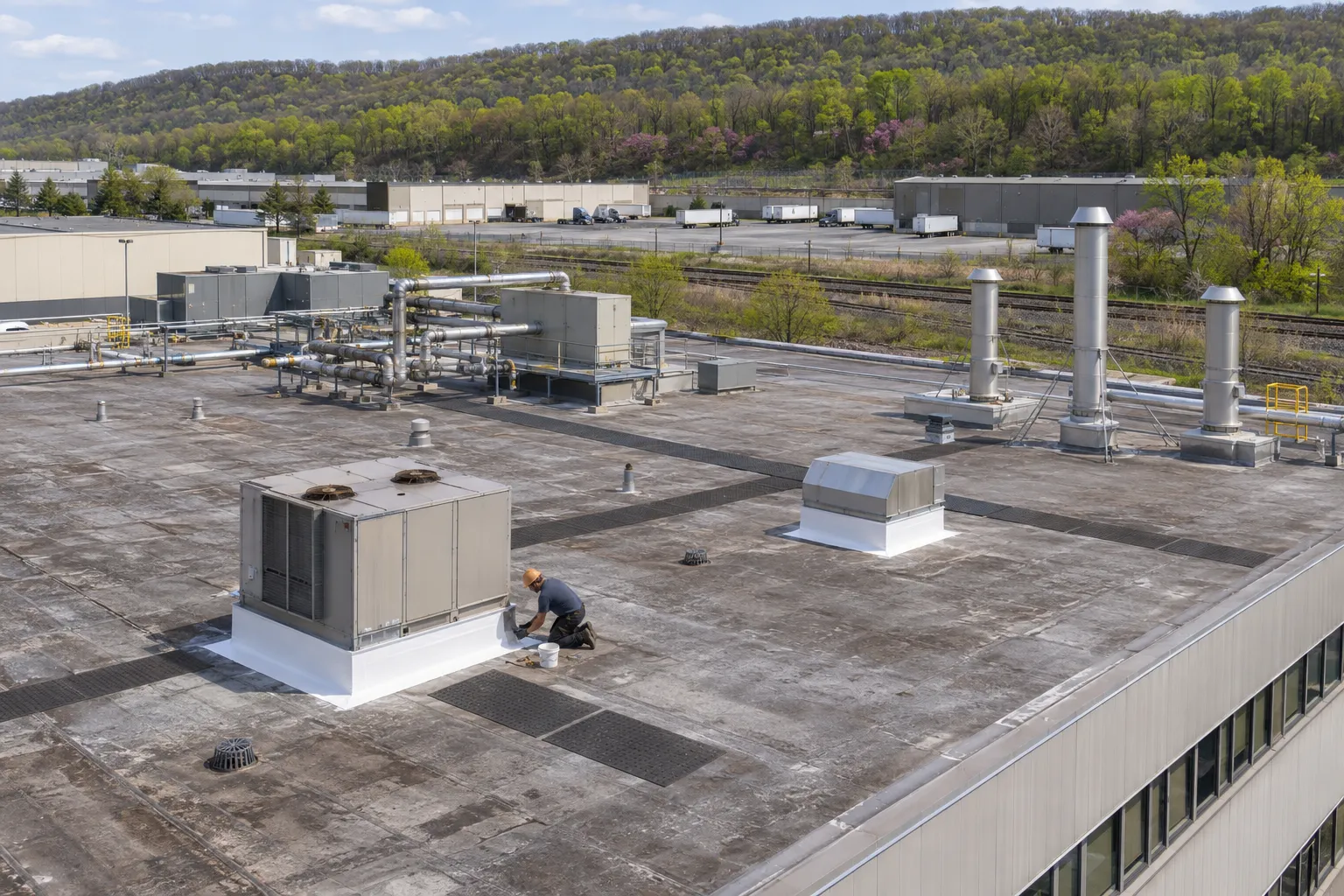
Rubber roofs over plants with exhaust and process moisture need the replacement planned with production schedules.
Where Water Gets In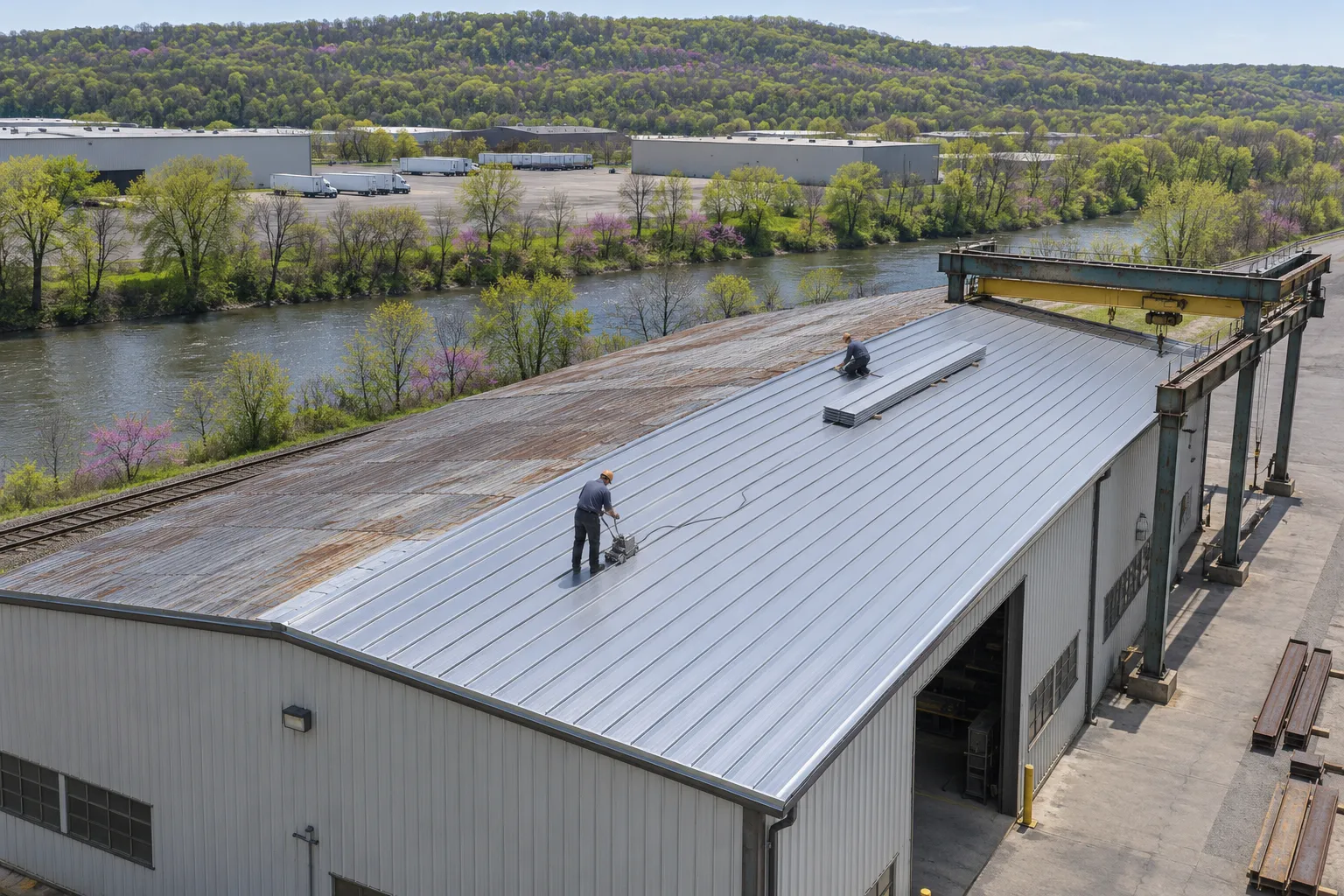
Low-slope rubber can be replaced by a sloped metal retrofit once framing and the structure below are reviewed.
Where Water Gets InAnswers about rubber roofs on commercial buildings.
EPDM is a synthetic rubber sheet, which is why many people call it rubber roofing. The name covers several systems, so we identify the exact build before choosing seam products, flashing, or repairs. Insulation, attachment, and drainage have to fit the building along with the sheet.
An EPDM price has to cover what sits under the membrane and what the inspection finds. We weigh area, sheet thickness, insulation, the old layers coming off, deck repair, edge metal, flashing, and equipment, plus access, staging, and season. The rubber itself is only part of the replacement cost.
An average age says little about one particular roof. We check seams, edge stress, punctures, and moisture under damaged spots. Upkeep and exposure explain why one section ages faster than another, and the call is based on the defects found today.
Repeated freezing works on drains, weak laps, and flashing first. We look for water held near outlets, stressed corners, and moisture reaching damaged details. Rubber flexes well, yet the connections still need to be tight and runoff needs a clear path off the roof.
In Pennsylvania the two names usually mean the same black membrane. We still confirm the material on the roof, since older buildings sometimes carry modified bitumen or other sheets that look similar from the ground.
Only after cores prove the existing layers are dry and the deck is solid. Most aged rubber roofs around Bethlehem come off, because water under loose sheet is common and hard to see.
Send the address and a note about the rubber roof. We will probe the laps, cut cores, and spell out the EPDM build that fits the building.