Worn Tracks to Units
Repeated trips leave scuffed lines and thin spots across the membrane, easy to trace from the hatch to each unit.

As an Ambler commercial roofing contractor, we replace commercial roofs and lay out service routes that keep foot traffic off seams and drains.
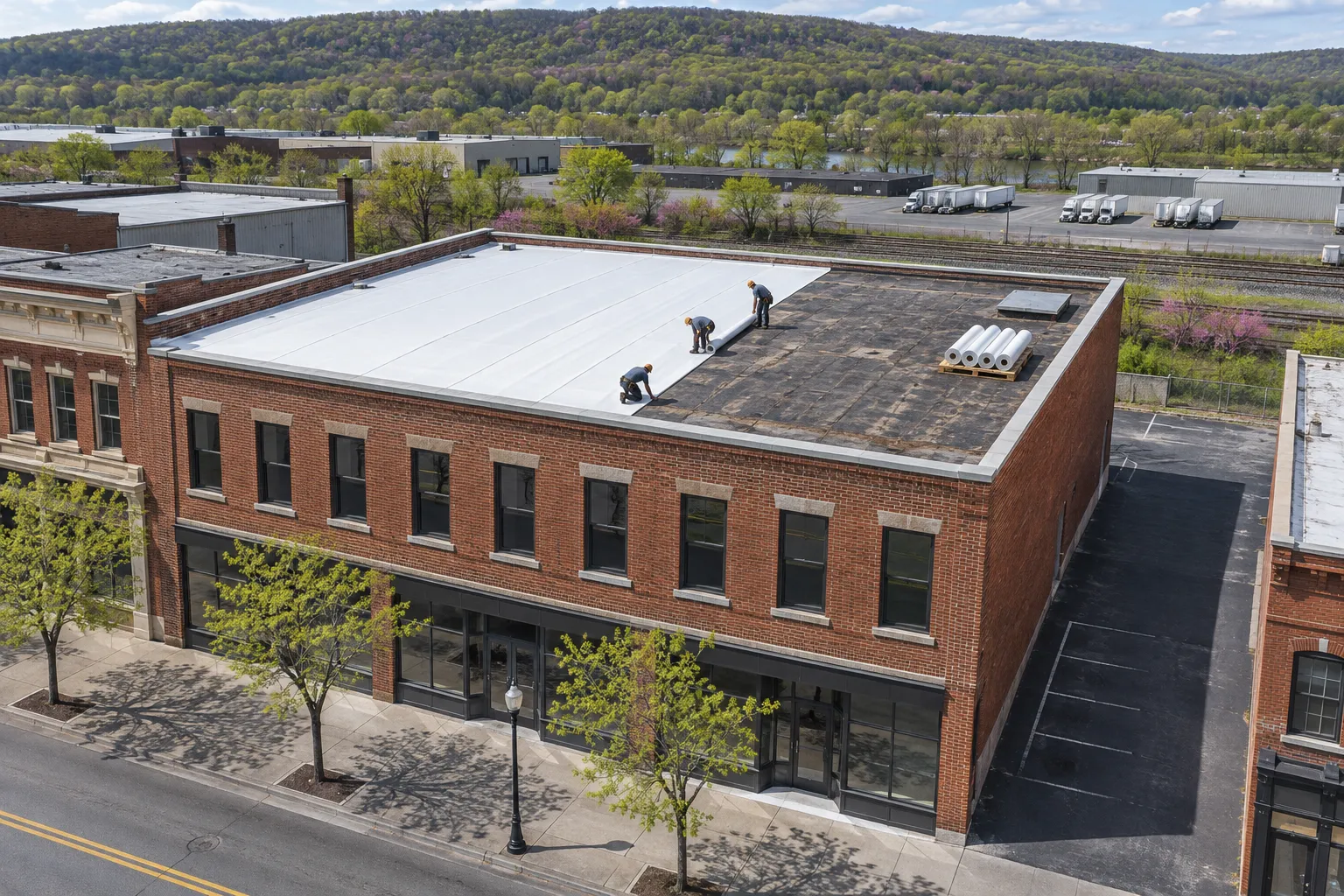
Ambler commercial roofing on a busy building has to account for the paths people walk to the equipment.
Every replacement here includes a plan for how technicians get from the hatch to each unit. Routes link safe access points with the equipment and steer around seams and flashing.
Walk pads have to suit the membrane and leave room to inspect drains. Each route is placed so it never blocks runoff or creates a dam along the roof.
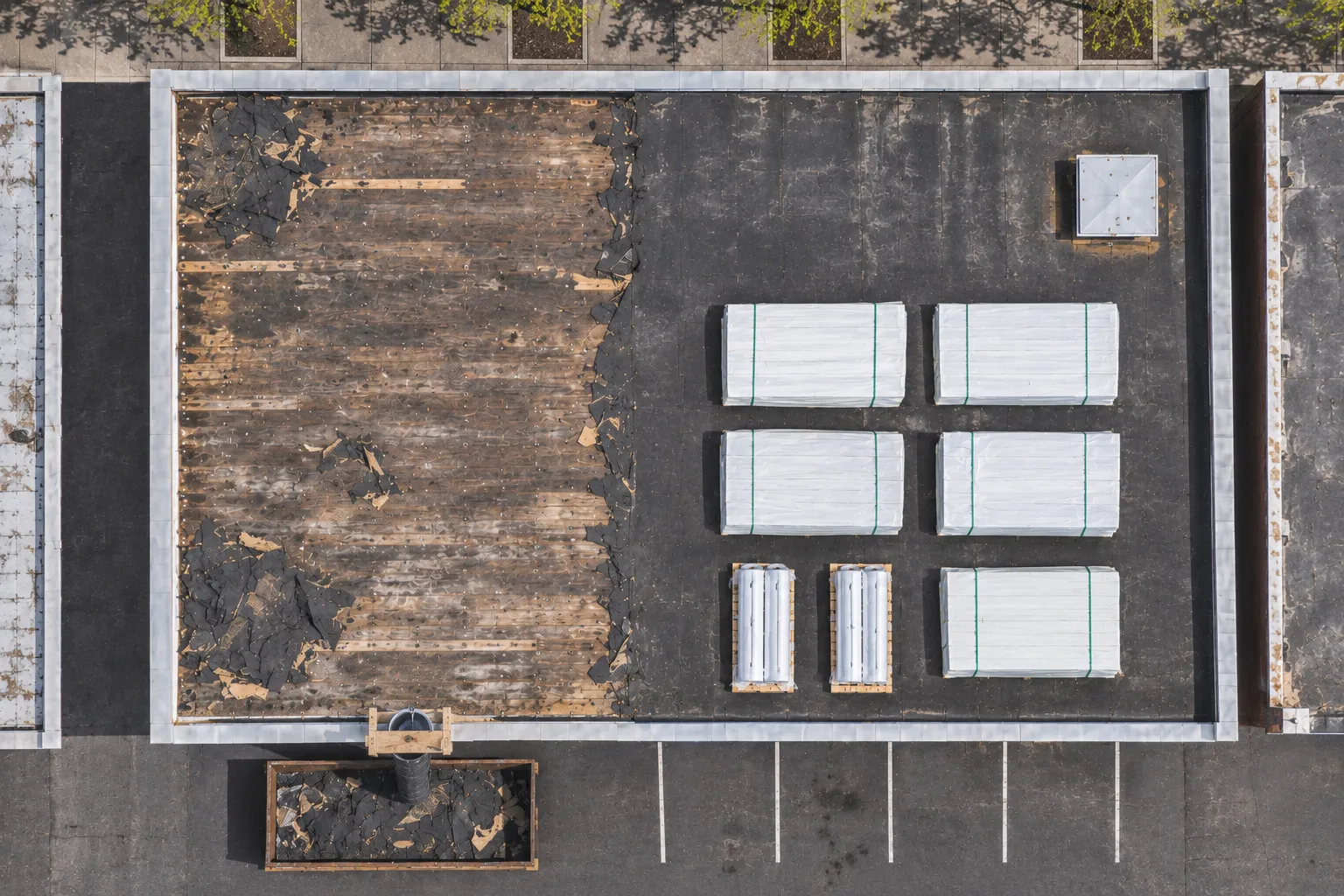
Traffic damage follows the same lines on every busy roof.
Repeated trips leave scuffed lines and thin spots across the membrane, easy to trace from the hatch to each unit.
Screws, filters, and tools dropped on the way puncture the field, and the holes are small enough to miss on a quick walk.
Laps along walk lines get stepped on and open sooner than seams in quiet parts of the roof.
The first few feet past the hatch take the heaviest roof wear, with ladders and tool bags set down on the membrane.
Packaging and filters left behind end up in the drains, backing water up across the field after the next storm.
Base flashing near units gets kicked and stepped on during service, cracking at the corners first.
A planned route protects the new roof from the traffic that ruined the old one.
Technicians take the shortest line, right over seams.
Marked walk pads set one route to each unit, away from laps and the corners of curbs.
Heavy traffic at the access point thins the membrane.
A protection pad covers the landing zone around the hatch, where ladders and tool bags land first.
Service litter collects at outlets.
Routes keep clear of drains, leaving them easy to see and clean.
Boots on base flashing crack it right beside the units.
Pads end a short distance from each unit, so service work happens off the flashing.
Walkway pads are made for each membrane, so the system choice comes first.
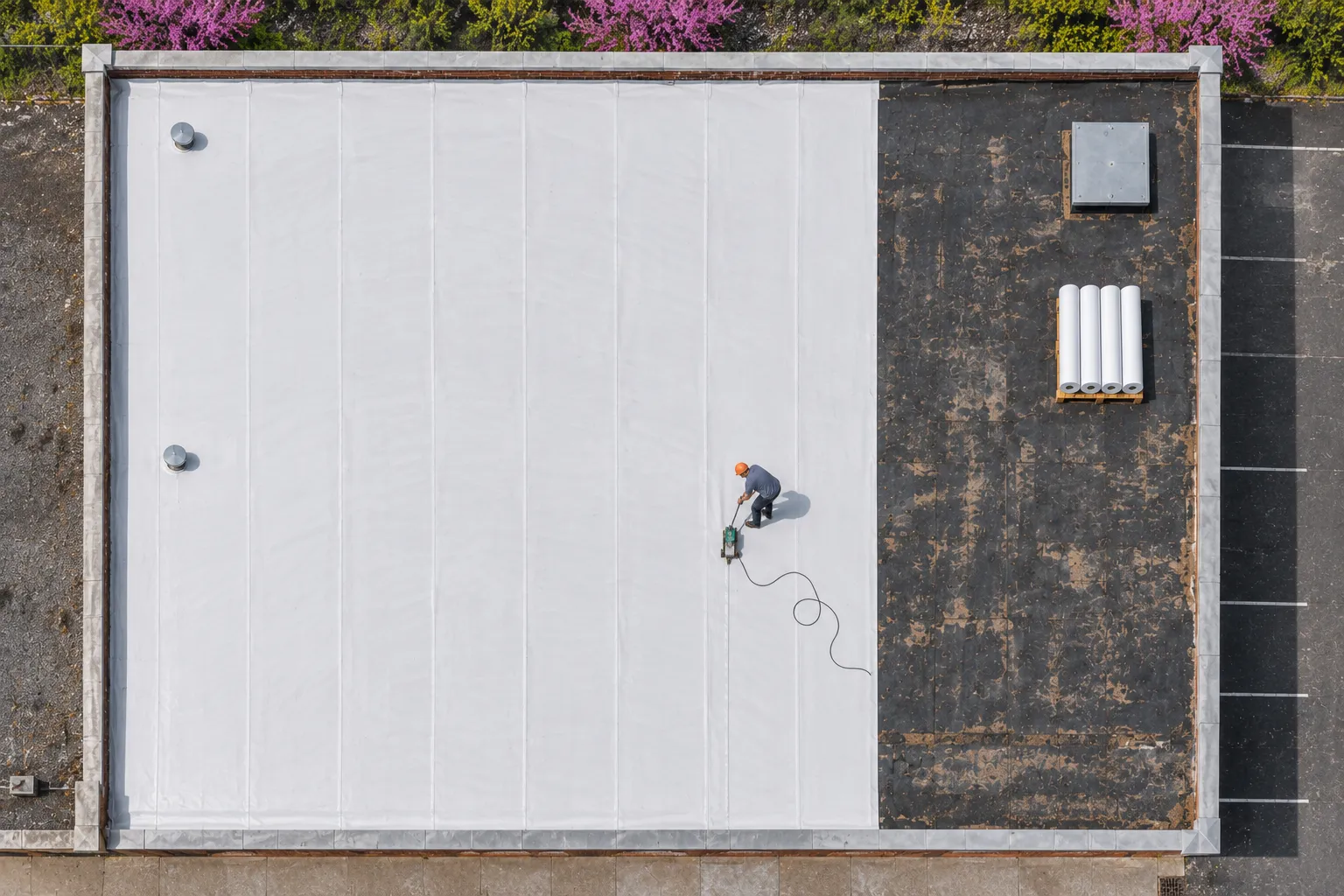
Welded TPO accepts heat-welded walk pads that stay attached where traffic is heaviest.
Where Water Gets In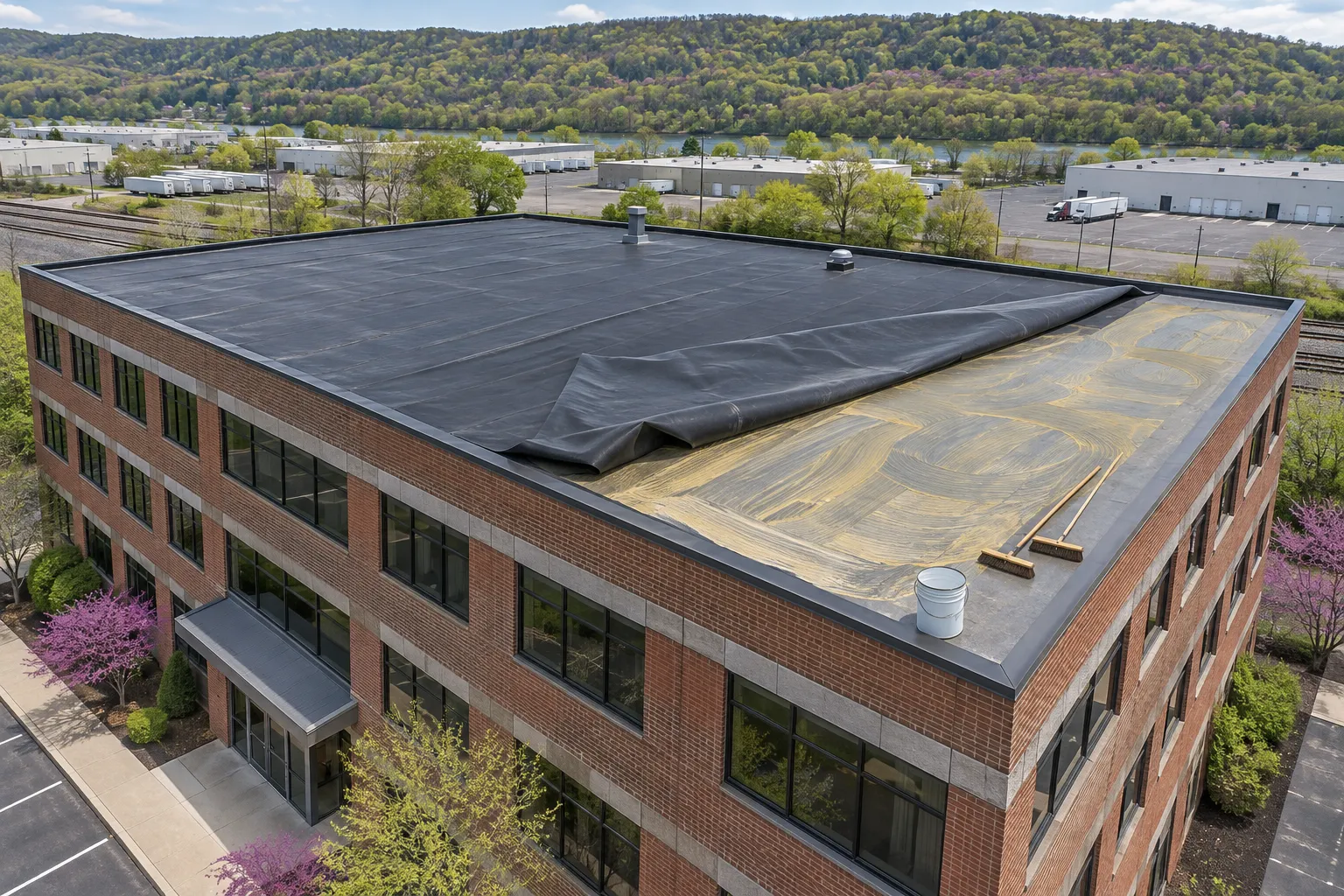
Rubber roofs take adhered walkway pads laid on the planned routes to each unit.
Where Water Gets In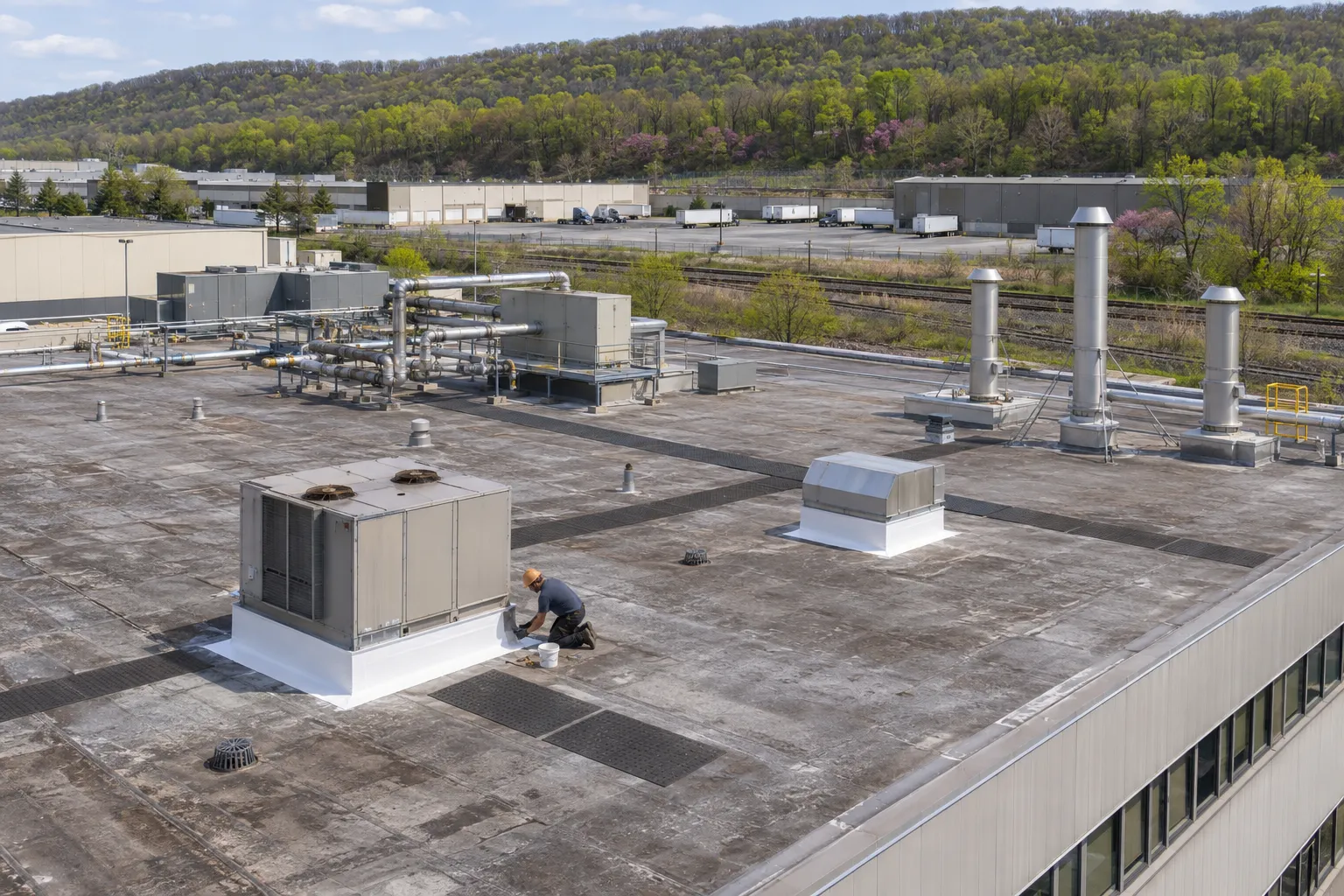
Plant roofs with daily service visits need routes planned with the maintenance team.
Where Water Gets In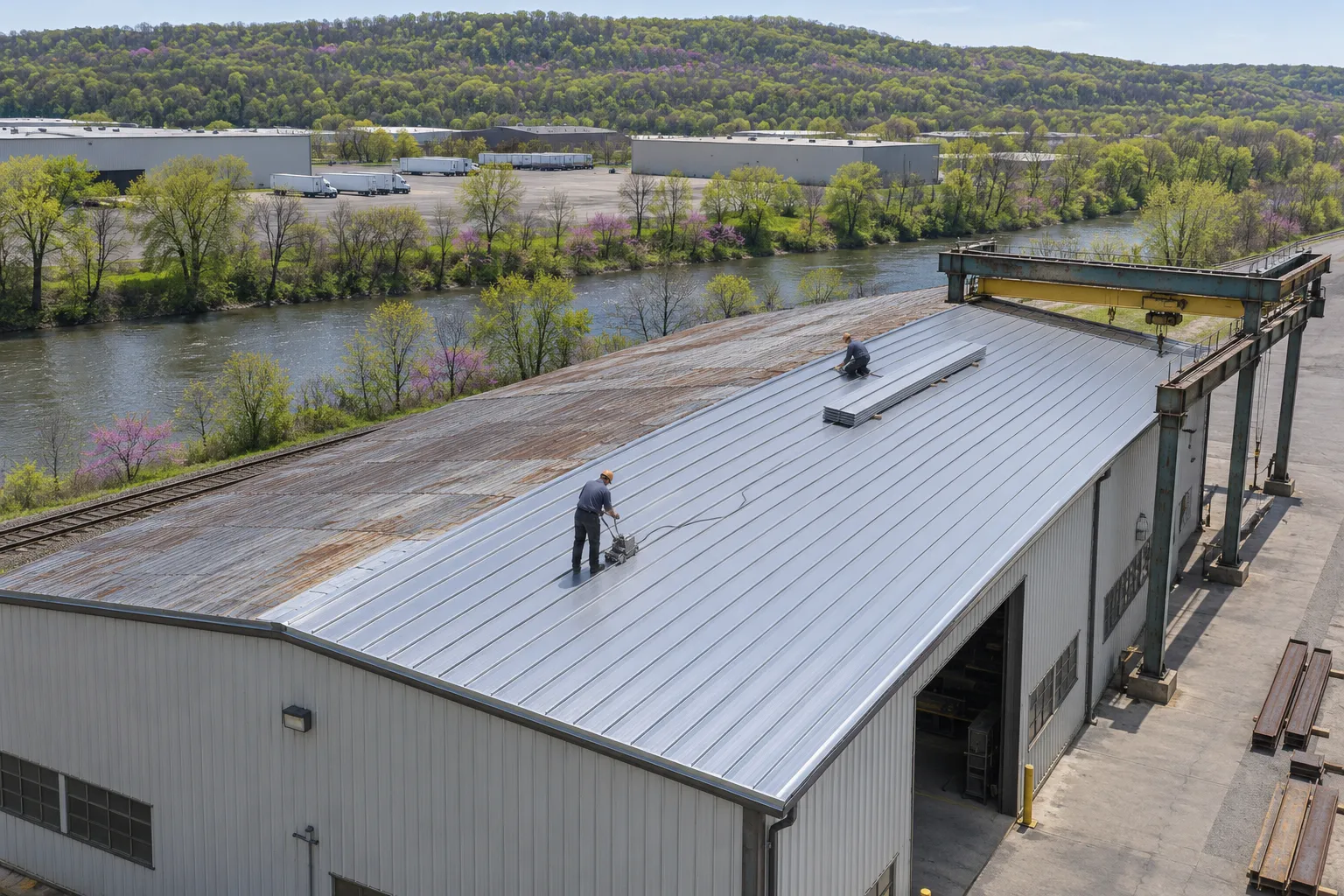
Metal panel roofs use walkway systems clamped to the seams instead of pads.
Where Water Gets InWorn tracks across the membrane point to a route problem as much as a roof problem. Book an inspection and we will map how the roof gets used.
Schedule Your Free InspectionRoutes are drawn before the membrane goes down, then built in at the end.
We trace the worn paths, check seams along them, and cut cores where water got in.
Routes from the hatch to each unit are set to avoid seams, corners, and drains.
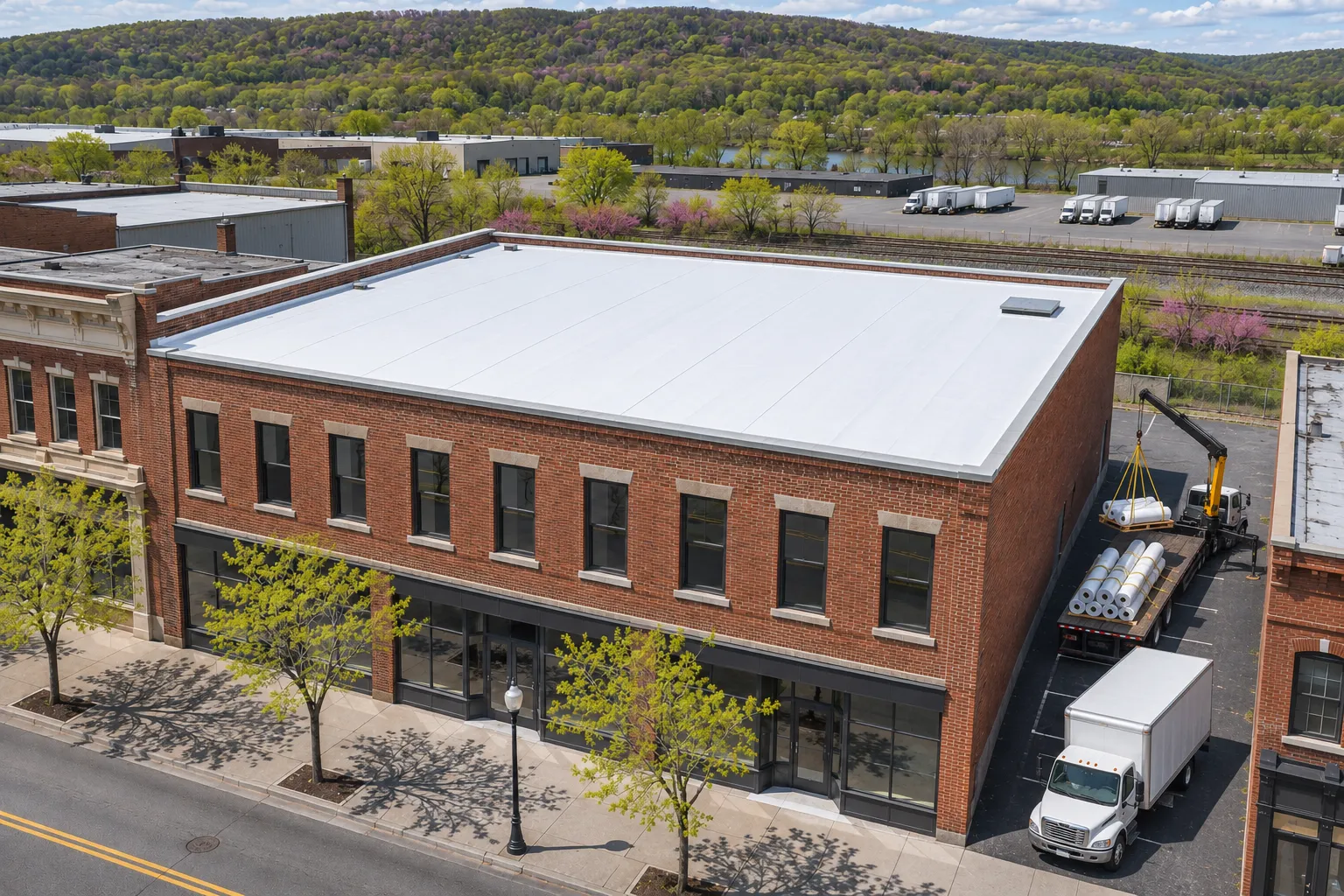
Old layers come off and new insulation and membrane go down section by section.
Walk pads are welded or adhered to the membrane along each route and around the hatch landing.
Every roof route gets walked with the facility team so service visits follow them.
Does your building sit outside Ambler? We take work in these towns too. For other places, call us or send us a message.
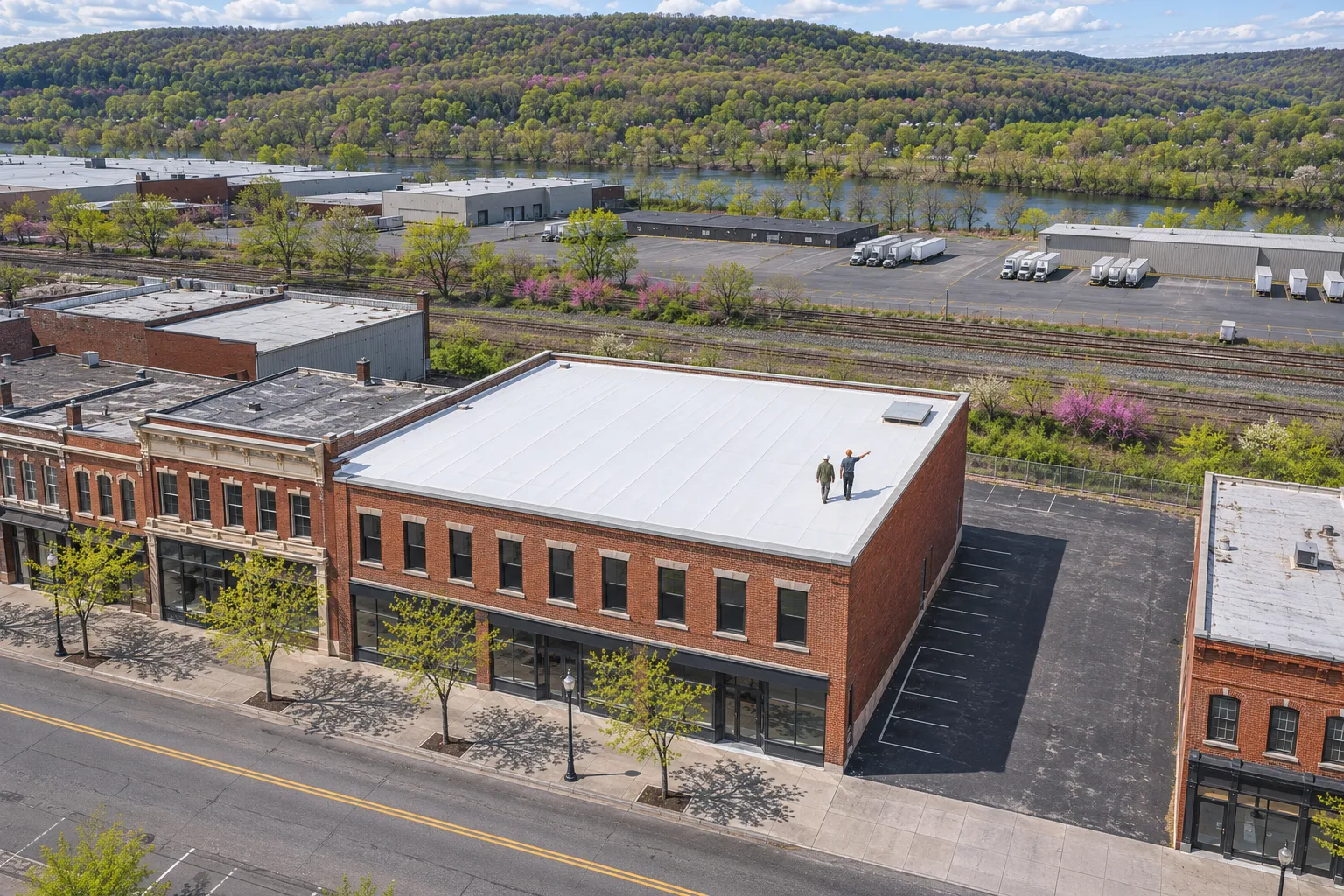
Home base for our commercial roof work.
Stocked warehouses and delivery-heavy buildings.
Storefronts and offices with older edge metal.
Office roofs crowded with rooftop units.
Flat roofs with low spots and slow drains.
Answers about busy roofs and service routes in Ambler.
They should link safe access points with the equipment that needs service and steer around vulnerable details. We pick walkway pads that suit the membrane and leave room to inspect drains and flashing. No route should block runoff or create a barrier on the roof.
They add some material and labor. The walkway plan shows how many feet of pads each roof needs.
Yes. Roofs with many units are where route planning matters most, and we lay out paths for each one.
We serve Ambler for full replacements and can look at damage along existing paths during an inspection.
Rarely. Old pads are usually worn and stuck fast to the old membrane, so new pads go down with the new roof.
Everyone who goes on the roof: HVAC technicians, electricians, and facility staff. We walk the routes with the facility team so they can brief vendors.
They should not block it. Pads are set with gaps and placed parallel to the flow, so runoff keeps moving toward the drains.
Yes. If new equipment goes on the roof, pads can be added along a new route with the same membrane-compatible material.
Send the address and how often technicians visit the roof. We will map the routes and plan the new roof around them.