Short Curbs Under New Insulation
Added insulation leaves old curbs too short to flash properly, so water reaches the top of the flashing during heavy rain.

As a Doylestown commercial roofing contractor, we replace office roofs and sequence the work with every rooftop unit, curb, and support.
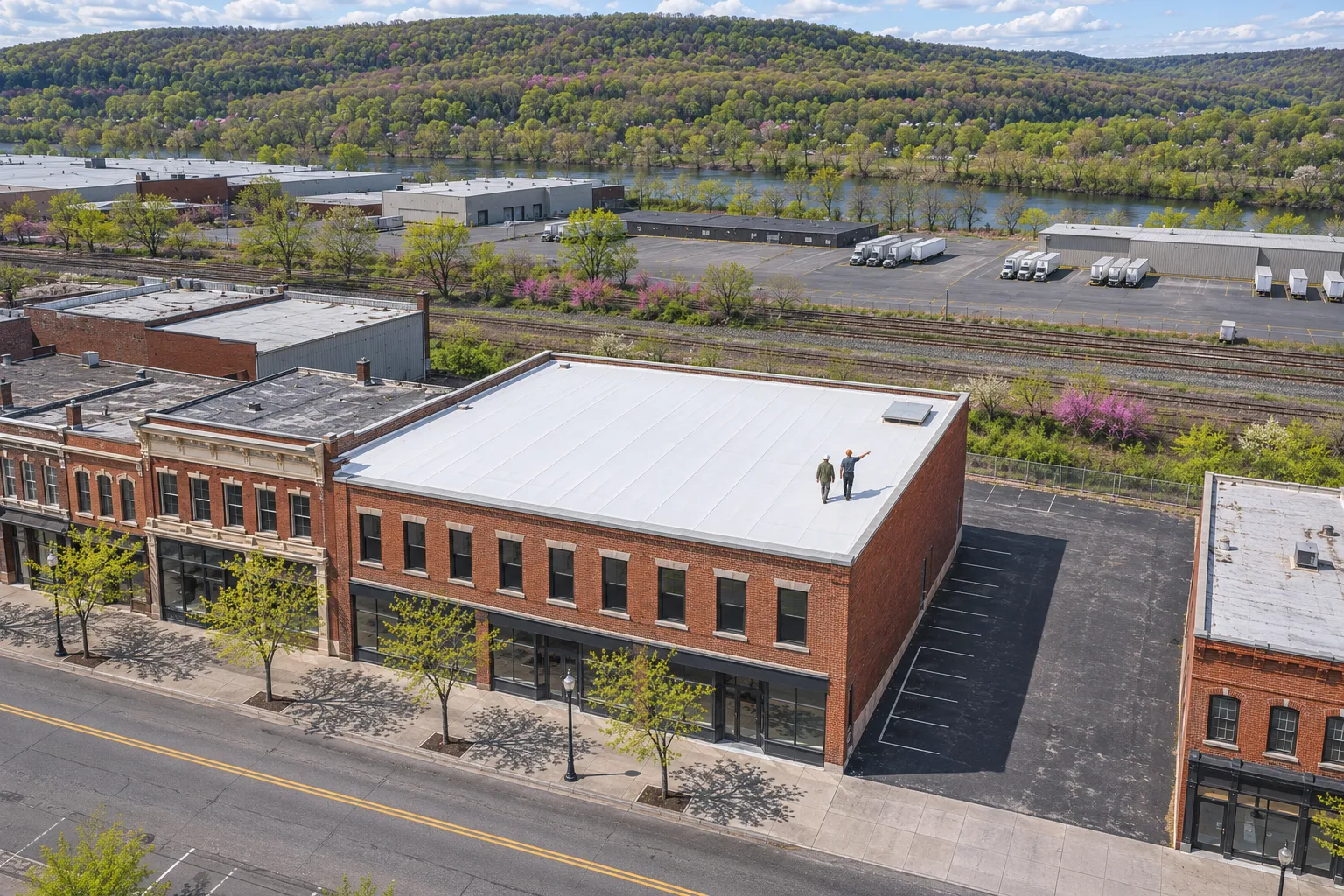
Doylestown commercial roofing on office buildings starts with a plan for the units, ducts, and supports on top.
Office roofs carry the equipment that keeps tenants comfortable. Every unit, curb, and support needs its own plan before removal reaches it.
We name any isolation or lifting needed and agree who does it with the equipment contractor. Clear roles keep new membrane from being cut later to finish a detail nobody planned.
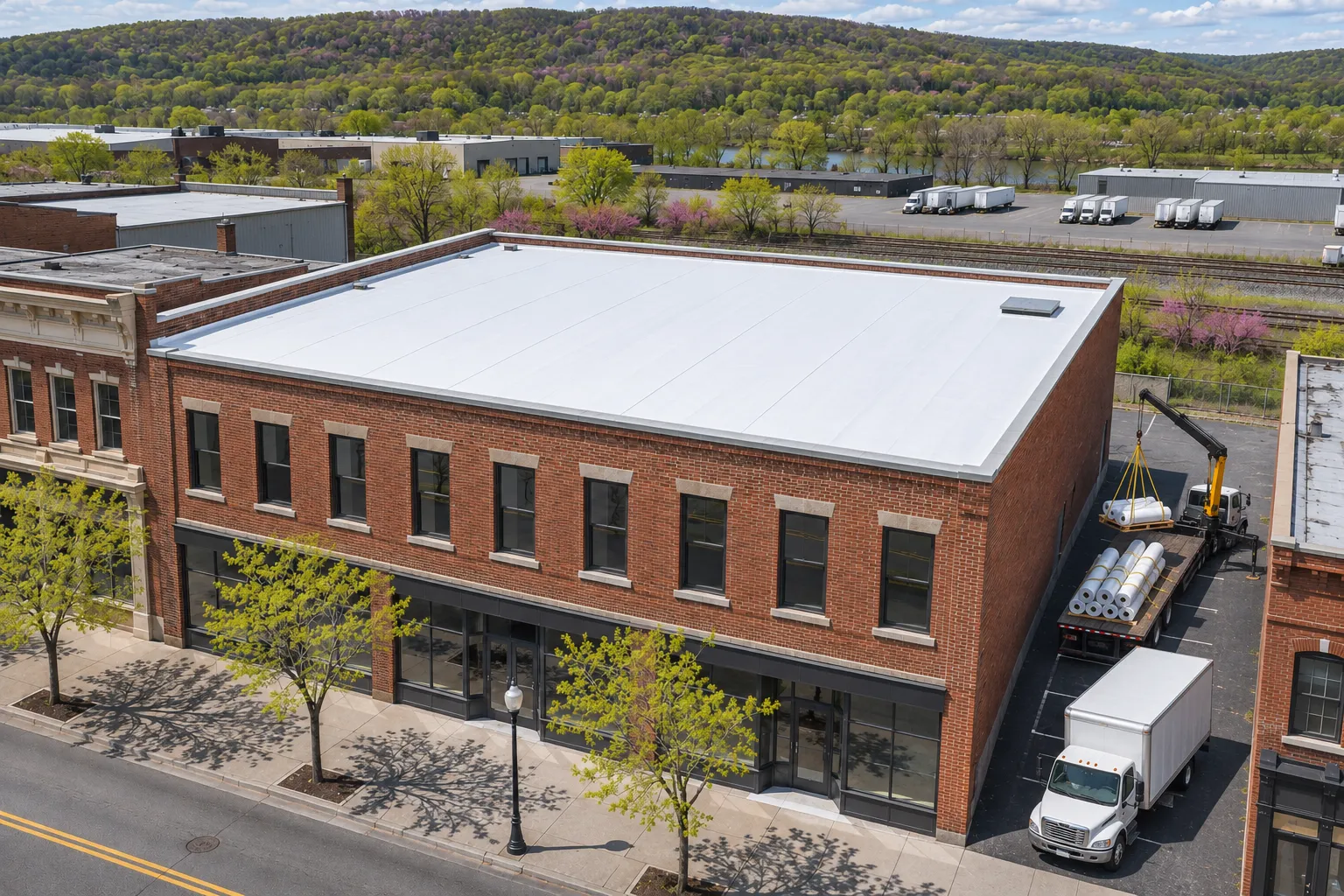
Equipment-heavy roofs fail around what sits on them.
Added insulation leaves old curbs too short to flash properly, so water reaches the top of the flashing during heavy rain.
Unit drain lines dump water onto the membrane and wear it down, leaving a bare streak that leads straight toward the nearest seam.
Supports set directly on the membrane tear the sheet as ducts expand and contract through each heating and cooling season.
Service work leaves loose screws and panel fasteners that puncture the roof underfoot when the next technician walks by.
Leaks at curbs show up as stains in the offices directly below.
Units block access to drains, so they clog without anyone noticing.
Equipment details are where the new roof makes the biggest difference.
Thicker insulation leaves little flashing height at old curbs.
Curbs are raised or rebuilt so flashing runs well above the new field, with corners formed from membrane instead of sealant.
Duct and pipe stands set on bare membrane wear holes through it.
Supports sit on protection pads or new stands flashed into the roof, so moving ducts no longer drag across the sheet.
Steady drips from unit lines erode the surface.
Condensate lines are piped to drains or set on protection pads.
Equipment placed over or beside drains blocks cleaning and inspection.
Drain access is kept open around units, with walk pads leading to each outlet.
Office buildings in Doylestown use all four of the systems we install.
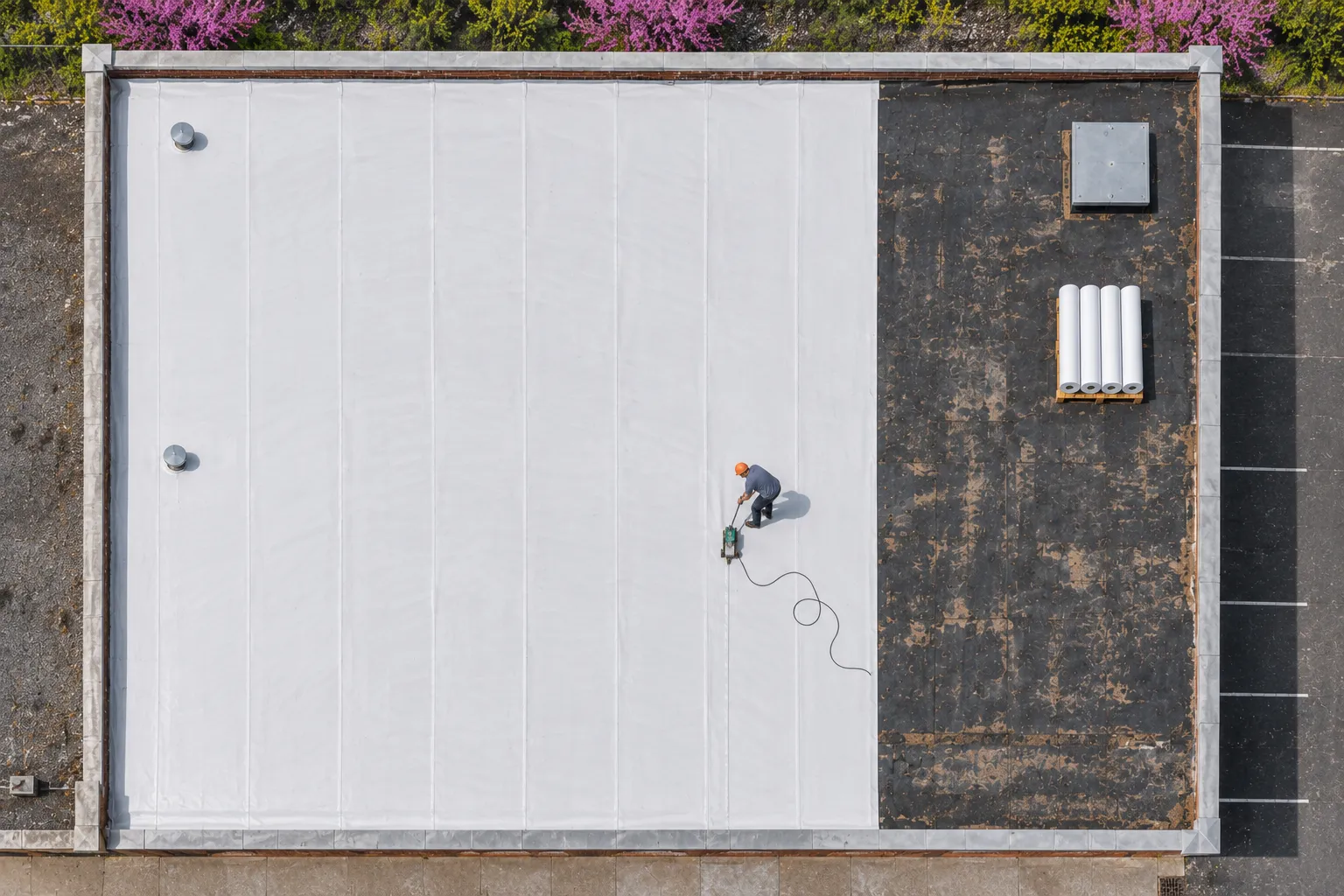
White TPO keeps office roofs cooler under the sun, with welded flashing at each unit curb.
Where Water Gets In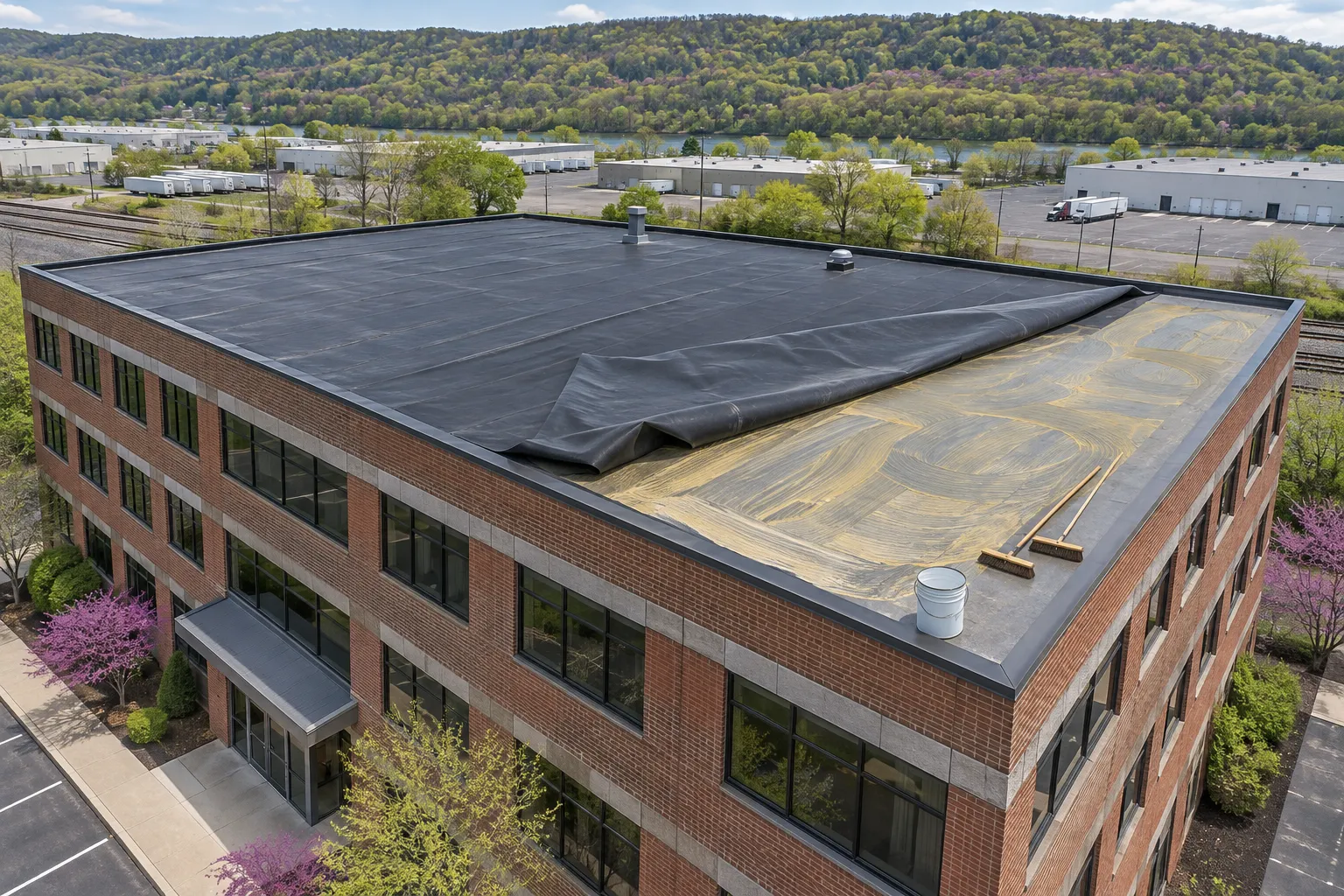
Adhered rubber covers office roofs with fewer units and long, open fields.
Where Water Gets In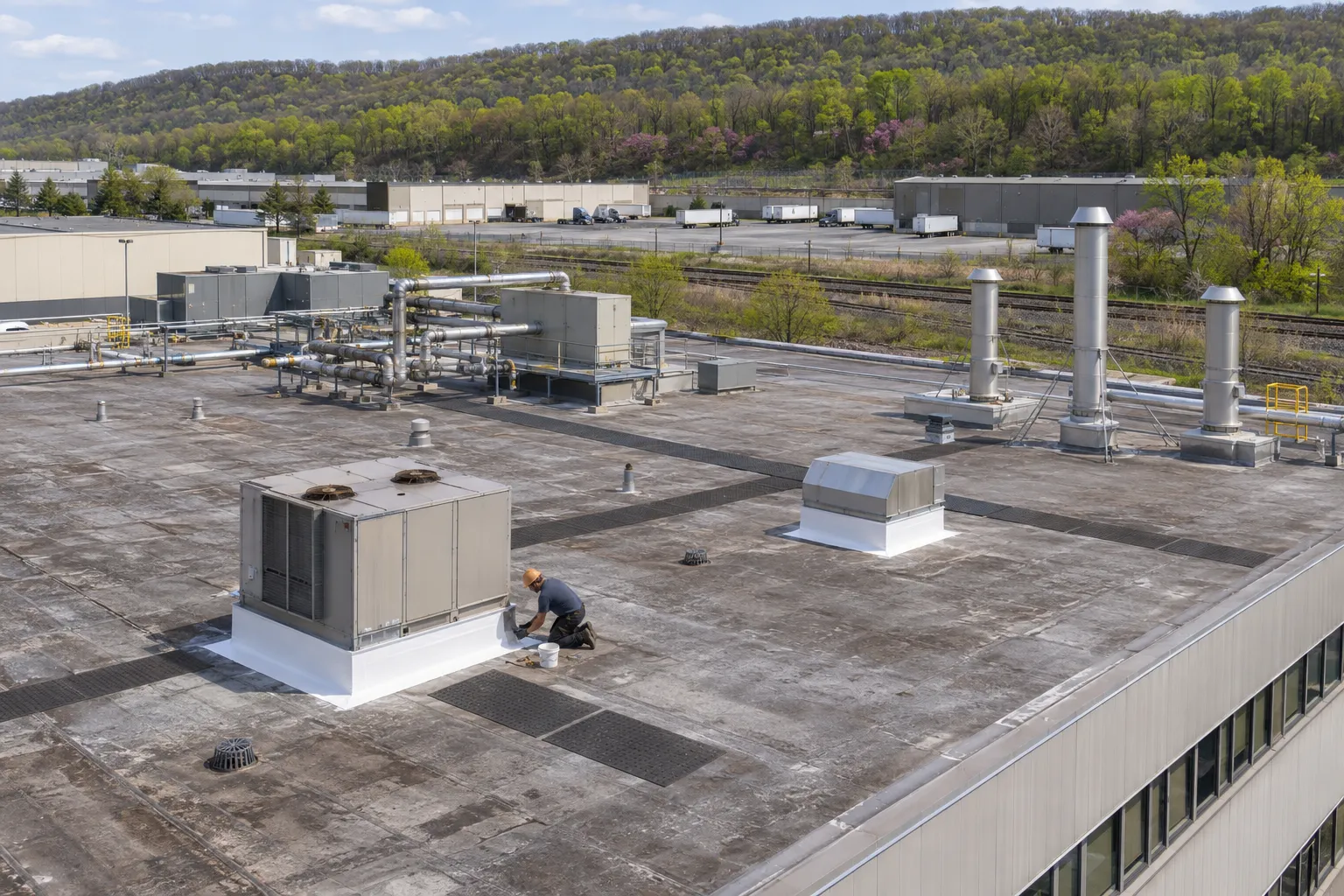
Buildings mixing offices with light production need equipment and process areas planned together.
Where Water Gets In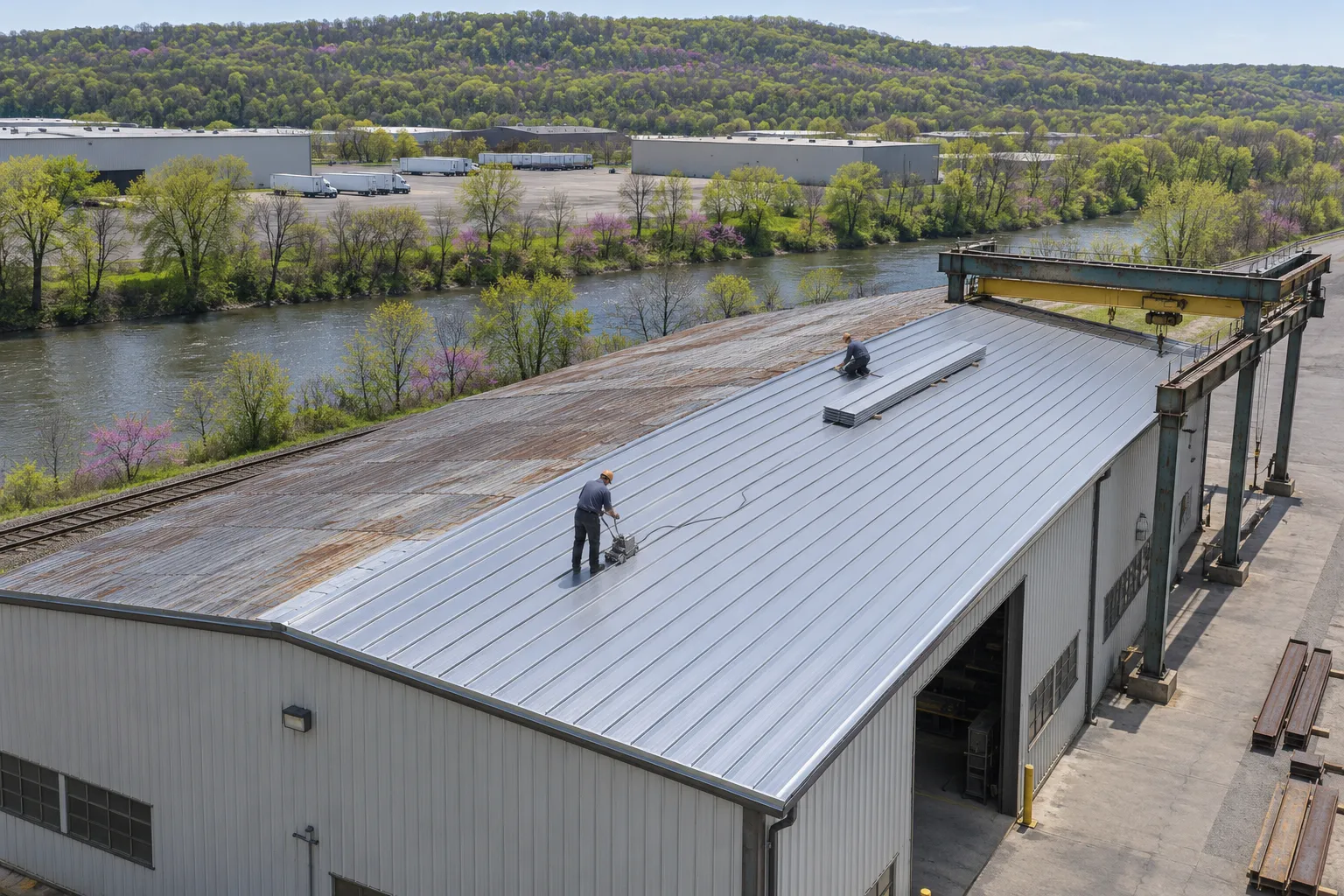
Pitched office wings and covered entries can get standing-seam metal with matching trim.
Where Water Gets InReplacing units and the roof at the same time saves cutting into new membrane later. Ask us to inspect now so both jobs line up.
Schedule Your Free InspectionEquipment work and roof work run in a set order so nothing gets redone.
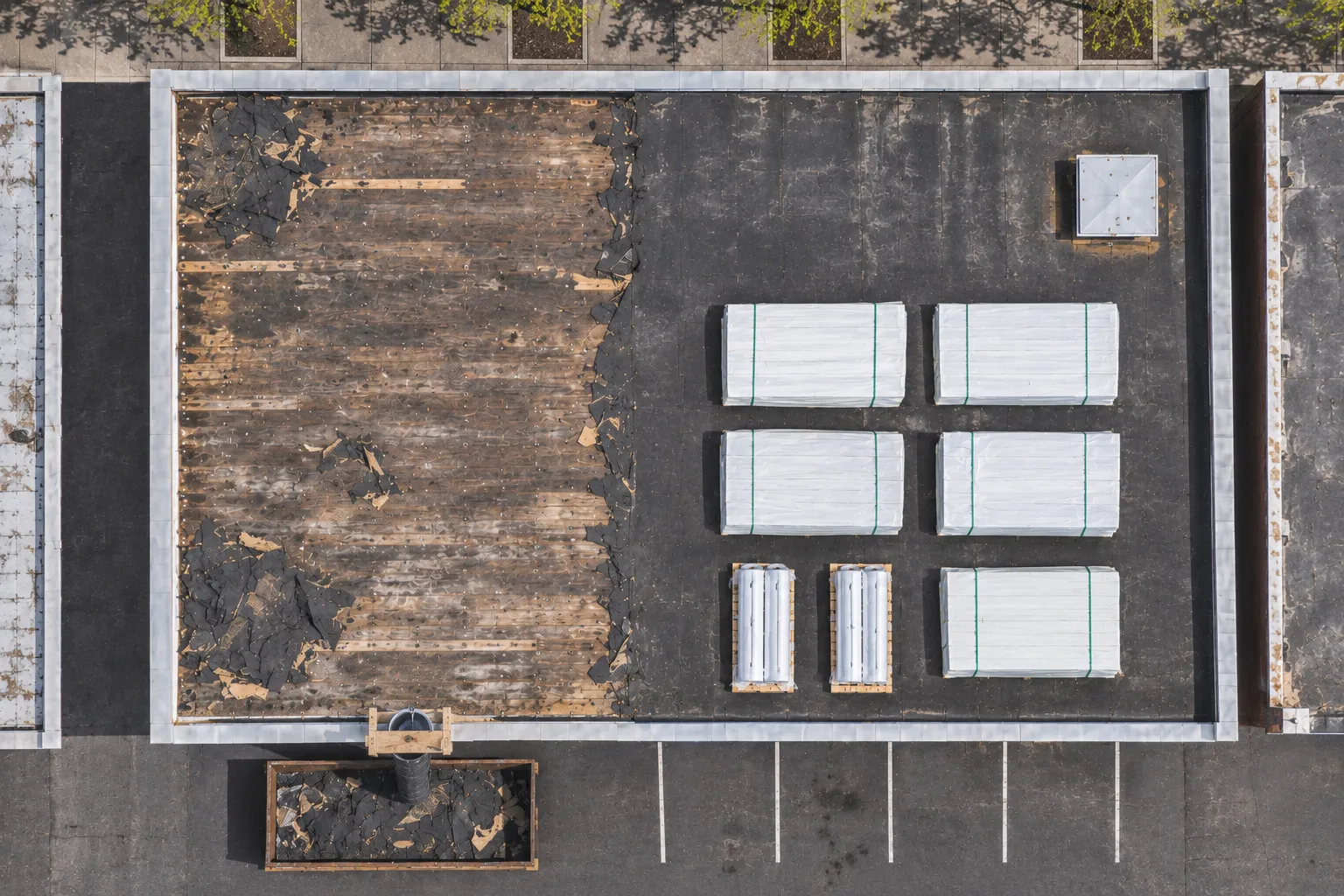
We list every unit, curb, and support, and cut cores to see what the insulation under them holds.
The HVAC contractor and our crew agree who disconnects, lifts, and reconnects each unit.
Units are isolated or raised before tear-off reaches their curbs.
New insulation and membrane go down, and curbs are flashed while the area is open.
Units are reset on finished curbs, condensate lines are routed, and the roof is walked with the property manager.
Need work outside Doylestown? These towns are part of our area. Anywhere else, call us or send us a message.
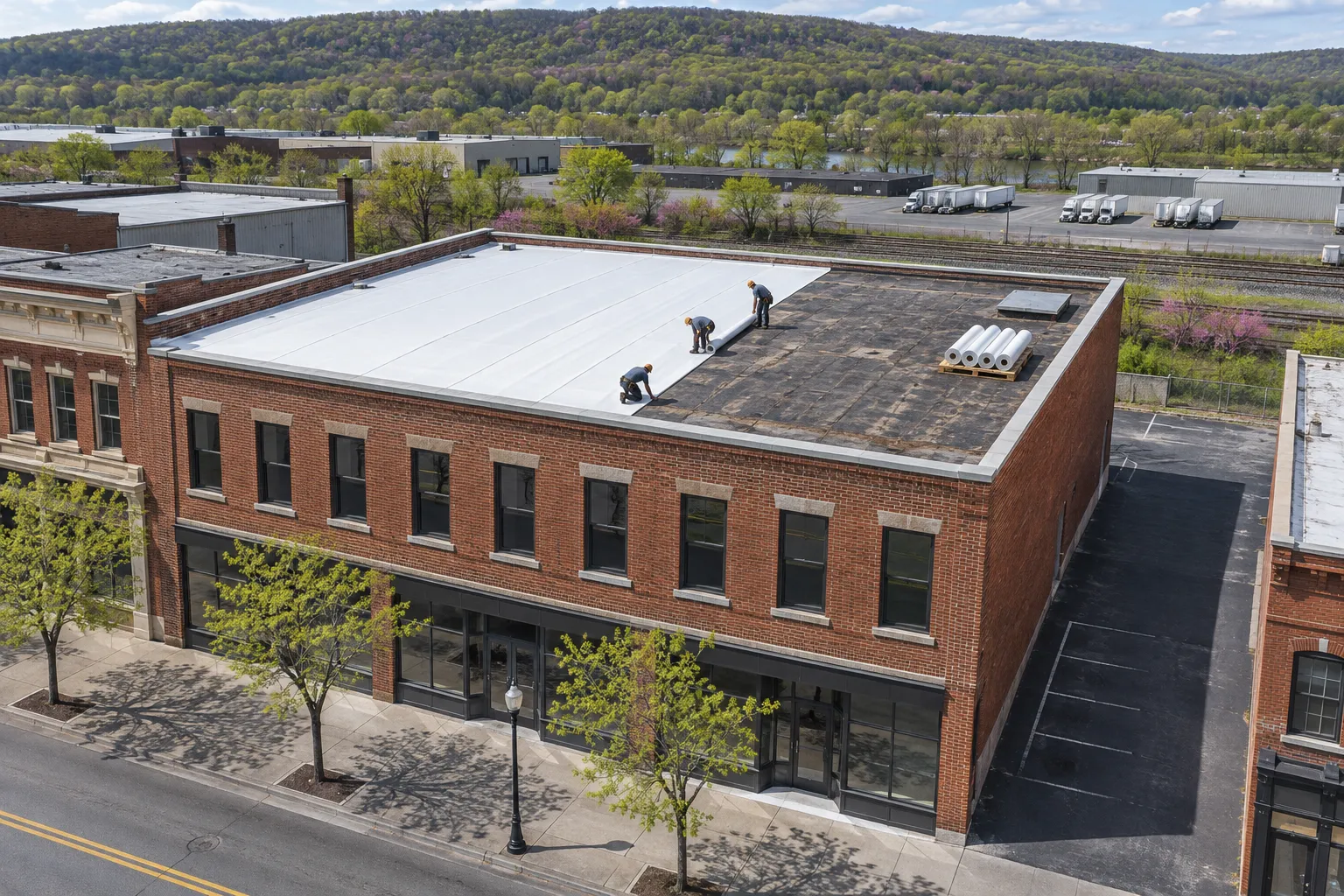
Answers for office owners and property managers in Doylestown.
Any unit whose curb, support, or connections the roof work touches is planned before removal reaches it. We name the isolation or lifting needed and keep roles clear between our crew and the equipment contractor, so new membrane never has to be opened later for a missed detail.
Yes. We serve Doylestown offices and office parks, and multi-building properties can be scheduled building by building.
You need one who coordinates with them. We plan unit work with your HVAC contractor so each knows when to disconnect and reconnect.
Equipment count, curb rebuilding, roof size, and insulation thickness drive most of it. Working around tenants and office hours adds planning time.
Usually yes. Noisy tear-off can be scheduled early or late, and interior protection goes up under the areas being opened.
Only when they are solid and tall enough for proper flashing over the new insulation. Short or rusted curbs get rebuilt.
Your HVAC contractor disconnects and reconnects equipment. We plan the timing with them so each curb is open for as short a time as possible.
It can be timed together. Replacing units and the roof in one sequence avoids cutting into new membrane later for a curb change.
Send the office address and a list of rooftop units if you have one. We will plan the roof around the equipment.