Coping Lifting in Wind
Loose coping on parapet walls rattles and lets water behind the wall flashing. Stains on the inside face of the wall are a common clue.
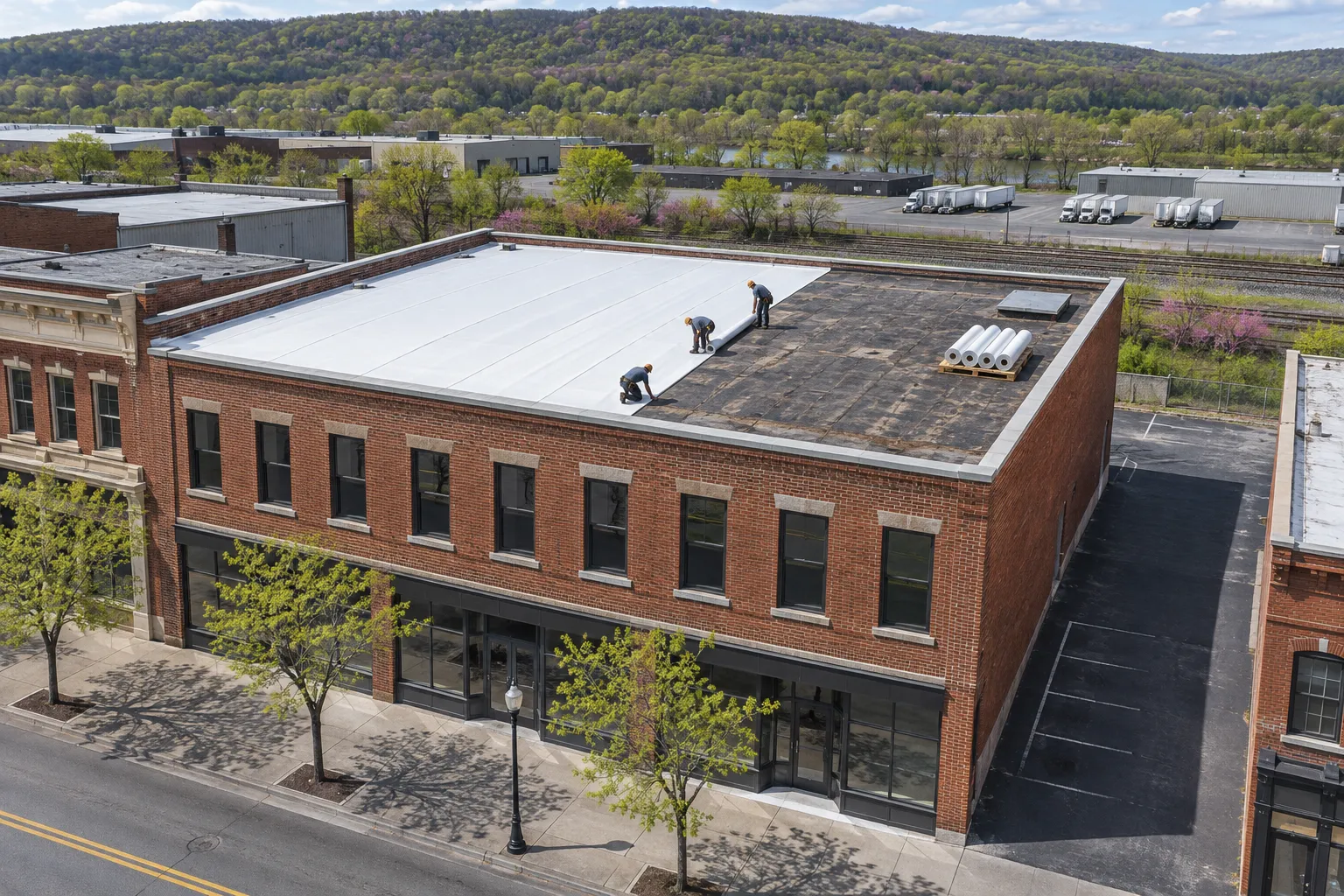
As a Hatboro commercial roofing contractor, we replace storefront and office roofs and decide edge by edge which perimeter metal stays.
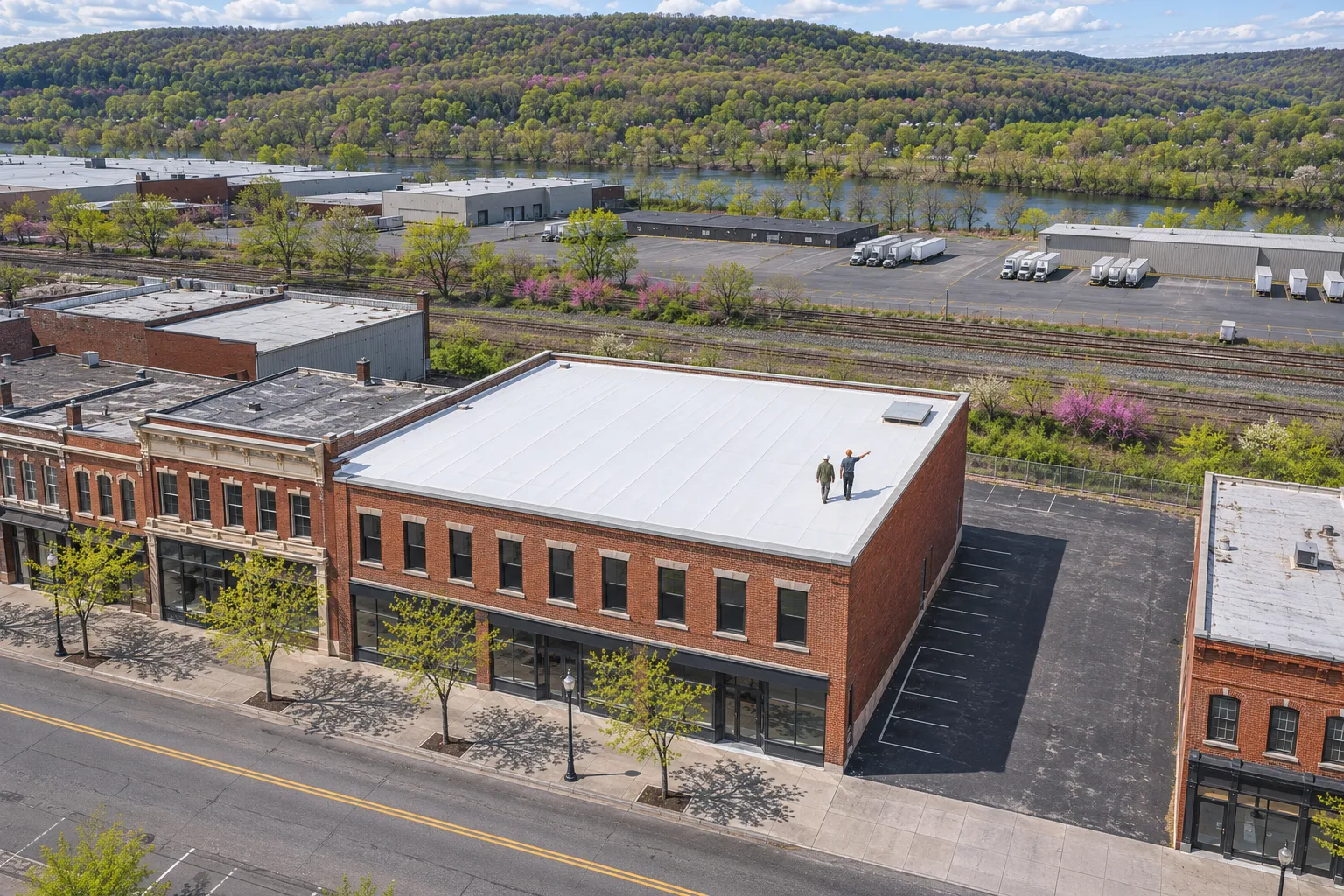
Older edge metal often decides how Hatboro commercial roofing turns out, so we look at it first.
Owners on older storefronts often ask whether the existing edge metal can stay. It can, only when its attachment, joints, and fit with the new flashing all check out.
Edges that fail those checks come off. Renewing the field while a loose coping or rusted gravel stop stays in place leaves a path for water right beside the new membrane.
Perimeter trouble shows up first on older storefront and office roofs.
Loose coping on parapet walls rattles and lets water behind the wall flashing. Stains on the inside face of the wall are a common clue.
Old gravel stop rusts at the joints, opening gaps where the membrane meets the edge. Rust streaks down the fascia show where it started.
Base flashing on brick parapets dries out and splits at inside corners, where the sheet was folded tightest during the last install.
Sealant at edge joints fails, letting water run down the face and into the wall.
Through-wall scuppers leak where the old sheet was only caulked to the metal.
Water from failed edges soaks the outer few feet of insulation first.
Perimeter work is where a new roof pays off on older buildings.
Loose metal lets rain run behind flashing and into the wall.
Edges that fail inspection are replaced and fastened to sound blocking.
Old base flashing cracks at corners and seams.
New wall flashing runs up the parapet and under new counterflashing or coping.
Caulked scupper joints open each season.
Scuppers are flashed into the new membrane with formed boots.
The outer strip of insulation absorbs water from failed perimeter joints.
Wet perimeter board is removed and replaced before the new edges go on.
Each system meets the edge differently, so the perimeter plan goes with the membrane choice.
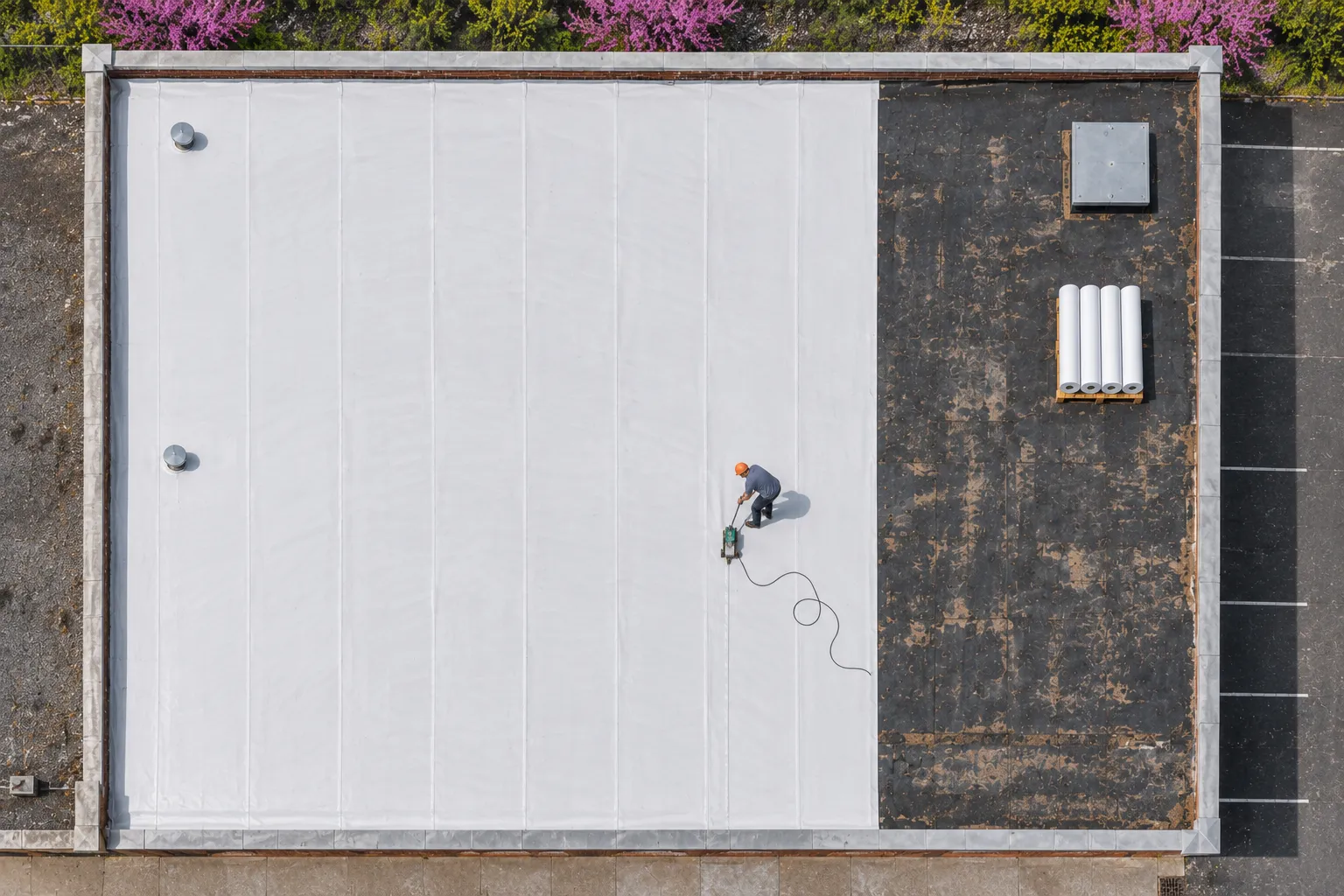
Welded TPO ties into edge metal with coated metal or welded strips, giving a clean joint at the perimeter.
Where Water Gets In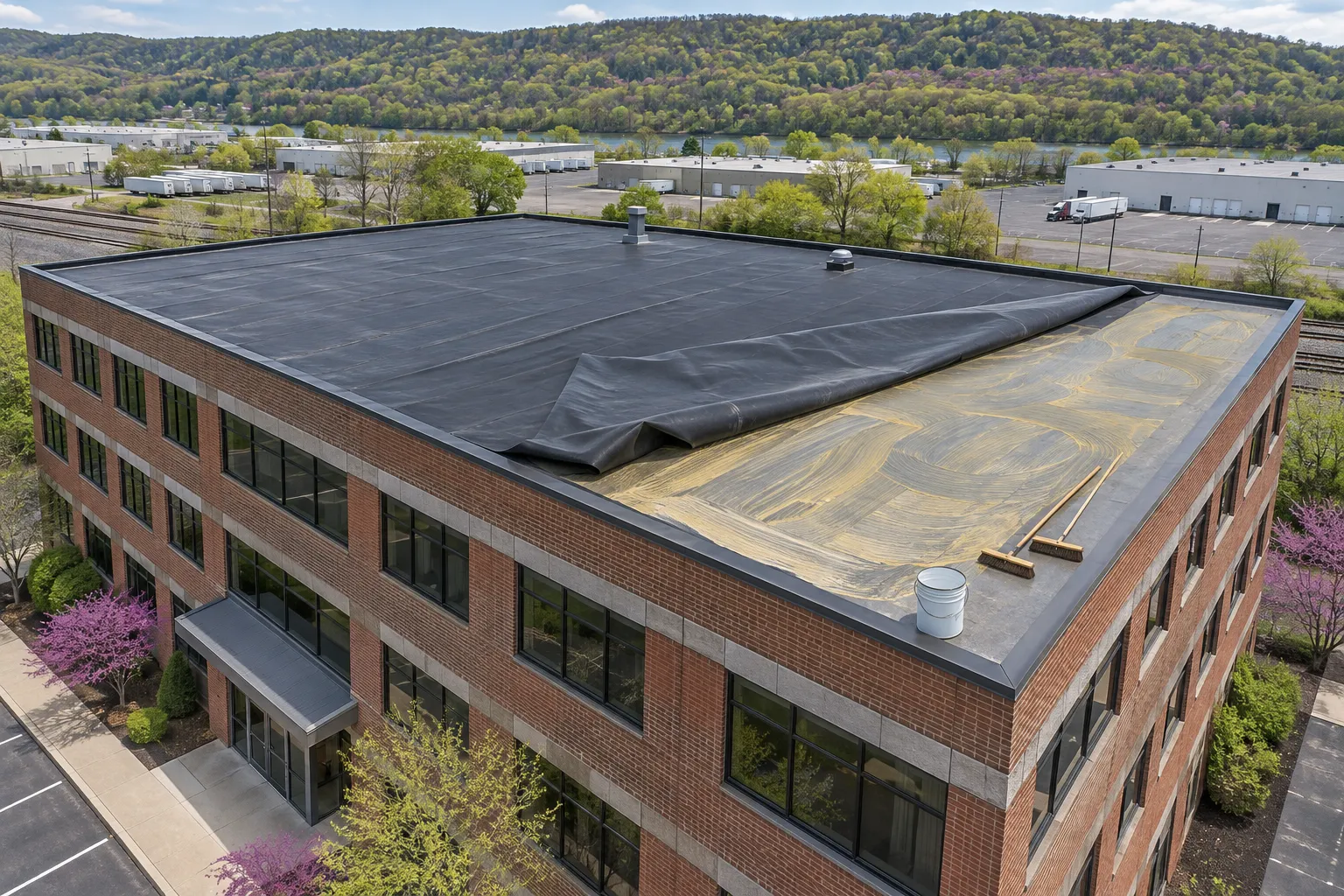
Rubber sheet is turned up parapets and sealed under termination bar where storefront walls meet the roof.
Where Water Gets In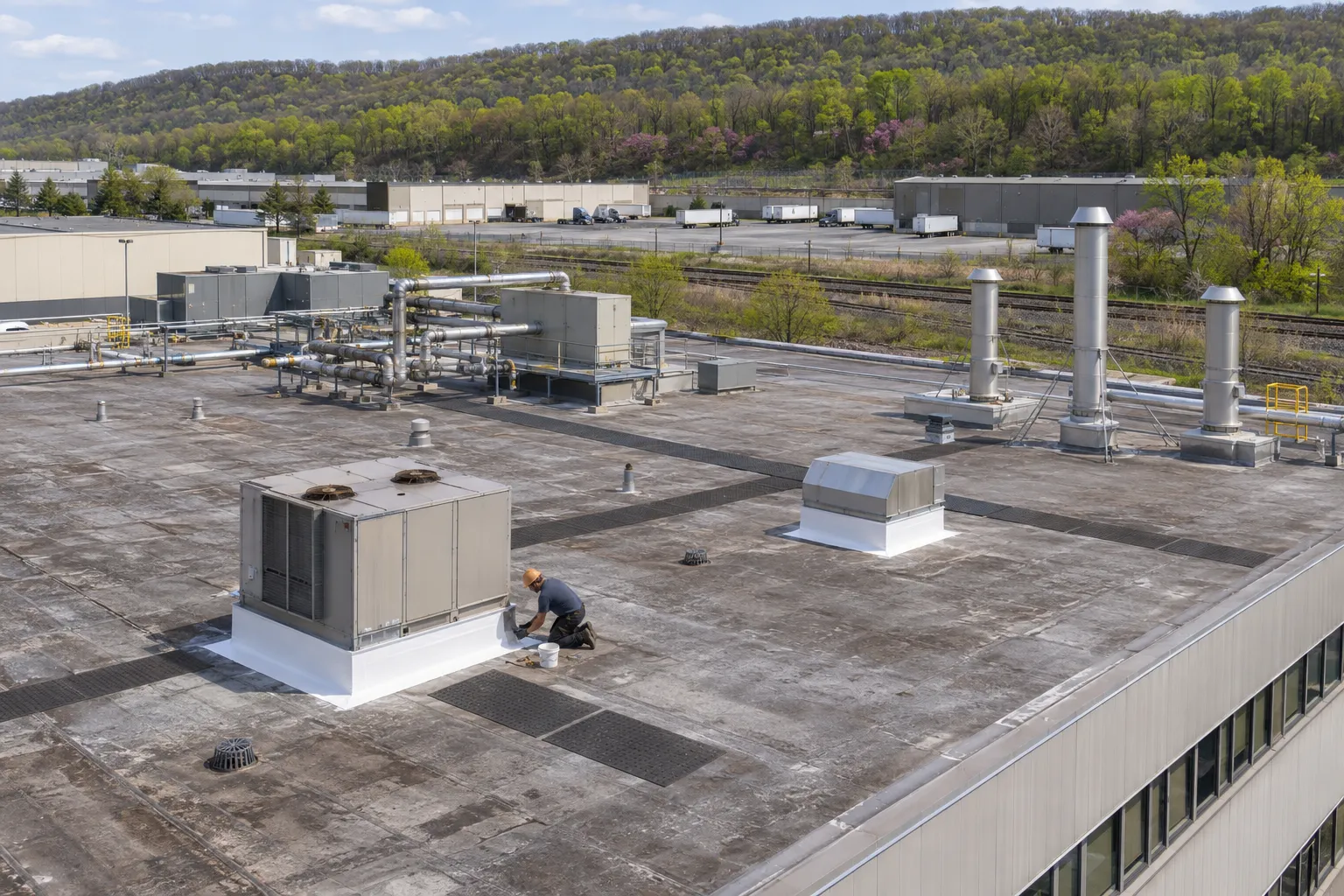
Small industrial buildings with stacks near the edge need the perimeter and equipment flashing planned together.
Where Water Gets In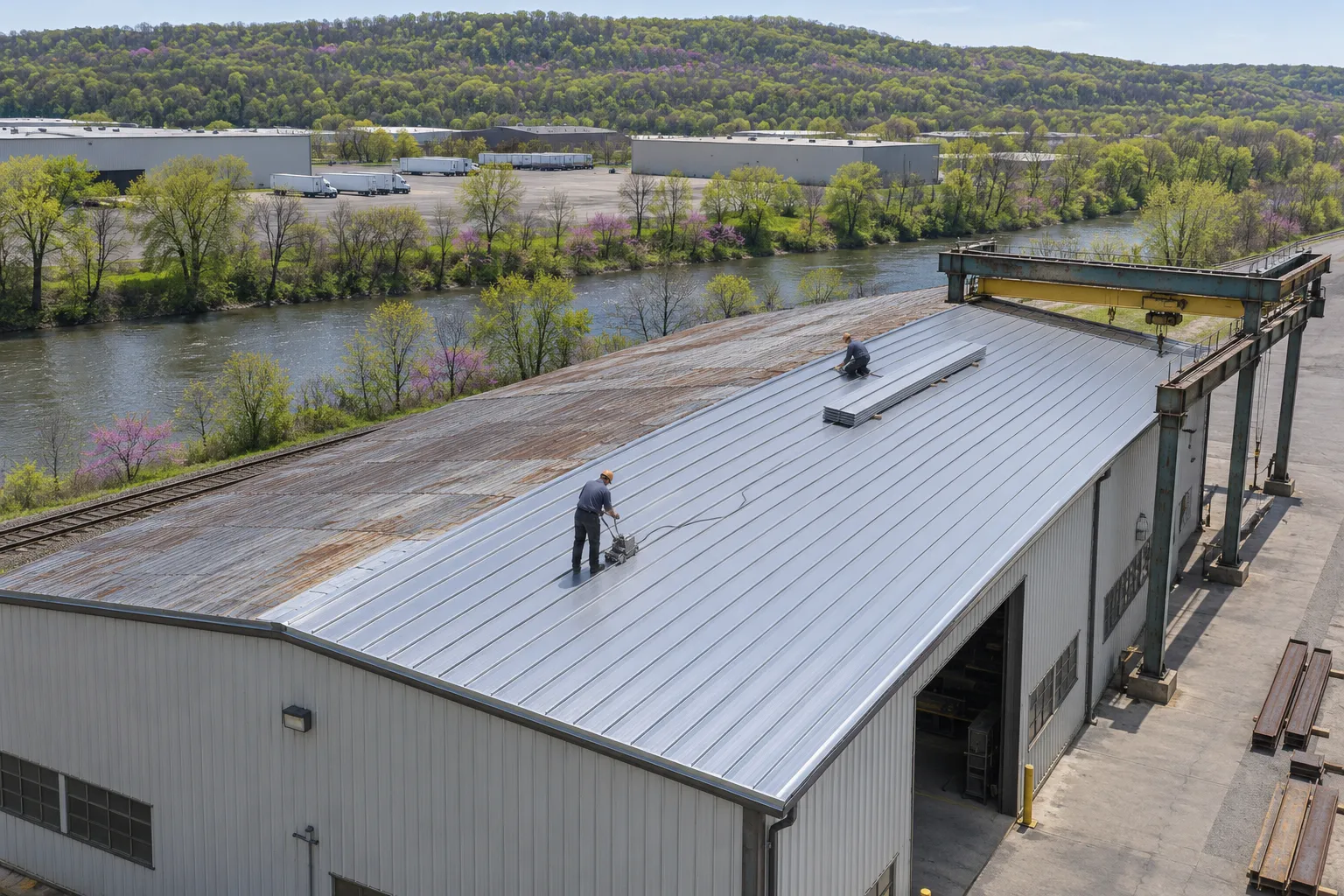
Metal-roofed buildings get new eave and rake trim along with the panels, sealed at every lap.
Where Water Gets InLoose perimeter metal is often the first sign the roof needs work. Set up an inspection and we will check every edge before scoping the new roof.
Schedule Your Free InspectionPerimeter decisions come first, then the field is replaced to meet them.
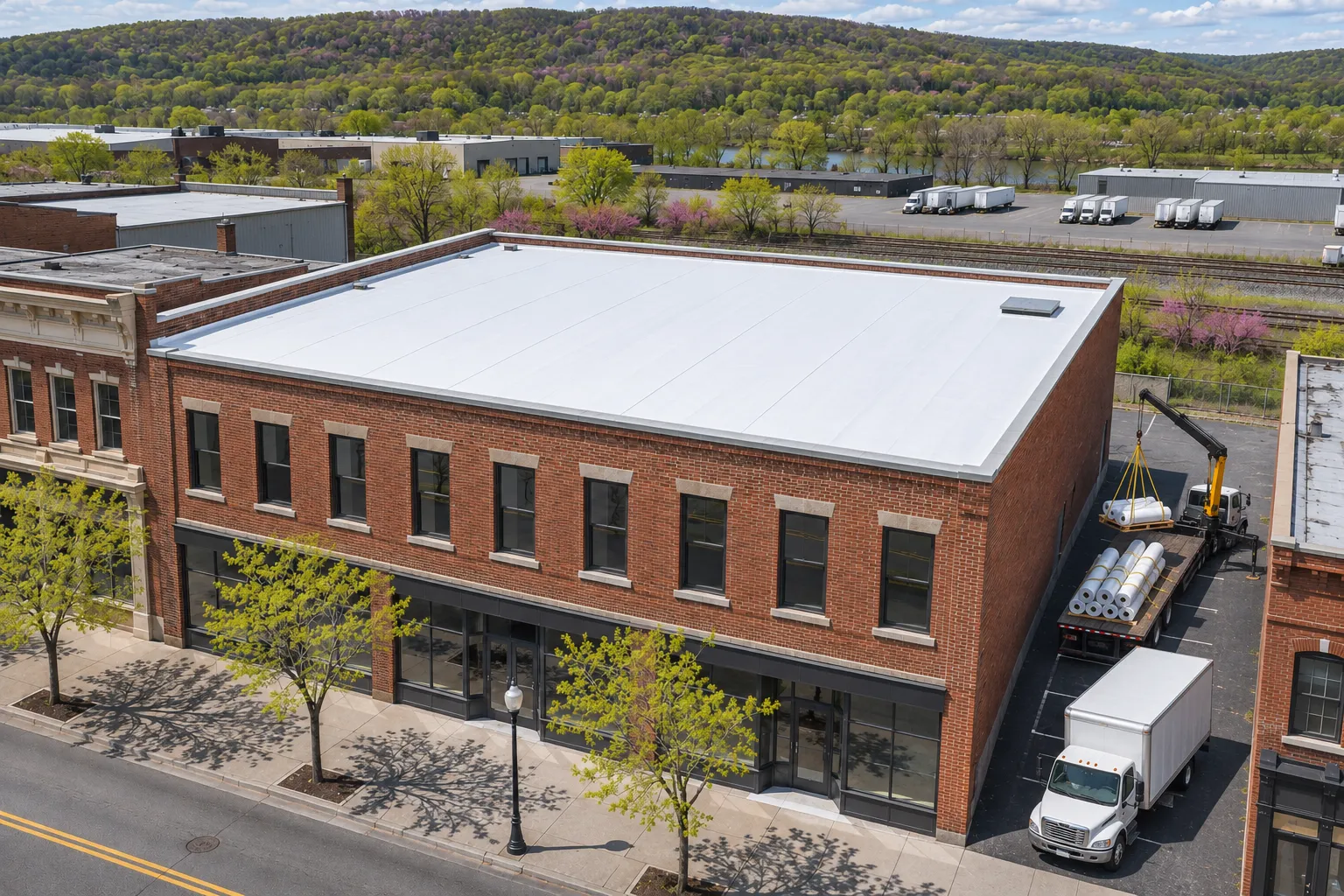
We open sample edges, check blocking and fasteners, and cut cores near the perimeter where water collects first.
Each run of edge metal is marked to keep or replace, and the list goes into the proposal.
Old membrane and rejected edge pieces come off, and rotted blocking is replaced.
Insulation and membrane go down and turn up the walls to meet the new or retained edges.
Edge metal, coping, and counterflashing are fastened and sealed before a final walk.
Is your building outside Hatboro? We cover the towns below as well. Elsewhere, call us or send us a message.
Home base for our commercial roof work.
Stocked warehouses and delivery-heavy buildings.
Office roofs crowded with rooftop units.
Flat roofs with low spots and slow drains.
Roofs with steady service traffic to equipment.
Answers for Hatboro storefront and office owners.
Only when the old metal is in good shape and fits the new assembly. We check attachment, joints, and compatibility with the new flashing before listing it as retained. Keeping a defective edge while renewing the field leaves a leak path right beside the new roof.
Yes. Storefronts and offices with brick parapets make up much of our Hatboro work, and their edges get the closest look.
We serve Hatboro directly. Call with the address, and we will set up a time to walk the roof and check the edges.
Small storefront roofs are part of our regular work. The same edge and flashing checks apply whatever the size.
Coping and edge metal come in many colors and profiles. We pick a profile that fits the wall width and the new membrane.
Rotted or loose wood blocking under the edge metal is replaced, since new metal is only as secure as what it fastens into.
Yes. Cracked coping joints and loose wall flashing let water into the wall itself, so we check parapets along with the membrane.
Retained pieces are cleaned, refastened where needed, and stripped into the new membrane with compatible flashing at every joint.
Send the address and where the edges look worst. We will check every run of metal and tell you what stays.