Rings Left by Dried Ponds
Dirt rings on the membrane mark where water sits for days after rain. Their size shows how far the low area spreads.

As a Glenolden commercial roofing contractor, we replace flat roofs and correct the low areas and slow drains that wore out the old one.
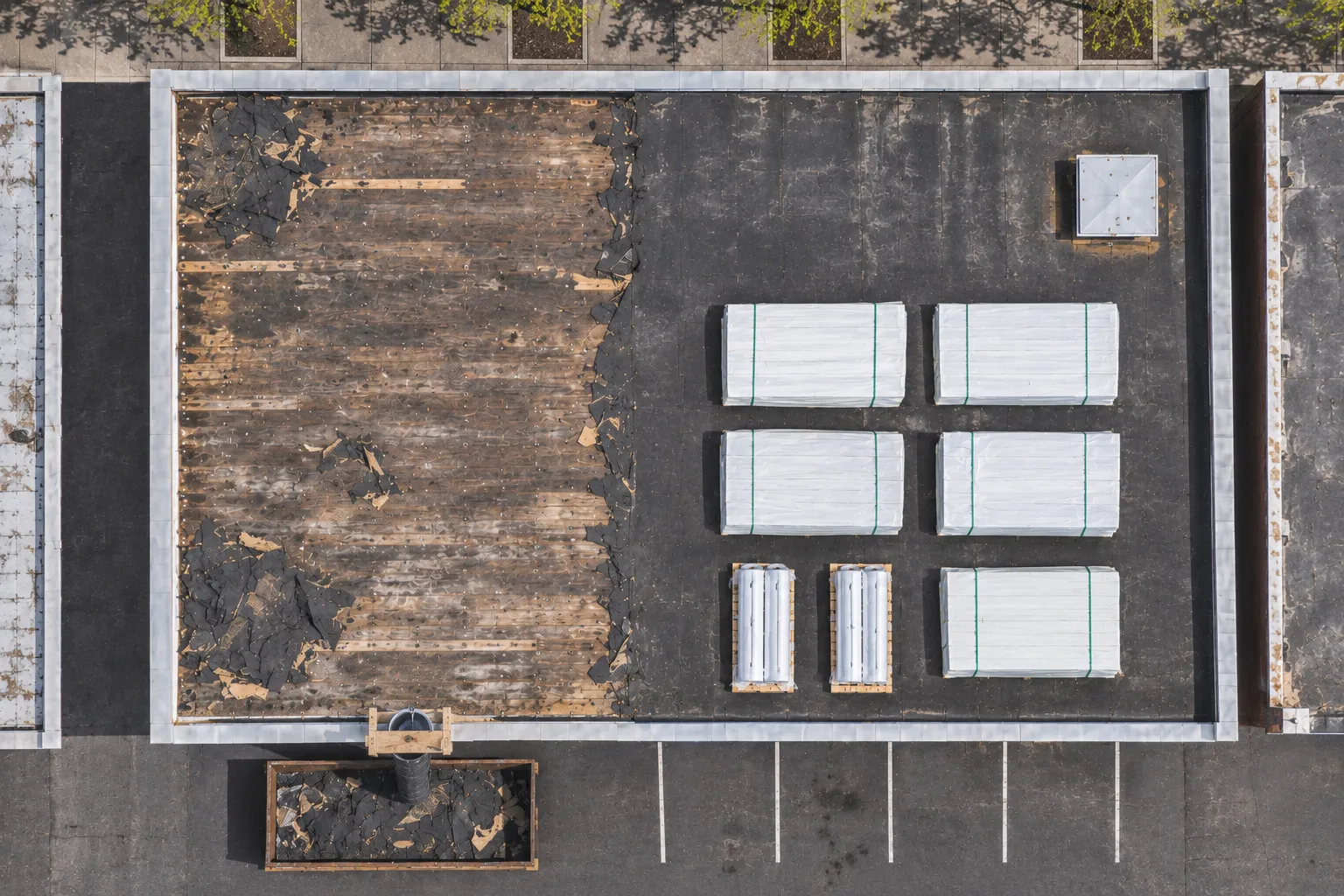
Water that sits on a roof shortens its life, and Glenolden commercial roofing work is the time to change that.
Replacement jobs here often reveal low spots and blocked runoff that helped ruin the last roof. Laying new membrane over the same layout brings the ponding right back.
We check drain outlets, the shape of the insulation, and the structure around each low area. Corrections can mean tapered board, crickets between drains, or resetting drain bowls lower.
Drainage trouble leaves clear marks on a flat roof.
Dirt rings on the membrane mark where water sits for days after rain. Their size shows how far the low area spreads.
Added layers over the years raised drain bowls above the roof around them, so water circles the outlet without reaching it.
Deflected deck creates bowls that collect water and debris, and the extra weight of ponding pushes the deck down further.
Ponded water freezes into sheets that stress seams and flashing, then melts and refreezes through every thaw.
Constant water finds small openings and soaks the board beneath, which then holds even more water in the next storm.
Undersized or clogged scuppers spill water down the wall, staining brick and soaking the base of the parapet.
Drainage corrections are built into the new roof from the first layer of board.
Ponds wear the surface and grow algae and debris.
Tapered insulation and crickets send water to the outlets, so the field dries within a day of a normal storm.
Water circles a drain it cannot reach.
Drain bowls are reset or sumped so the low point sits at the outlet, and new clamping rings hold the membrane tight around each one.
Clogged scuppers spill over the wall face.
Scuppers are resized or reflashed so runoff leaves the roof cleanly.
Deflected deck between joists keeps refilling with water.
Soft deck is repaired and taper is added so the bay drains toward an outlet instead of refilling after every rain.
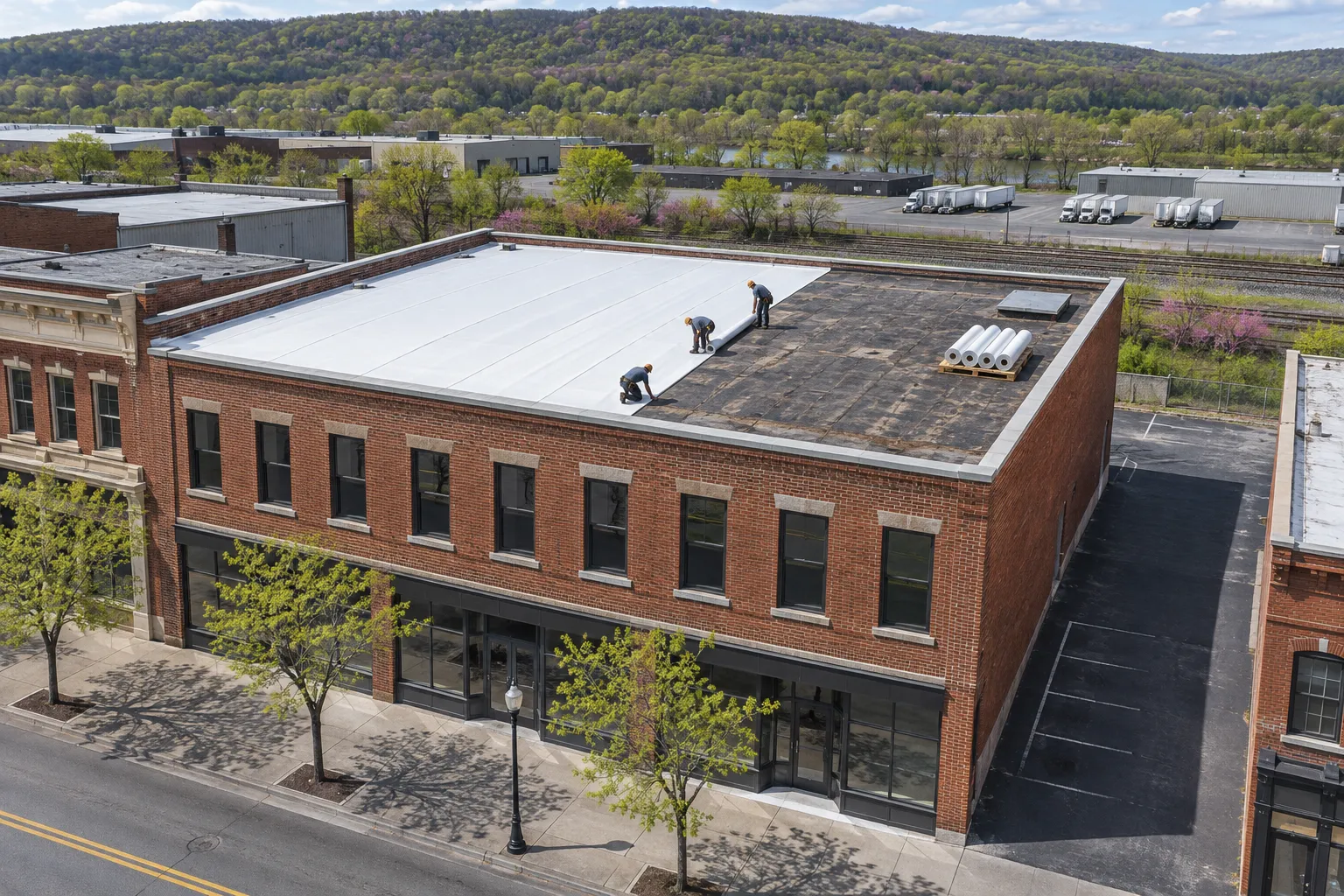
Every system we install can be built over tapered insulation to fix slope.
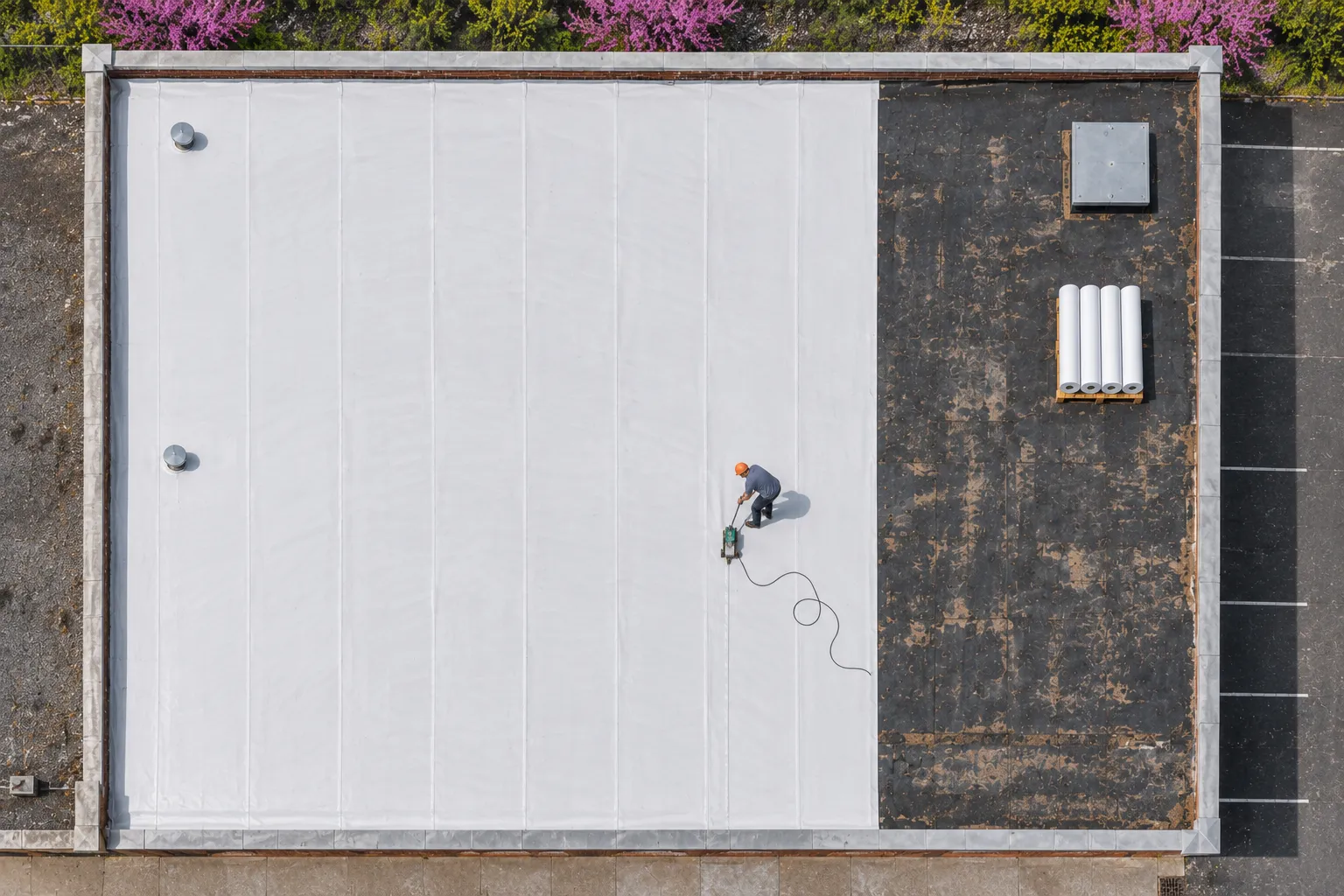
TPO welded over tapered board handles the flat commercial roofs common in Glenolden.
Where Water Gets In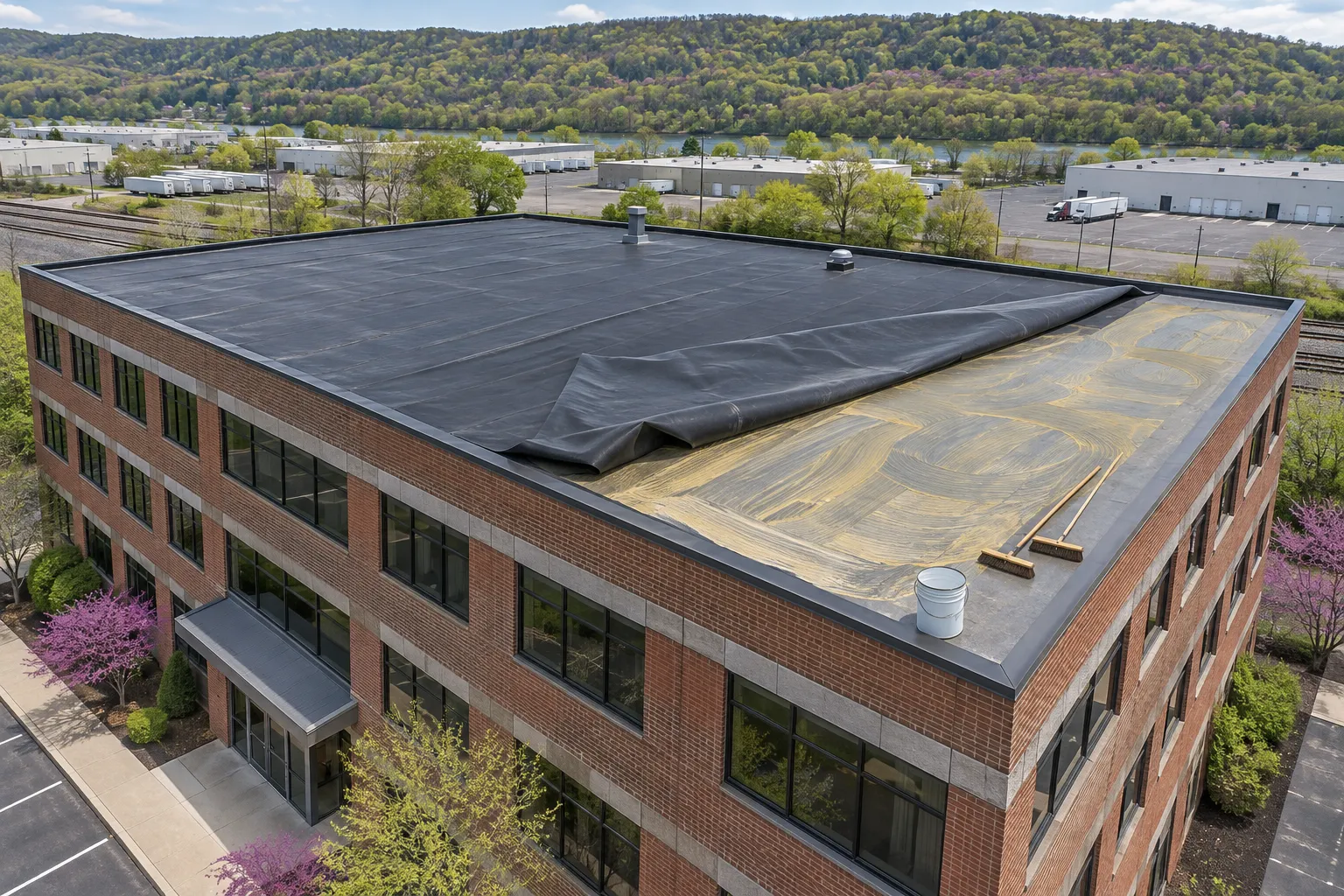
Rubber membrane goes over new tapered insulation where an older EPDM roof held water.
Where Water Gets In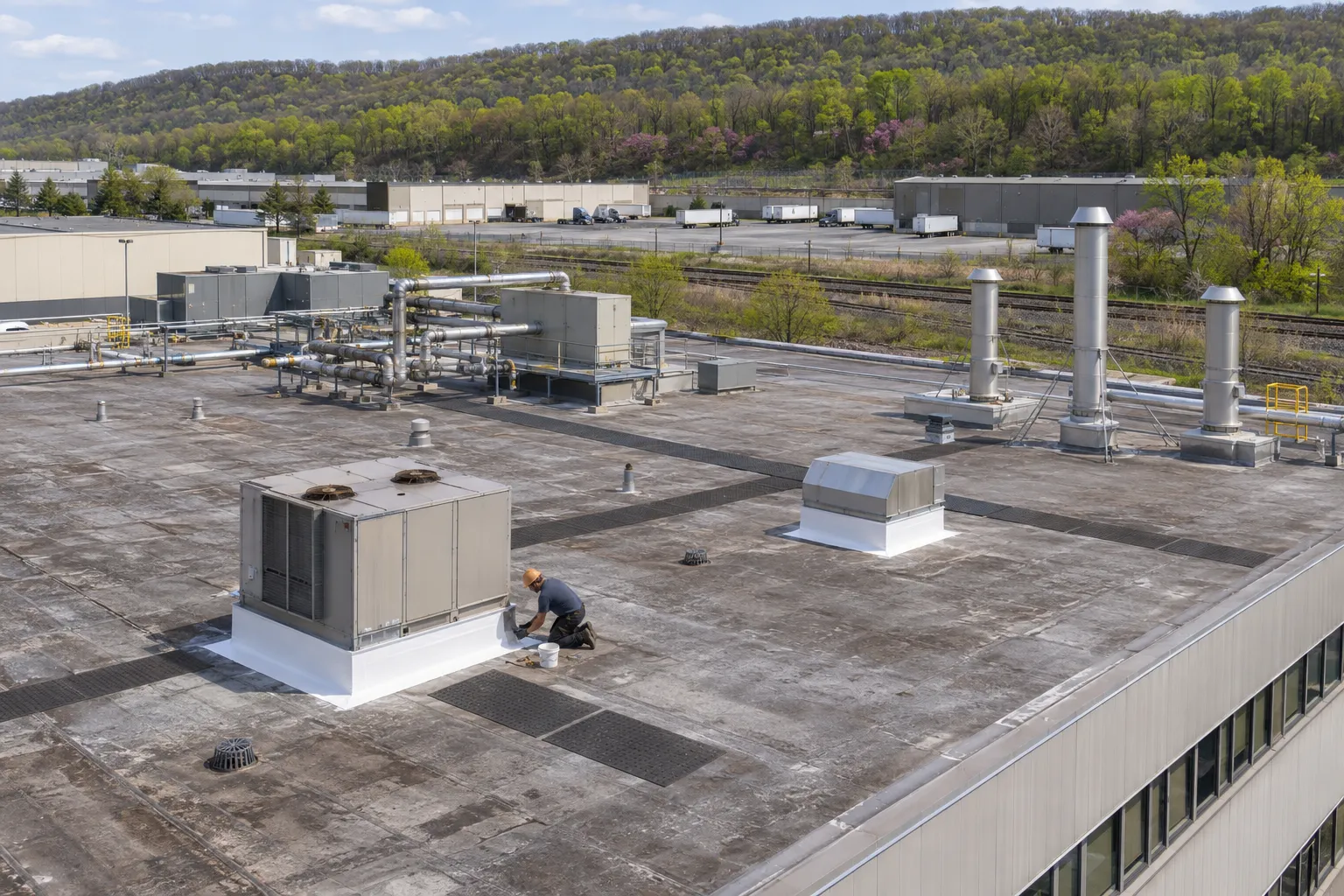
Shops with equipment on the roof need drains kept clear of new curbs and supports.
Where Water Gets In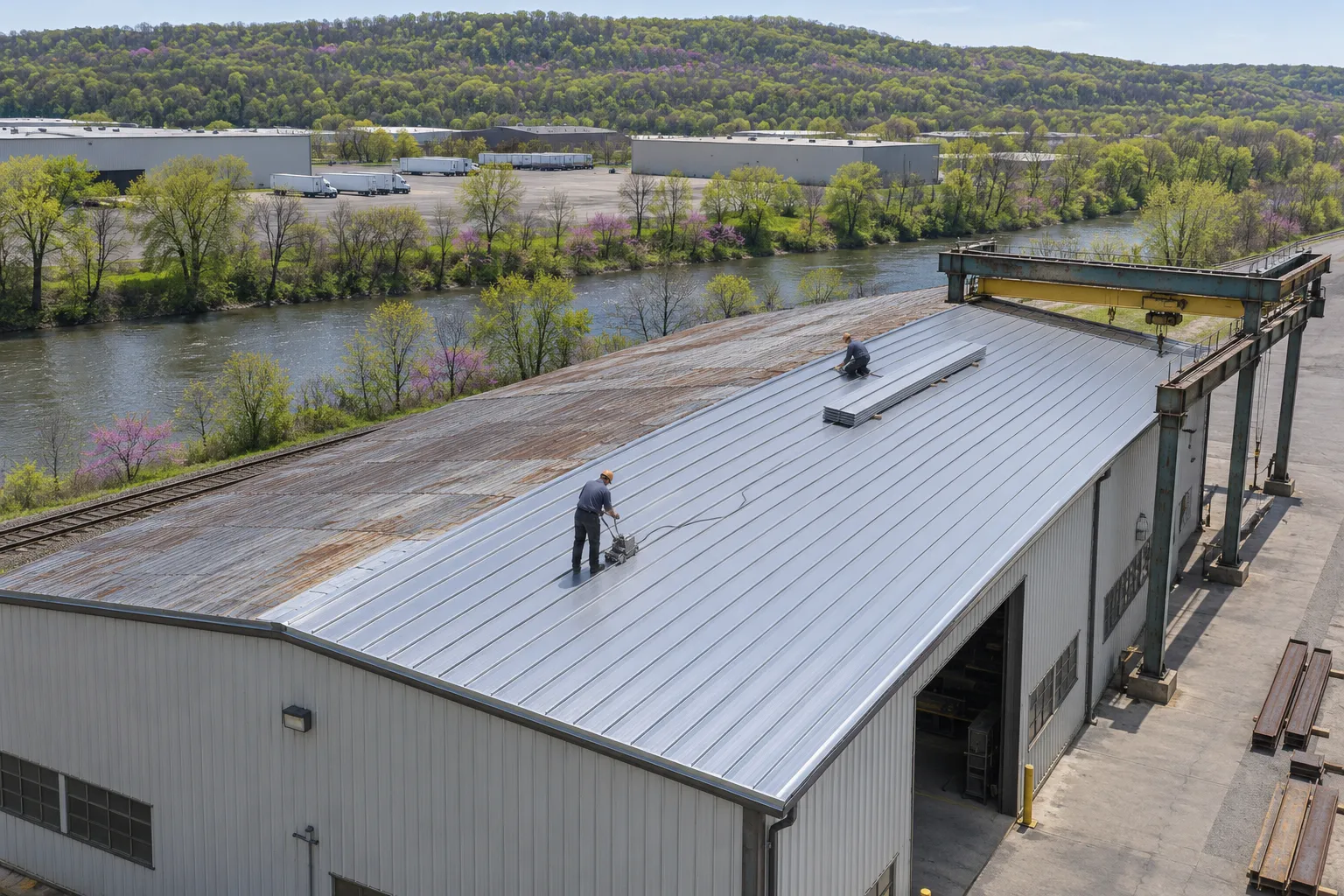
Metal retrofit framing can add real slope over a flat roof once the structure is reviewed.
Where Water Gets InPonding that lasts usually means the slope or drains need correcting. Book an inspection after the next storm and we will map where it collects.
Schedule Your Free InspectionDrainage is designed before the first sheet goes down.
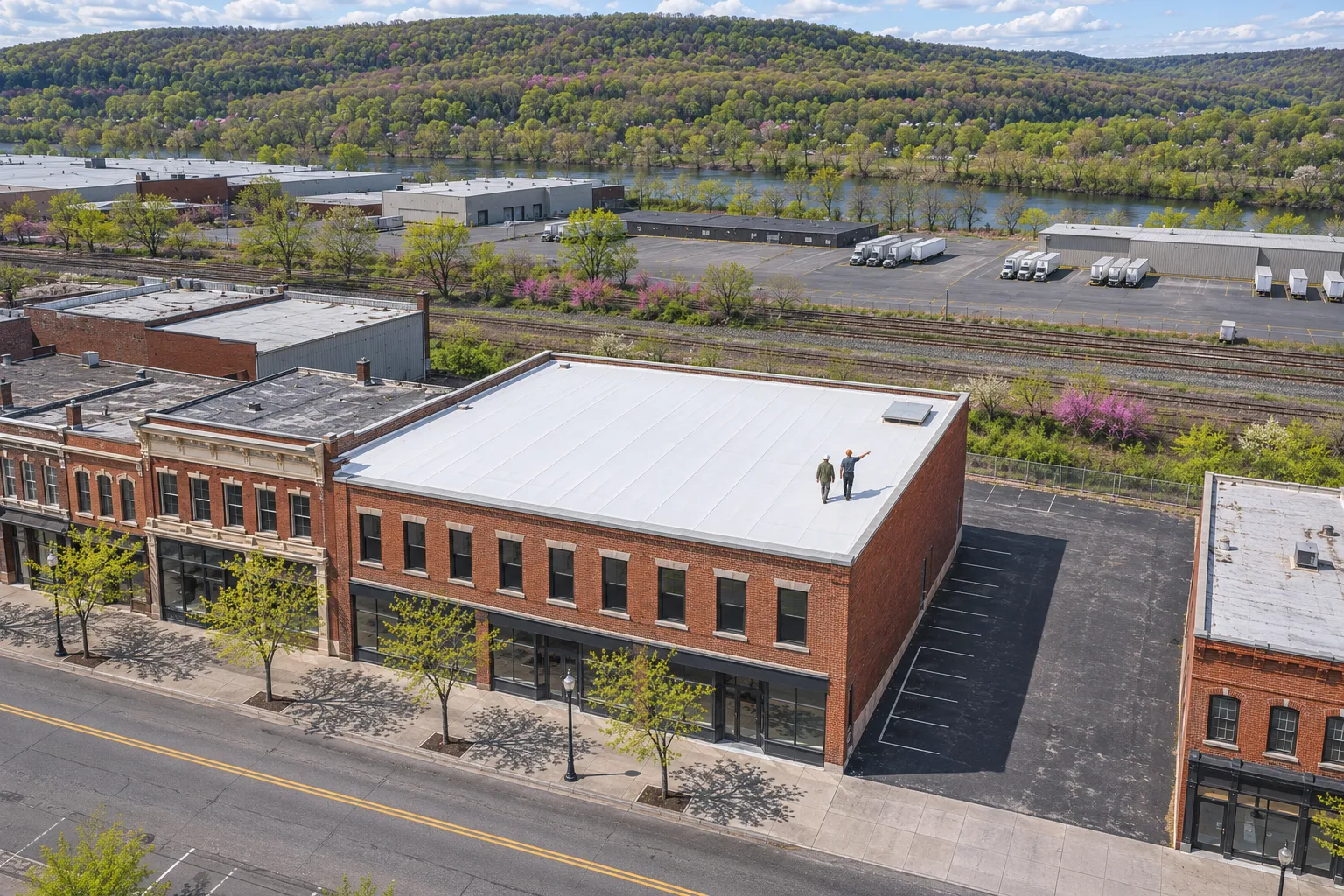
We map ponds, measure drain heights, and cut cores in the wettest areas.
Crickets and tapered board are laid out so every roof area falls to an outlet.
Saturated insulation comes off, and soft or sagging deck is repaired.
Tapered board, crickets, and the new membrane go down section by section.
Drains are flushed and runoff is checked before the owner walks the roof.
Is your property beyond Glenolden? We also work in these towns. If yours is not listed, call us or send us a message.
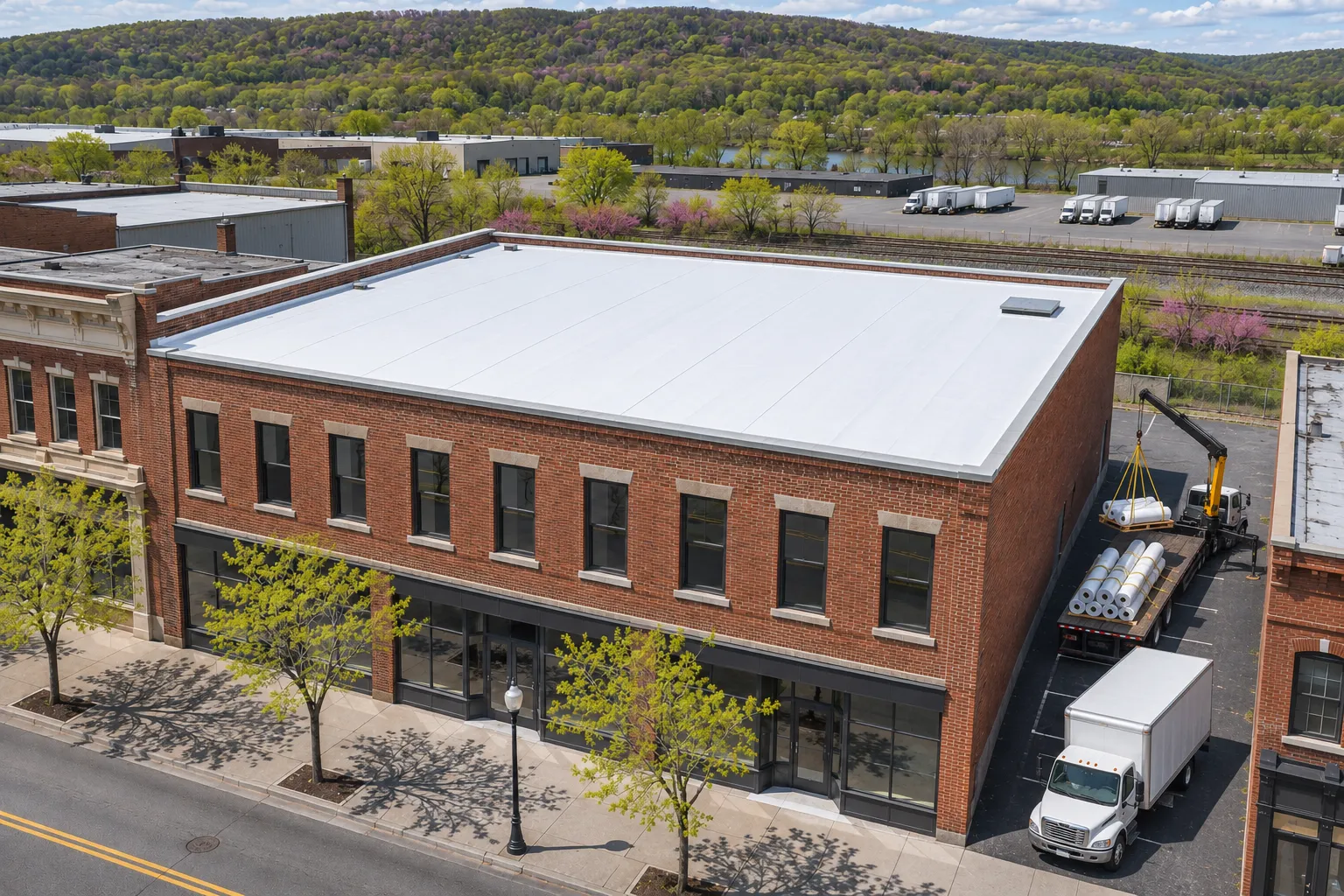
Home base for our commercial roof work.
Stocked warehouses and delivery-heavy buildings.
Storefronts and offices with older edge metal.
Office roofs crowded with rooftop units.
Roofs with steady service traffic to equipment.
Answers about drainage and replacement in Glenolden.
It can, where low areas or blocked runoff helped damage the old roof. We check outlets, insulation shape, and the structure around low spots before deciding on corrections. A new membrane over the same layout leaves the water problem in place.
Yes. Flat commercial roofs are most of our Glenolden work, and drainage gets checked on every one.
It adds material, and the taper plan shows how much. Many owners weigh that against the repeat repairs ponding causes.
Yes. Small shop and office roofs get the same drain and slope review as large ones.
Sometimes. Adding or relocating a drain involves plumbing below the deck, so it is planned with the building owner and a plumber.
A cricket is a small built-up slope, usually tapered insulation, placed between drains or behind curbs so water moves around obstacles toward the outlets.
The taper plan is designed to move water to the drains. We check runoff after the new roof is installed and adjust drain flashing where water still collects.
Ponded water that freezes stresses seams and flashing each winter, which is one reason slope corrections are worth planning during replacement.
Send the address and a photo of the ponding if you have one. We will map the low areas and plan the slope.